Blog Content
Why Understanding Business Crime Insurance Cost Matters for Maine Businesses
Business crime insurance cost typically ranges from $650 to $2,500 annually for most small businesses, though your actual premium depends on several key factors including your industry, number of employees, and coverage limits.
Quick Cost Overview:
- $500,000 coverage: ~$1,450/year with $2,500 deductible
- $1 million coverage: ~$1,600/year with $2,500 deductible
- $3 million coverage: ~$2,500/year with $2,500 deductible
- Minimum premiums: Starting as low as $100 for basic protection
Globally, companies lose trillions to fraud annually, but the impact on small businesses is very real and local.
Here in Maine, from Kennebunk to Ogunquit, small companies face the highest median losses from fraud: $150,000 per incident. A single fraudulent act can cost what many Maine small businesses earn in several months.
The statistics paint a sobering picture:
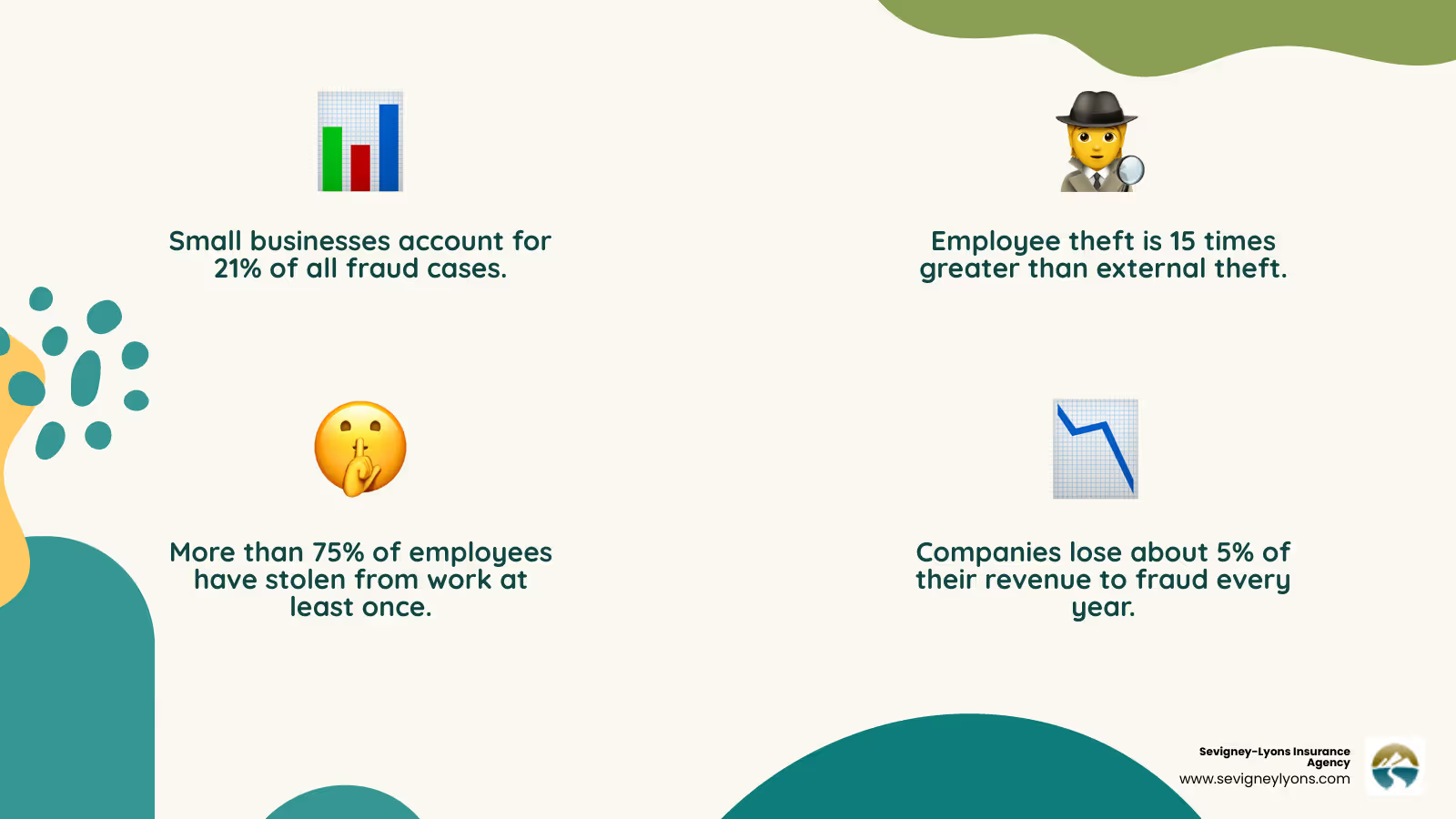
- Small businesses account for 21% of all fraud cases
- Employee theft is 15 times greater than external theft
- More than 75% of employees have stolen from work at least once
- Companies lose about 5% of their revenue to fraud every year
Business crime insurance protects your company from financial losses caused by employee theft, embezzlement, forgery, robbery, and other criminal acts. It's designed for threats standard property insurance doesn't cover, like employee theft or funds transfer fraud.
For Maine business owners, this coverage isn't just a nice-to-have. It's financial protection that could mean the difference between recovering from a crime and closing your doors permanently.
What Does Business Crime Insurance Actually Cover?
Many Maine business owners worry about theft. Not just from a burglar, but from a trusted employee or a sophisticated fraudster who tricks your staff into wiring money to a fake vendor.
Business crime insurance (sometimes called commercial crime insurance or fidelity insurance) protects you from exactly these scenarios. It's the safety net that catches you when criminal acts threaten to drain your bank account.
Crucially, your standard commercial property insurance doesn't cover these losses. While property insurance might replace a stolen laptop, crime insurance covers the $50,000 embezzled using that laptop.
Whether you're in Portland or Wells, your business relies on trust. When that trust is broken, the financial impact can be staggering and potentially close your doors for good.
Criminal Acts Included in a Standard Policy
A solid business crime insurance policy covers various criminal acts that could drain your business financially.
Employee theft tops the list as one of the most common and damaging crimes. This covers money, securities, or property stolen by an employee, from petty cash skimming to large-scale embezzlement. Statistics show 90% of all significant theft losses come from employees, and more than 75% of employees have stolen from work at least once.
Embezzlement is a specific type of employee theft where someone fraudulently takes property or funds you've entrusted to them. For example, a bookkeeper slowly siphoning funds into their own account.
Forgery or alteration protection kicks in when someone creates or modifies financial documents to steal from you. Computer fraud covers losses from someone fraudulently changing data in your computer system to transfer money. And funds transfer fraud protects you when criminals send fake instructions to your bank, convincing them to wire money from your account.
You're also covered for straightforward crimes like robbery (taking property by force) and burglary (breaking in to steal).
All of these fall under the umbrella of white-collar crimes—non-violent, financially motivated offenses that can be devastating.
First-Party vs. Third-Party Protection
Understanding who gets protected under your policy is critical.
First-party coverage protects your business directly. When an employee embezzles from your company or someone robs your cash register in Kennebunk, first-party coverage reimburses you for those direct financial losses.
Third-party coverage is equally important. This protects you when your clients suffer losses because of a criminal act by one of your employees.
For example, if your janitorial service employee steals from a client's office in Ogunquit, the client will look to you for compensation. Third-party crime coverage (often via a fidelity bond) helps cover the client's losses, protecting your finances and reputation.
This distinction determines whether you're protecting yourself from direct losses or from claims others might make against you.

Common Exclusions to Be Aware Of
Every insurance policy has limits. Knowing what business crime insurance doesn't cover helps you avoid surprises.
Acts by owners or partners typically aren't covered. Insurers figure owners control the finances, so they're responsible for their own actions.
The policy focuses on direct financial losses. It doesn't cover indirect losses like business interruption or reputational damage, which fall outside the policy's scope.
Here's a big one: data breaches aren't the same as computer fraud. While your crime policy might cover some computer-related theft, it's not a substitute for cyber liability insurance, which is needed for data breaches and stolen intellectual property.
Losses from an employee with a known criminal history of theft may not be covered, as you knowingly took on that risk.
Finally, the policy covers criminal acts—not honest mistakes or poor judgment calls that don't involve criminal intent.
For a fuller picture of protecting your Maine business, see our guide on business liability insurance cost in Maine.
High-Risk Industries in Maine
Certain Maine industries are particularly vulnerable because they handle significant cash, sensitive data, or valuable inventory.
Retail businesses, like boutiques in Kennebunk, deal with cash and valuable merchandise, facing threats from shoplifters and employees.
Hospitality businesses in tourist spots like Ogunquit handle high volumes of cash and credit card transactions, often with seasonal staff, creating opportunities for dishonesty. We've written about Maine restaurant insurance and its specific vulnerabilities.
Healthcare providers manage sensitive patient data and financial information. Internal fraud involving billing schemes falls under crime coverage.
Financial services firms are obvious targets, handling large sums of money and facing high risks of embezzlement and fraud.
Construction companies and contractors in Biddeford and throughout Maine have valuable equipment at job sites, making theft a concern. Managing payroll and project finances also opens doors for internal fraud.
If your business handles money, securities, or sensitive information, understanding crime risks is essential. The business crime insurance cost is the price of protecting everything you've built.
Calculating Your Business Crime Insurance Cost
When Maine business owners ask about business crime insurance cost, they want a simple answer. The truth is that your premium is personal, reflecting your unique business risks, whether you're a Kennebunk retailer or a Wells accounting firm.
Understanding how insurers calculate your cost helps you make smarter decisions and potentially lower your premium.
Key Factors That Determine Your Premium
Insurers carefully assess specific aspects of your business to determine risk and set your rate.
Your employee count matters. More employees mean more people handling money and sensitive data. A restaurant in Ogunquit with thirty staff members has different exposure than a two-person consulting firm.
Revenue size plays a role too. Higher revenue means more transactions and greater potential exposure.
Your industry carries its own risk profile. As mentioned, retail, restaurants, and financial services face higher crime risks, which affects your premium. A Biddeford construction company might see different rates than a healthcare practice with similar revenues.
Internal controls can work in your favor. Strong financial controls—like segregating duties, regular audits, and background checks—tell insurers you're serious about prevention and can lower your premium.
Your claims history speaks volumes. A history of crime-related losses is a red flag, while a clean history works in your favor.
Location factors in subtly. Insurers consider regional crime statistics and the security environment where your Southern Maine business operates.
What is the Average Business Crime Insurance Cost?
Most small to medium-sized Maine businesses pay between $650 and $2,500 annually for a stand-alone business crime insurance policy.
Businesses with minimal exposure can sometimes add crime coverage as an endorsement to an existing policy for as little as $100, but dedicated protection requires a larger investment.
Here's what you might pay based on different coverage amounts, assuming a standard $2,500 deductible:
Notice that doubling your coverage from $500,000 to $1 million might only add about $150 to your annual premium. The increase is relatively modest for the additional security.
For many Maine businesses, these premiums are a tiny fraction of potential losses. Compared to the $150,000 median loss, even the highest premium here is a worthwhile investment.
How Policy Choices Affect Your Business Crime Insurance Cost
Your coverage limit and deductible have the biggest impact on your final business crime insurance cost.
Your coverage limit is your safety ceiling—the maximum your policy will pay. Set it too low, and you're vulnerable. We help Maine business owners think through realistic scenarios to determine an appropriate limit. A Wells retail shop might need $500,000, while a Kennebunk financial firm could need $3 million or more.
Your deductible is your risk share—what you pay before insurance kicks in. A higher deductible lowers your premium, but ensure you can comfortably cover that amount during a crisis. Most Maine small businesses find a $2,500 deductible offers a good balance.
The key is matching coverage to your reality, not just your budget. At Sevigney-Lyons Insurance Agency, a local independent insurance agency in Wells, we walk through these decisions with you. For more insight into how different commercial policies work together, check out our guide on commercial insurance coverage in Maine.
Proactive Strategies to Lower Your Insurance Premiums
You have more control over your business crime insurance cost than you might think. By taking concrete steps to reduce risk, you can earn lower premiums from insurers.
Insurance companies assess risk. When they see a business actively working to prevent crime, they see a safer bet, which can translate to lower premiums.
Strengthening Internal Financial Controls
Most business crime happens from the inside. This isn't about paranoia; it's about building systems that protect everyone, including honest employees.
Segregation of duties is your first line of defense. For example, the same person shouldn't write checks, sign them, and reconcile the bank statement. Split these duties among different people.
Regular audits and reconciliations are crucial. Review bank statements promptly and conduct surprise cash counts to catch problems early.
For anyone handling money, thorough background checks are essential. The upfront cost is minimal compared to a potential loss, especially in tight-knit Maine communities where formal vetting might be overlooked.
Two-person verification for significant transactions creates an automatic check-and-balance. Require dual signatures on checks over a certain amount or for large wire transfers.
If you run a cash-heavy business like a restaurant in Ogunquit or a retail shop in Biddeford, strict cash handling procedures are non-negotiable. Count cash at the start and end of each shift with a witness and use tamper-evident deposit bags.
Other essential practices include securing unused checks, carefully reviewing expense reports, and establishing clear approval processes for payments. These steps demonstrate to insurers that you're serious about protecting your business.
Investing in Security and Technology
Physical security measures send a clear message. Surveillance cameras deter crime and are useful for investigating incidents. Install them in strategic locations where cash is handled or inventory is stored.
A quality alarm system, strong locks, and well-lit premises make your business a harder target.
Cybersecurity measures are also crucial. Use multi-factor authentication for financial accounts, keep software updated, and train your team to spot phishing emails that trick employees into transferring funds.
Employee education is a cost-effective security investment. Teach your staff what fraud looks like and empower them to question unusual requests. An alert employee can stop fraud before it starts.
For more insights on protecting your physical assets, explore our guide on business property insurance in Maine.
The Importance of ERISA Bonds for Benefit Plans
If your Maine business offers a 401(k) or similar retirement plan, you are legally required to have an ERISA fidelity bond under the Employee Retirement Income Security Act (ERISA).
ERISA bonds protect your employees' retirement funds from theft by those who handle plan assets. The bond must equal at least 10% of the plan's assets, up to a maximum of $500,000 (or $1 million for plans with employer securities).
As a fiduciary, you have a legal responsibility to manage these funds prudently. An ERISA bond helps you fulfill this obligation.
Maintaining proper ERISA bonding signals your commitment to financial integrity, which can positively influence your overall risk profile and lower your business crime insurance cost. At Sevigney-Lyons, we help Maine businesses implement these strategies to protect themselves and potentially reduce insurance costs.
The High Price of Inaction: Risks of Forgoing Coverage
Skipping crime insurance isn't saving money—it's gambling with your business's future. The consequences of being uninsured can be severe.

The annual business crime insurance cost of $650 to $2,500 is minor compared to the median loss from occupational fraud of $150,000. For most small businesses in Wells or Kennebunk, a loss of that size is a potential ending.
Fraud's devastating financial impact hits small businesses hardest. Unlike large corporations, a local Ogunquit restaurant or Biddeford retail shop likely lacks the reserves to absorb a six-figure loss. An uninsured loss drains cash needed for payroll, rent, and inventory, leading to a cascade of financial problems.
Another sobering number: companies lose about 5% of their revenue to fraud every year. For a business earning $500,000 annually, that's $25,000 gone.
The business closure risk is real. A trusted bookkeeper embezzles funds, an employee creates a ghost vendor, or a fraudster tricks someone into wiring money. Without insurance, these scenarios can force even established businesses to close permanently, affecting you, your employees, and our Maine communities.
Then there's the reputational damage. News of fraud travels fast in Southern Maine. Customers question your operations, suppliers worry about payment, and banks may hesitate to extend credit. Rebuilding that trust takes years.
Don't forget the hidden costs of investigating the crime, hiring forensic accountants, and pursuing legal action.
The Association of Certified Fraud Examiners' Occupation Fraud 2022: A Report to the Nations shows that organizations with fewer than 100 employees see the largest share of fraud cases at 28 percent. Small businesses aren't just vulnerable—they're a primary target.
Forgoing crime insurance exposes everything you've built to unacceptable risks.
Conclusion: Protecting Your Maine Business with Confidence
Understanding your business crime insurance cost isn't just about budgeting; it's a strategic investment in your Maine business's long-term security.
We've reviewed what crime insurance covers (from employee theft to computer fraud), the difference between first-party and third-party protection, and common policy exclusions so you can plan accordingly.
The numbers tell a compelling story. With typical premiums from $650 to $2,500 annually and a median fraud loss of $150,000, the math is clear. The cost of protection is a fraction of the potential loss. For businesses across Southern Maine—from a Kennebunk retail shop to a Biddeford construction company—this coverage can be the difference between weathering a storm and closing for good.
We've also shared practical ways to lower your premiums through stronger internal controls, better security, and thorough employee screening. These are sound business practices that protect you on multiple fronts.
Crime can happen to any business, but small businesses are particularly vulnerable, accounting for 21% of all fraud cases. The good news is you don't have to face these risks alone.
At Sevigney-Lyons Insurance Agency, we've served Maine businesses for decades. As an independent agency with access to over 20 top carriers, we shop on your behalf to find coverage that fits your specific needs and budget. We understand the challenges facing Maine businesses because we're part of this community.
Crime insurance provides peace of mind, allowing you to focus on what you do best—serving customers and growing your business.
Your business represents years of hard work. You've built something worth protecting. Don't leave it vulnerable to risks that could undo all that effort. We're here to help you design a protection plan that makes sense for your unique situation.
Get your free Maine insurance coverage quote today and let's start a conversation about protecting what you've worked so hard to build.