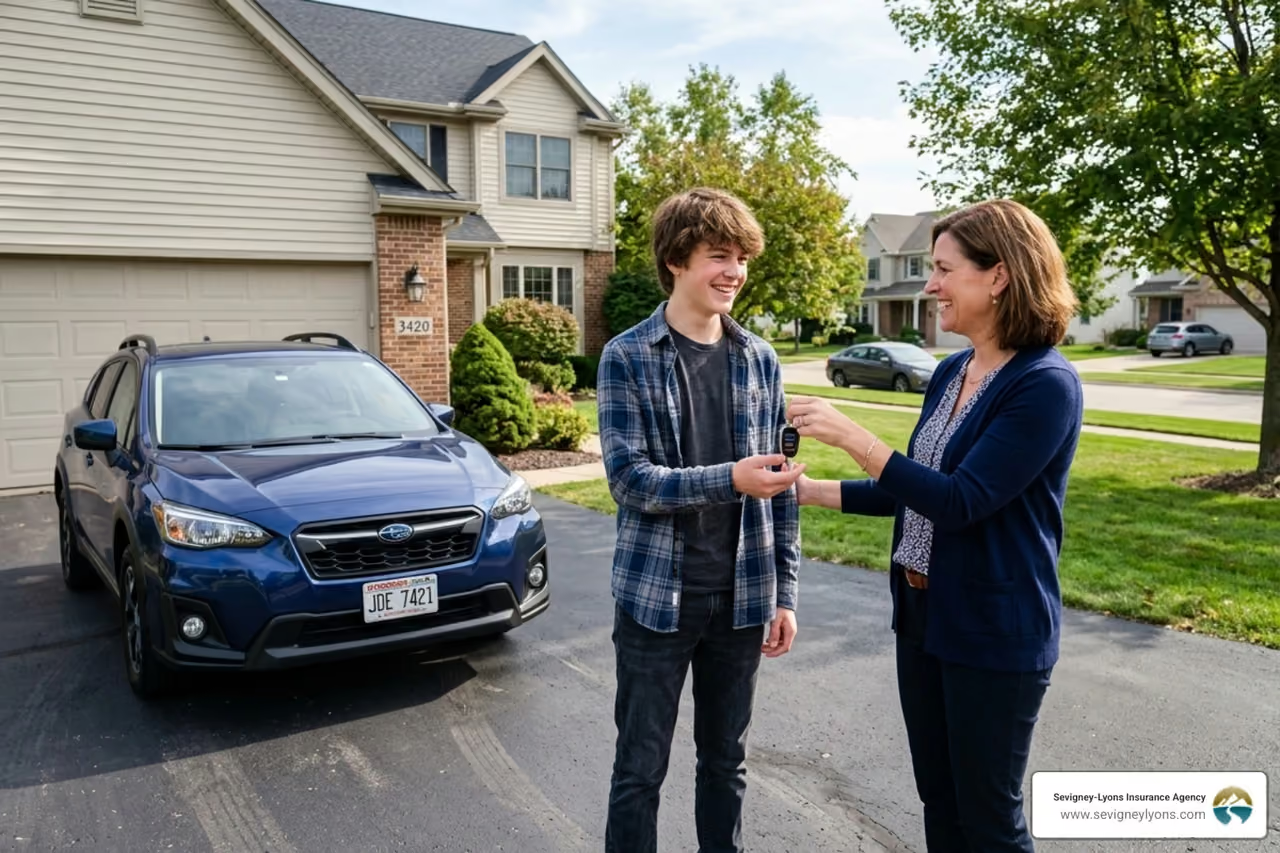
Blog Content
How to Find Cheap Car Insurance for 17-Year-Olds in Maine
The most reliable way to find cheap car insurance for 17-year-olds is to add the teen to a parent or guardian's policy, compare several Maine quotes, and stack every available discount. Good grades, driver education, safe-driving apps, and a safe, modest vehicle can all help lower the price.
In Maine, a 17-year-old's insurance rate can still be much higher than an adult's because new drivers have less experience behind the wheel. But families in Wells, Kennebunk, Ogunquit, and Biddeford do not have to accept the first price they see. The vehicle, coverage choices, driving record, deductible, and ZIP code can all make a meaningful difference.
For most families, the goal is not simply the lowest premium. It is affordable coverage that protects the teen, the family car, and the assets you have worked hard to build.
I'm Jon Sevigney, and I will walk through the practical steps Maine families can use to reduce teen-driver insurance costs without overlooking important protection.

Cheap car insurance for 17 terms to learn:
Why Teen Auto Insurance Premiums Are So High
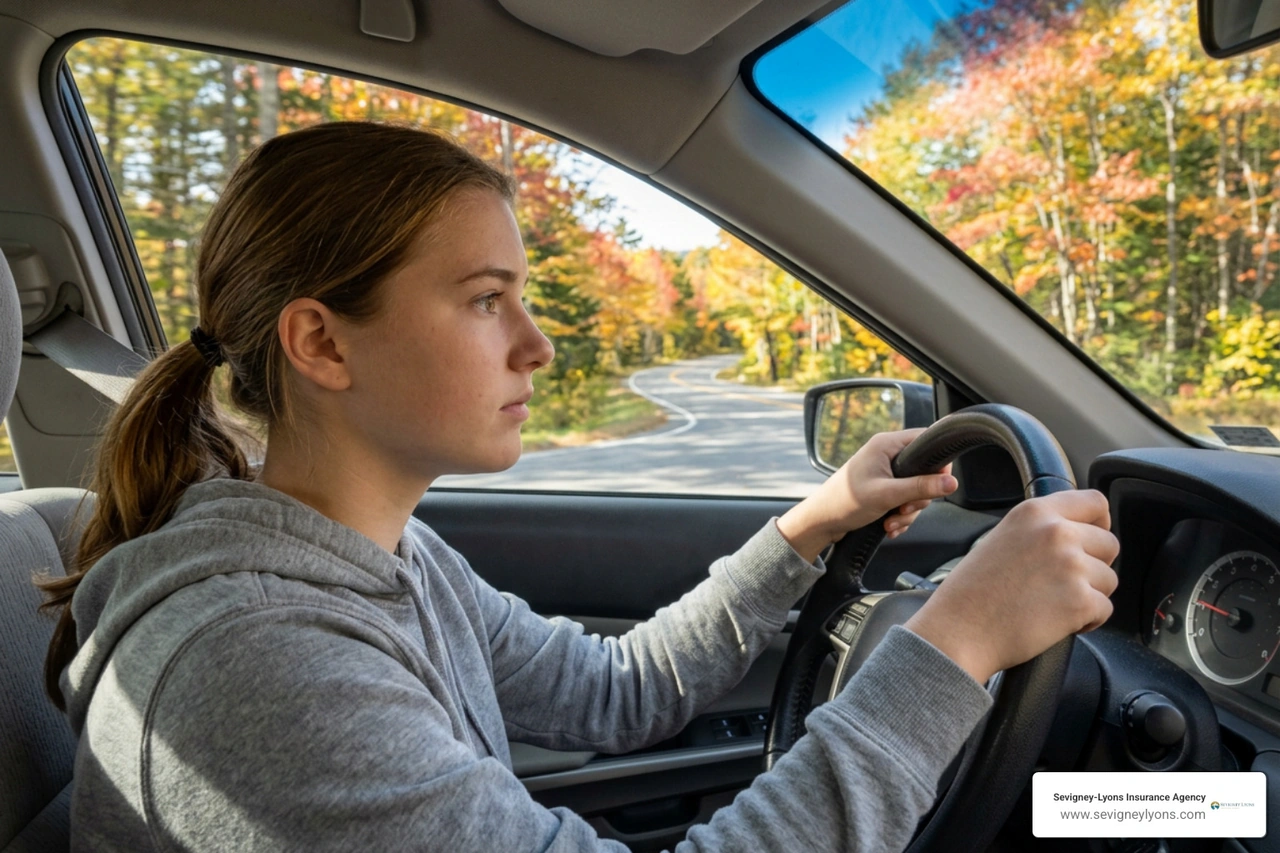
Watching your teenager pull out of the driveway alone for the first time is a mix of immense pride and white-knuckle anxiety. When the insurance bill arrives a few weeks later, that anxiety often turns into genuine sticker shock.
Nationally, the average annual auto premium for a 17-year-old driver sits between $3,500 and over $5,400 when purchased as a standalone policy—nearly three times higher than the national adult average. While Maine drivers benefit from some of the most competitive base insurance markets in the country, the average annual premium for a 17-year-old in the state still hovers around $4,531 for solo coverage.
To understand these rates, you have to look at how actuarial risk models work. Insurance pricing is purely a reflection of statistical probability. Actuaries do not look at your individual teenager’s stellar manners or tidy bedroom; they look at cold data across millions of driving profiles. And statistically, novice drivers represent the highest payout risk on the road.
Evaluating baseline rate data helps families understand local pricing benchmarks across different York County communities.
Crash Statistics and Risk Factors for Young Drivers
According to the Centers for Disease Control and Prevention and the Insurance Institute for Highway Safety, teen drivers aged 16 to 19 have a fatal crash rate per mile driven nearly three times higher than drivers aged 20 and older. The core risk factors come down to a combination of brain development, spatial judgment, and raw behind-the-wheel experience:
- Hazard Recognition Lag: It takes hundreds of hours behind the wheel to intuitively predict when an oncoming car might turn left across your lane or notice black ice on a shaded road. Novice drivers simply react more slowly to developing hazards.
- Distracted Driving: Mobile phones, infotainment screens, and especially peer passengers dramatically increase claim frequency among high school drivers.
- Nighttime Hazards: A disproportionate share of severe teen crashes occur between 9:00 PM and midnight, when low visibility compounds the challenges of unfamiliar roads.
Navigating this transition starts early. If you are preparing for licensing milestones, understanding 16-year-old insurance in Maine provides a helpful baseline for what to expect as your driver progresses into their seventeenth year.
Demographic and Location Factors
Beyond driving experience, several demographic and geographical variables influence what your family pays:
- Gender Differences: On average, 17-year-old males cost roughly $320 more per six-month policy period than young female drivers due to higher statistical rates of aggressive driving, speeding violations, and severe collisions.
- Urban vs. Coastal vs. Rural Driving: Driving along Route 1 through Wells, navigating summer traffic congestion in Ogunquit, or commuting along the Maine Turnpike through Kennebunk and Biddeford each carry unique risk profiles. Congested tourist corridors create frequent fender benders, while rural stretches increase animal-strike risks.
- Winter Weather Hazards: Southern Maine winters bring freezing rain, Nor'easters, and rapid freeze-thaw cycles that test any young driver’s car-handling abilities.
- Maine State Coverage Laws: Maine requires minimum auto liability limits of $50,000 per person, $100,000 per accident for bodily injury, and $25,000 for property damage (50/100/25), alongside mandatory uninsured motorist coverage and medical payments. While higher than many other states, these minimums provide essential baseline protection.

How to Find Cheap Car Insurance for 17-Year-Old Drivers in Maine
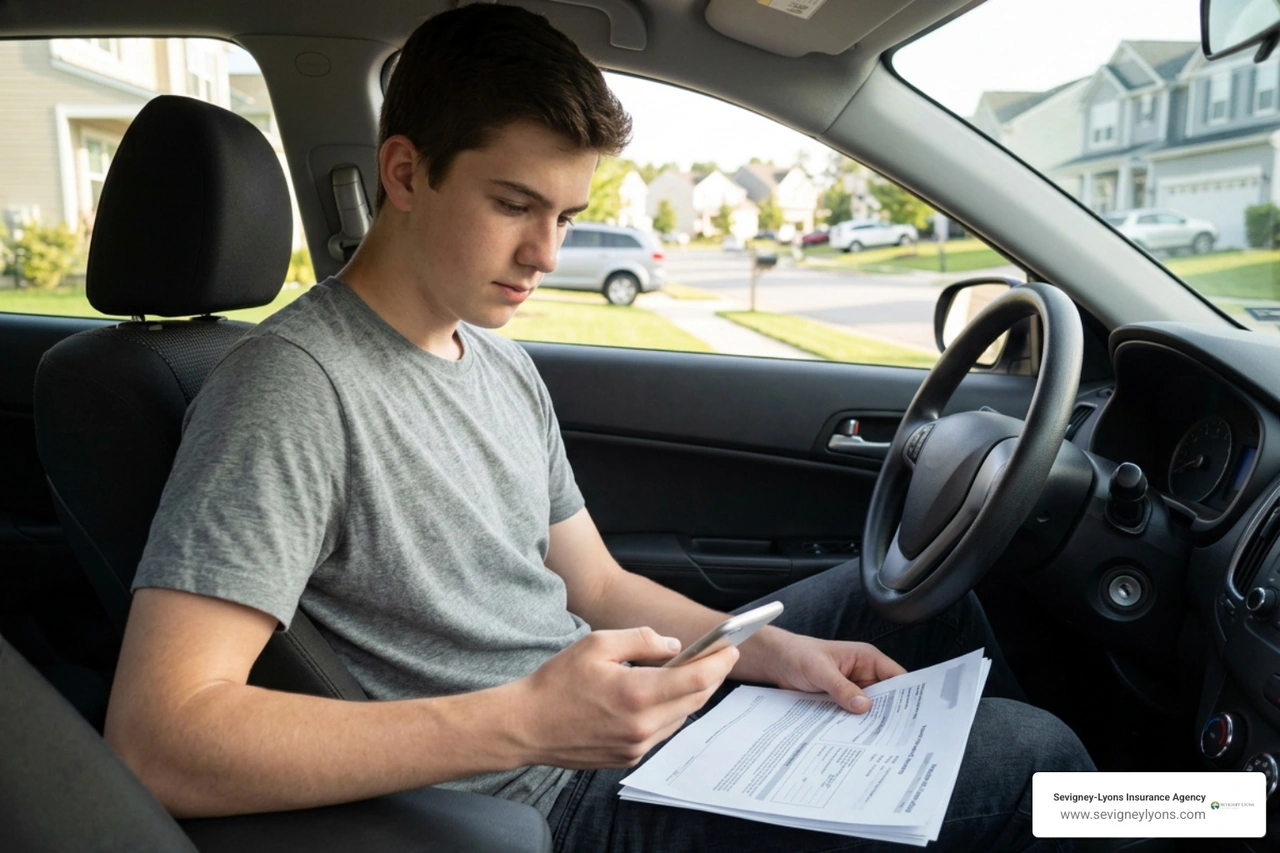
Securing reasonable rates does not require cutting corners on crucial protections. It requires a deliberate, strategic approach to policy structuring and rate shopping.
Because we operate as an independent insurance agency representing more than 20 top regional and national insurance carriers, we see that pricing can vary by upwards of $700 or more per year between companies for the exact same coverage profile. Exploring regional carrier options through insurance deals for young drivers in Maine is one of the most effective ways to avoid overpaying.
Unlocking High School Student Discounts for Cheap Car Insurance for 17-Year-Old Drivers
Carrier discounts are the most direct tool parents have to offset higher baseline rates. When stacked together, discounts can reduce a teen's portion of the insurance bill by 10% to 25%:
- Good Student Discount: Carriers reward academic discipline. High school students maintaining a 3.0 GPA ("B" average) or higher, or who rank in the top 20% of their class, can qualify for premium reductions ranging between 5% and 15%. Simply submit a report card or transcript at every six-month renewal.
- Driver Education Completion: Enrolling your 17-year-old in a state-approved Maine driver education program provides fundamental road training and qualifies them for immediate policy credits.
- Defensive Driving Programs: Completing supplemental certified defensive driving or road safety courses can unlock additional discounts with participating carriers.
- Telematics & Mobile Safe-Driver Apps: Many carriers now offer voluntary telematics programs via smartphone apps or plug-in OBD-II devices. These tools measure speed, braking, cornering, nighttime driving, and phone usage. Demonstrating safe driving habits can earn initial participation discounts of 5% to 10% and ongoing savings of up to 20% or more.
Parents looking for structured savings can review our detailed guide on affordable car insurance for teen driver to build a multi-discount strategy.
Selecting Safe Vehicles to Get Cheap Car Insurance for 17-Year-Olds
The vehicle your 17-year-old drives has a dramatic impact on your total premium. Many parents mistakenly believe an old two-door sports coupe is an economical choice because of its purchase price, only to discover it commands astronomical insurance premiums due to poor crash-test ratings and high repair costs.
Look for modest sedans, hatchbacks, and compact crossovers equipped with modern safety features such as anti-lock brakes (ABS), electronic stability control, and advanced airbag systems.

Policy Structures and Coverage Options for Young Drivers
Choosing how to structure your policy and selecting proper coverage levels is essential. While state law establishes minimum liability limits, relying solely on minimum coverage can leave your family financially exposed if an accident causes serious damage or injury.
For an in-depth breakdown of essential protections, our auto insurance guide for young drivers outlines how to strike the right balance between robust protection and reasonable out-of-pocket costs.
Adding a Teen to a Family Policy vs. Buying Separate Coverage
One of the most frequent questions parents ask is whether they should purchase a separate policy for their 17-year-old or add them to the household auto policy.
In almost every scenario, adding a 17-year-old to an existing family policy is substantially cheaper than buying standalone coverage.
- The Cost Difference: Adding a teen driver to a parent’s policy costs an average of $304 per month ($3,648/year) across the household, whereas a standalone policy for a 17-year-old averages $405 to $687 per month ($4,860 to $8,200+ annually). Adding your teen saves an average of $1,200 to $1,800 or more each year.
- Multi-Vehicle and Multi-Policy Bundles: A family policy allows you to apply multi-car discounts, home-and-auto bundling credits, and mature-driver loyalty ratings across all vehicles.
- Legal and Contractual Rules: In Maine, minors under the age of 18 cannot legally enter into binding financial contracts without an adult co-signer. Furthermore, auto insurance carriers generally require vehicle titles and insurance policies to share ownership within the same household.
To read more about maximizing household policy structures, explore our breakdown on inexpensive car insurance for teenage drivers.
Choosing the Right Deductibles and Coverage Limits
Managing your deductibles is one of the quickest ways to reduce monthly premiums without dropping vital coverage:
- Adjust Deductibles Responsibly: Raising comprehensive and collision deductibles from $500 to $1,000 can reduce your monthly physical damage premium by 10% to 15%. Just ensure your household keeps that $1,000 reserve fund available in savings in case a claim occurs.
- Apply the 10-Year / Low-Value Vehicle Rule: If your 17-year-old is driving an older, reliable vehicle valued under $3,000 to $4,000, paying for collision and comprehensive coverage may no longer be cost-effective. Dropping physical damage coverage on a low-value vehicle and carrying liability, medical payments, and uninsured motorist protection can cut the teen's premium in half.
- Protect Family Assets with Umbrella Coverage: Because teens carry a statistically higher risk of major accidents, carrying liability limits of 250/500/100—backed by an inexpensive personal umbrella policy—ensures family savings, homes, and future earnings are fully shielded from catastrophic lawsuits.
Frequently Asked Questions About Teen Auto Insurance
Can a 17-year-old legally purchase an independent car insurance policy?
In Maine, a 17-year-old cannot legally purchase an independent auto insurance policy on their own because minors lack the legal capacity to sign binding contracts. An independent policy requires a parent or legal guardian to co-sign and assume financial responsibility. The only exceptions are legally emancipated minors. For almost every family, listing the teen on a household policy is simpler, legally sound, and far more cost-effective.
At what age do car insurance rates begin to decrease for young drivers?
Auto insurance rates begin dropping incrementally each year a driver maintains an accident-free and violation-free record. Premiums typically experience noticeable reductions at age 18 and 19 as drivers exit the novice licensing tier. The most significant rate decreases typically occur at age 25, provided the individual maintains a clean driving history without major moving violations or at-fault claims.
How much does car insurance cost for a 17-year-old on average in Maine?
In Maine, the average annual cost to insure a 17-year-old on an individual policy is approximately $4,531 per year. However, when added to an existing family policy with full coverage, the cost typically ranges between $2,200 and $3,400 annually, depending on vehicle type, location, and applied discounts. Families in coastal communities like Ogunquit, Wells, Kennebunk, and Biddeford often see rates below national averages due to Maine's generally favorable insurance climate.
Conclusion
Insuring a 17-year-old driver does not have to break your family’s budget. By keeping your teen on your family policy, choosing a safe and practical vehicle, stacking good student and safe-driver discounts, and dialing in your deductibles, you can secure dependable protection at manageable rates.
At Sevigney-Lyons Insurance Agency, our team lives and works right here in Southern Maine. With access to over 20 top-tier insurance carriers, we compare policies across the market to customize an auto plan that protects your young driver while protecting your household budget.
Whether you are in Wells, Kennebunk, Ogunquit, Biddeford, or anywhere across Maine, reach out to our local agents today for a free Maine insurance coverage quote and discover how much your family can save.