Blog Content
Why Maine Business Owners Need Commercial Auto Insurance Protection
Commercial Auto Insurance Maine protects your business from financial disasters involving work vehicles. Whether you're driving to client sites in Wells, making deliveries in Biddeford, or transporting equipment in Kennebunk, the right coverage shields your company from costly lawsuits and accident damages.
Quick Answer for Maine Businesses:
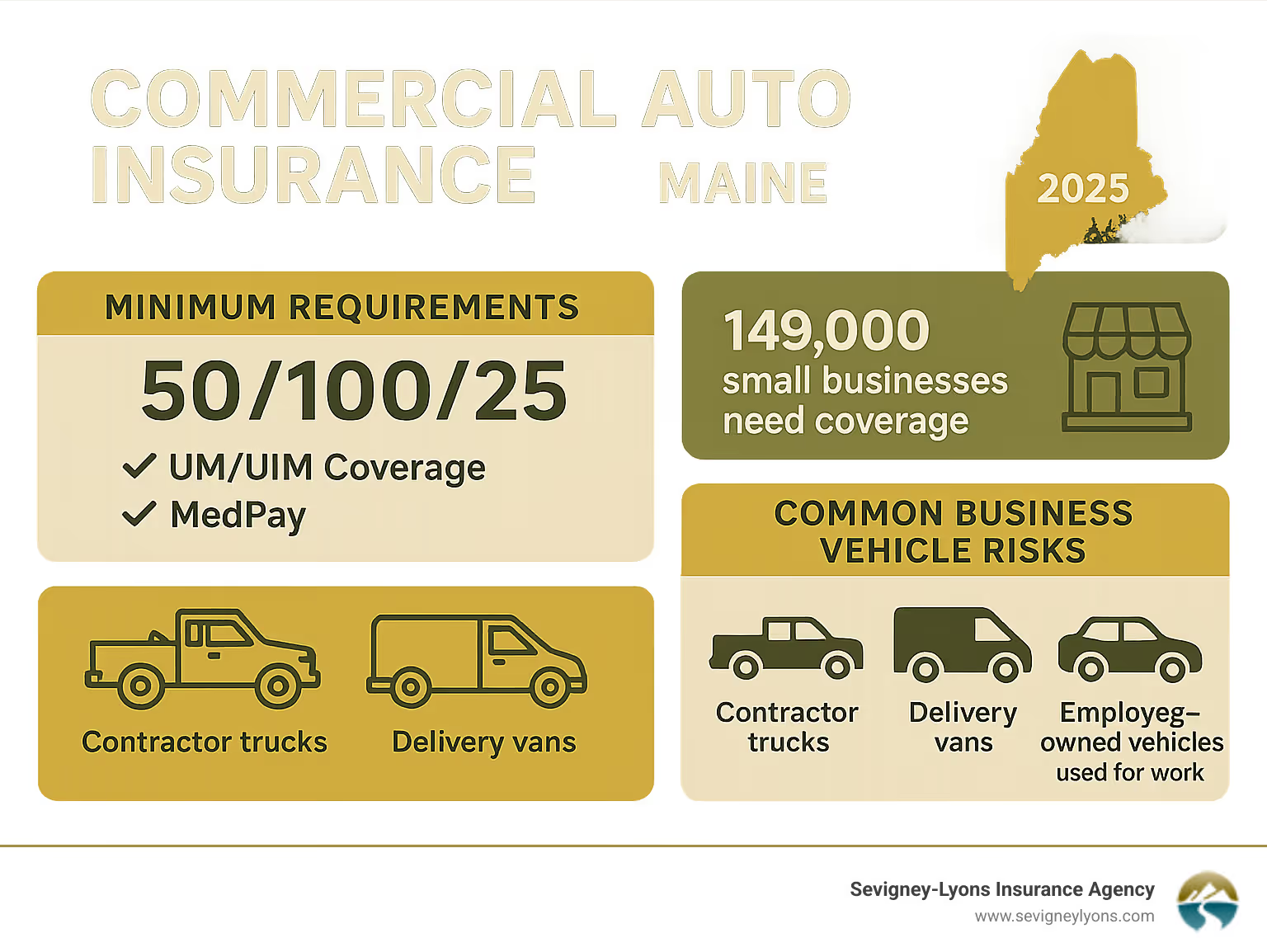
- Minimum Requirements: Maine requires 50/100/25 liability limits plus UM/UIM and MedPay coverage.
- Who Needs It: Any business using vehicles for work, including contractors, delivery services, real estate agents, and food trucks.
- Key Protection: Covers injury, death, and property damage from business vehicle accidents.
- Personal Policy Gap: Your personal car insurance will not cover business use.
Maine has approximately 149,000 small businesses that may need commercial auto coverage. From the coastal roads of Ogunquit to the busy streets of Biddeford, business vehicles face unique risks daily.
Personal auto policies exclude business use, leaving you exposed to significant financial loss. Even using your personal car for simple business tasks like client visits can void your coverage when you need it most.
A single accident involving a business vehicle can result in:
- Expensive medical bills
- Property damage claims
- Legal fees and court costs
- Lost income during lawsuits
- Potential business closure from uninsured losses
Why Your Maine Business Needs Commercial Auto Insurance
Running a business in Maine, from a contractor service in Portland to a delivery shop in Wells, means safeguarding your operation. Proper vehicle insurance is critical, and commercial auto insurance is more than a legal requirement—it's a financial shield for your livelihood.
At its core, Commercial Auto Insurance Maine guards against financial losses from vehicle incidents, including injuries, fatalities, and property damage caused by your business or employees. If an employee has an accident while making a delivery in Kennebunk, your business could be liable for significant damages without proper coverage. This could lead to devastating lawsuits and financial setbacks that jeopardize your entire operation.
Even a minor accident can result in a costly lawsuit. Our commercial auto policies are designed to protect your business assets, ensuring an unexpected event doesn't derail your hard-earned success.
Vehicles and Activities Requiring Coverage
It's a common misconception that personal auto insurance covers business use. Personal policies almost universally exclude business activities, meaning if an accident occurs during work use, your personal insurer will likely deny the claim, leaving your business exposed.
So, what types of vehicles and activities require Commercial Auto Insurance Maine?
- Cars, Vans, and Pickup Trucks: Vehicles owned by your business or regularly used by employees for work need commercial coverage. This includes a real estate agent's sedan in Biddeford or a contractor's pickup.
- Box Trucks and Heavy Trucks: Larger vehicles, especially those with a Gross Vehicle Weight (GVW) up to 45,000 pounds, require specialized commercial coverage. Transporting goods across state lines may trigger specific motor carrier insurance requirements.
- Food Trucks: Popular in areas like Ogunquit, these mobile businesses require coverage for both the vehicle and its expensive attached equipment.
- Utility and Service Trailers: Trailers towed by company vehicles, such as those used by landscapers or construction crews, must be included in your commercial policy.
- Employee-Owned Vehicles Used for Work (Non-Owned Auto Liability): This is a critical, often overlooked coverage. If employees use their personal cars for company business—running errands or visiting clients—your business can be liable in an accident. "Hired/Non-owned Auto Liability" provides essential protection in these scenarios.
- Transporting Goods or Equipment: If your business moves products, tools, or supplies, commercial auto insurance is a must.
- Driving to Client Sites/Multiple Job Sites: If employees travel between various locations for work, their vehicles need commercial protection.
- Delivery Services: Any vehicle used for delivering goods, from pizza to courier packages, needs a commercial policy.
If you're a contractor, understanding these distinctions is vital. Our guide on Commercial Auto Insurance for Contractor offers more in-depth information.
Common Maine Businesses That Need a Policy
Many Maine businesses benefit from robust commercial auto insurance. Here are some of the most common ones we serve:
- Contractors (General, Electrical, Plumbing, HVAC): Your trucks and vans are essential for jobs in Kennebunk and Wells, carrying valuable tools. Specialized coverage is crucial, especially for trades like electricians. Learn more in our Insurance for Electricians Maine guide.
- Landscapers: Your vehicles face unique risks from hauling trailers and heavy equipment.
- Restaurants and Food Businesses with Delivery Services: Whether a local diner or an Ogunquit food truck, vehicles used for delivery or operations need specific coverage. Explore our Food Business Insurance Maine for more details.
- Caterers: Transporting food and equipment for events requires reliable auto insurance.
- Distributors & Wholesalers: These businesses rely on their fleet for timely and safe delivery.
- Real Estate Agents: Using your personal car to show properties exposes you to risk without a commercial policy or specific endorsements.
- Snow Plow Services: Given Maine's winters, the specialized use of snow plows requires robust commercial auto insurance.
- Handyman Services: Carrying tools and materials to various job sites means you need commercial protection.
This list isn't exhaustive. If your business uses vehicles, consider Commercial Auto Insurance Maine. For a broader look at business protection, check out our Maine Business Insurance Essential 2025 guide.
Understanding Your Commercial Auto Insurance Maine Policy
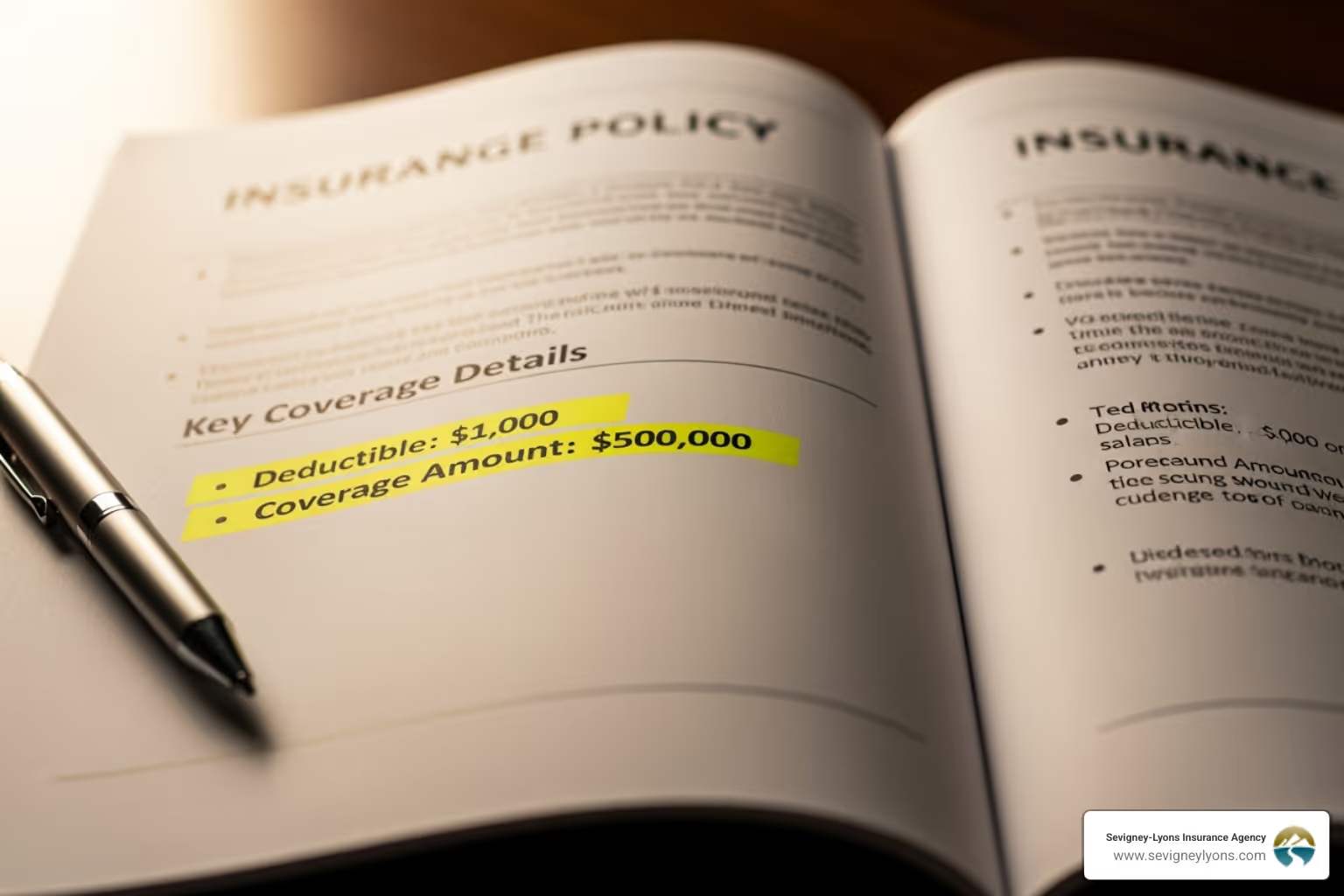
Your Commercial Auto Insurance Maine policy is a protection plan designed for your business, composed of different coverages working together to protect your fleet and operations.
Understanding your policy is straightforward. It outlines mandatory coverages required by Maine law and optional protections for extra peace of mind. The key is knowing the difference between what you must have and what you should have. While Maine's minimums provide a foundation, most businesses need additional coverage for better protection. For a detailed breakdown, see our Commercial Auto Insurance Cover Maine guide.
Maine's Minimum Insurance Requirements
Maine requires specific minimum coverages to ensure everyone on the road, from Biddeford to Wells, has basic protection in an accident.
The foundation of a Commercial Auto Insurance Maine policy is liability coverage. Bodily injury liability pays for medical bills, lost wages, and pain and suffering when your business vehicle injures someone. Property damage liability covers damage your vehicle causes to someone else's property, like a car or building.
Maine uses a "split limit" system, written as 50/100/25. This means up to $50,000 for each person injured, $100,000 total for all injuries in one accident, and $25,000 for property damage per accident. These are legal minimums, but many businesses need higher limits to protect their assets.
Maine law also requires three other coverages. Uninsured motorist coverage protects you if an uninsured driver hits your vehicle. Underinsured motorist coverage applies when an at-fault driver has insufficient insurance. Finally, medical payments coverage pays for medical or funeral expenses for you, your employees, and passengers, regardless of fault.
For complete details on state regulations, you can check Maine car insurance laws and regulations or review our Maine Car Insurance Laws 2025 guide.
Essential Optional Coverages to Consider
Maine's minimums often leave gaps that can be costly. Smart business owners add optional coverages for a more complete safety net.
Collision coverage repairs or replaces your business vehicle after a collision, regardless of who is at fault. It's essential for getting your vehicle back on the road quickly.
Comprehensive coverage protects against non-collision damage. In Maine, this includes theft, vandalism, fire, falling branches, weather damage, and animal collisions (like deer or moose).
Hired and non-owned auto liability is one of the most important optional coverages. It protects your business when employees use rental cars or their personal vehicles for company business. Without it, your business could face serious liability if an employee causes an accident while running a work errand.
Gap coverage can be a financial lifesaver for leased or financed vehicles. If your vehicle is totaled, insurance pays its actual cash value, which may be less than your loan balance. Gap coverage pays this difference.
Towing and labor coverage handles the cost of towing and roadside repairs like tire changes or battery jumps. For businesses operating across Southern Maine, it can prevent a minor inconvenience from becoming a major disruption.
Coverage for attached equipment protects valuable equipment permanently attached to your vehicle, like a food truck's grill or a contractor's crane, which standard auto policies may not fully cover.
Choosing the right combination of these coverages creates a policy that fits your business. To explore all your options, visit our Business Insurance Coverage Maine page.
Key Differences: Commercial vs. Personal Auto Insurance
As a Maine business owner, you might assume your personal auto policy covers work-related driving, like visiting a client in Wells or getting supplies in Kennebunk. This common assumption can lead to devastating financial consequences.
The reality is that personal auto policies almost universally exclude business use. Even a simple client meeting can void your coverage, leaving a dangerous gap that could cost your business everything.
The key difference is risk exposure and liability limits. Business vehicles are on the road more, carry heavier loads, and operate in busy areas like Biddeford and Ogunquit. This increased activity leads to higher risks and potentially larger claims.
Commercial Auto Insurance Maine offers higher liability limits and specialized coverages for these risks. For instance, if a contractor's employee has an accident, the resulting lawsuit could far exceed personal policy limits. Crucially, commercial policies list your business as the named insured, not you personally. This protects your business assets and ensures claims are handled as a commercial matter.
The higher cost reflects greater risk. Commercial policies account for more road time, valuable equipment, and multiple drivers. While the premium is higher, the protection is designed for the real risks your Maine business faces—something a personal policy is not.
Factors That Influence Your Maine Commercial Auto Insurance Cost
The price of Commercial Auto Insurance Maine is unique to your business, shaped by several factors that insurers evaluate. Understanding these factors helps you make better decisions.
Vehicle type and weight are major cost factors. A heavy-duty truck in Kennebunk costs more to insure than a sedan in Wells because larger vehicles can cause more damage. An insurer considers the Gross Vehicle Weight (GVW) and any permanently attached equipment, like on an Ogunquit food truck.
Your employees' driving records are critical. Clean records mean lower premiums, as safe drivers are less likely to file claims. A history of violations or accidents will increase your rates. Many businesses use driver training and regular record checks to manage this.
Your garaging location impacts cost. A business in a busy urban center will likely pay more than one in quieter Wells or Biddeford due to higher traffic and accident rates.
Your travel radius indicates risk. Local operations, like a plumber in the Wells-Kennebunk area, usually cost less to insure than businesses that travel long distances or cross state lines. More miles mean more chances for an accident.
Claims history is highly influential. Insurers review your "loss runs" (past claims reports). A clean history demonstrates good risk management and leads to better rates, while frequent claims suggest higher future risk. Claim-free years can improve your rates over time.
Your type of business affects your risk profile. A delivery service is inherently riskier than an accounting firm whose employees occasionally visit clients. Industries like contracting or towing typically pay more than office-based businesses with less vehicle use.
Finally, your coverage limits and deductibles directly impact your premium. Higher liability limits cost more but offer better protection. A higher deductible lowers your premium but increases your out-of-pocket cost in a claim. It's a balance between protection and budget.
Understanding these factors helps you work with your agent to find the right balance of protection and affordability. For more insights, check our guide on Maine Business Liability Insurance Cost.
Frequently Asked Questions about Commercial Auto Insurance in Maine
Navigating insurance can feel overwhelming. To help, we've answered the most common questions we hear from business owners about Commercial Auto Insurance Maine.
What information is needed to get a commercial auto insurance quote in Maine?
To get an accurate Commercial Auto Insurance Maine quote, it helps to have the right information ready:
- Driver Information: Full names, dates of birth, and driver's license numbers for all drivers.
- Vehicle Information: Year, make, model, and Vehicle Identification Number (VIN) for each vehicle.
- Garaging Location: The primary address where your vehicles are stored overnight. Rates differ between locations like downtown Biddeford and rural Wells.
- Business Operations: A clear description of how you use your vehicles (e.g., contractor in Kennebunk, delivery service in Ogunquit) helps us tailor your coverage.
- Travel Radius: Whether your vehicles stay local or travel long distances/across state lines.
- Coverage Needs & History: Your desired coverage limits and any prior insurance history, including "loss run" reports from previous policies.
What are common exclusions in a commercial auto policy?
While comprehensive, Commercial Auto Insurance Maine has standard exclusions. It's important to know what isn't covered:
- Intentional Damage: Deliberate acts of harm or destruction are not covered.
- Racing or Demolition: Damage from organized racing or demolition events is excluded.
- Wear and Tear: Standard maintenance like brake replacement, tire wear, and rust are not covered.
- Undisclosed Use: If you use a vehicle for a riskier purpose than you disclosed (e.g., heavy towing instead of light landscaping), a related claim may be denied.
- Contractual Liability: Liability you assume through a contract may not be covered by your auto policy.
For more detailed information, you can View Maine State Police Commercial Vehicle FAQs.
Do I need commercial auto insurance if I use my personal car for work?
The answer is almost always yes. Using a personal vehicle for business without the right coverage is extremely risky.
Your personal auto policy excludes business use. It is designed for personal activities, so using your car for a client meeting in Wells or deliveries in Biddeford can lead to a denied claim.
Activities like rideshare driving, food delivery, or transporting clients for your business all require commercial coverage. Your personal policy won't apply, and any company-provided insurance may be limited.
The best solution is Hired & Non-Owned Auto Liability coverage. This can be added to your business insurance policy to create a safety net when you or your employees use personal vehicles for work, protecting both your business and personal assets.
Don't assume your personal policy covers business use. Proper Commercial Auto Insurance Maine provides essential peace of mind and financial protection.
Secure Your Business with the Right Coverage
Running a business in Maine involves unique driving challenges, from icy Portland roads to summer traffic on Route 1 in Wells and Kennebunk. Commercial Auto Insurance Maine isn't just an expense—it's a financial lifeline when the unexpected happens.
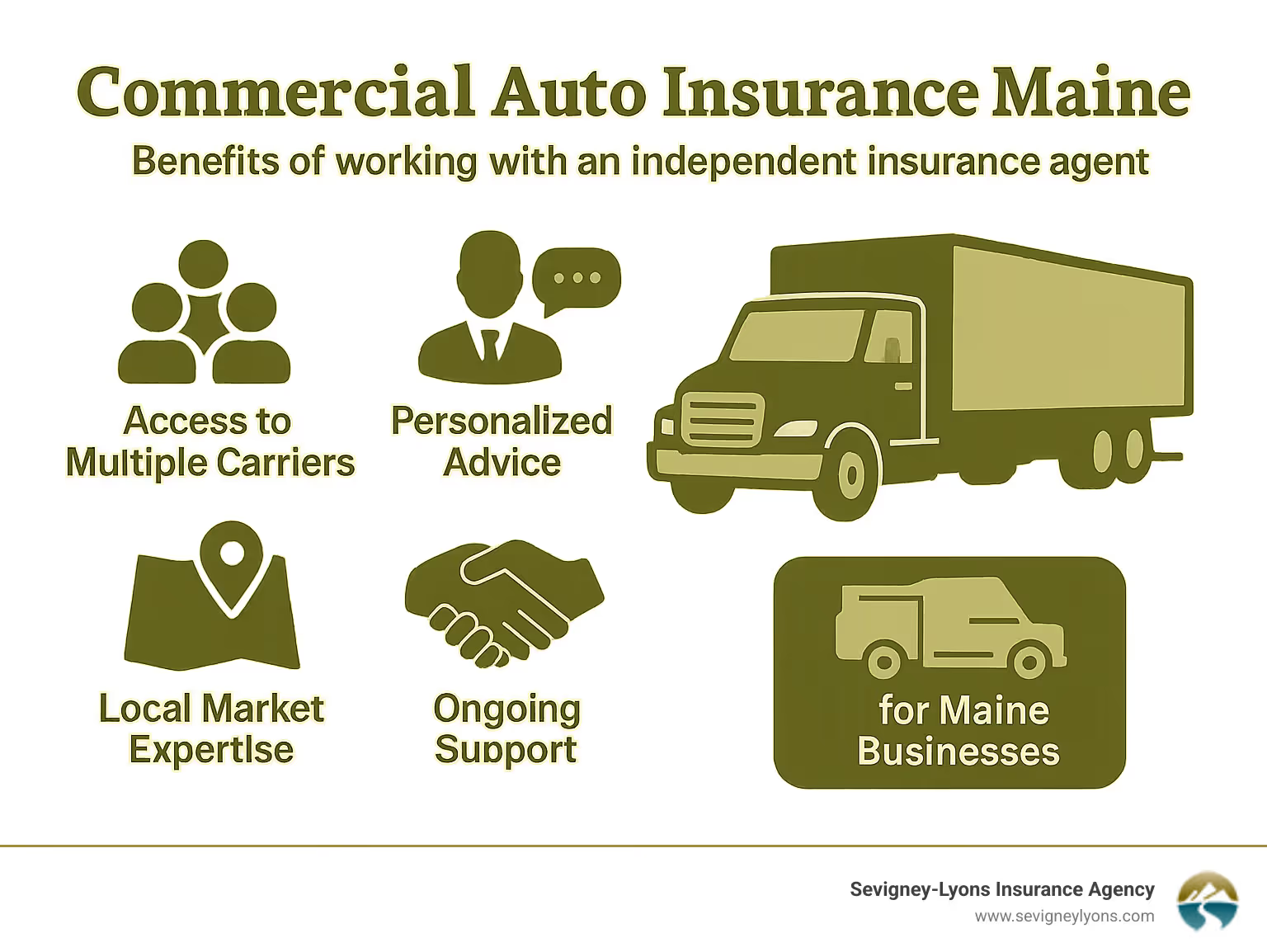
Every Maine business is unique, from a contractor in Biddeford to a caterer serving Ogunquit. Your insurance needs are just as specific, which is why one-size-fits-all policies often fall short.
Working with an independent insurance agency makes all the difference. At Sevigney-Lyons, we shop the market for you, comparing options to find the perfect fit for your specific situation. We're not tied to one company's products—we're committed to finding you the best coverage at the best price.
Our deep roots in Southern Maine give us unique insights into the local business landscape. We know a Wells landscaping business has different risks than a Biddeford food truck. We use this local knowledge to craft custom solutions that protect your business.
As your insurance advocates, we'll help you steer Maine's requirements, understand your coverage options, and build a policy that provides the right protection without unnecessary costs.
Maine's roads are full of surprises, but your insurance shouldn't be one of them. With the right Commercial Auto Insurance Maine policy, you can focus on growing your business, not worrying about what might happen on the next delivery run.
Ready to protect your business with coverage that actually fits? Request your free Commercial Auto Insurance Maine quote today. Let's work together to keep your Maine business moving forward.