Blog Content
Introduction: Your Guide to Protecting Your Maine Home
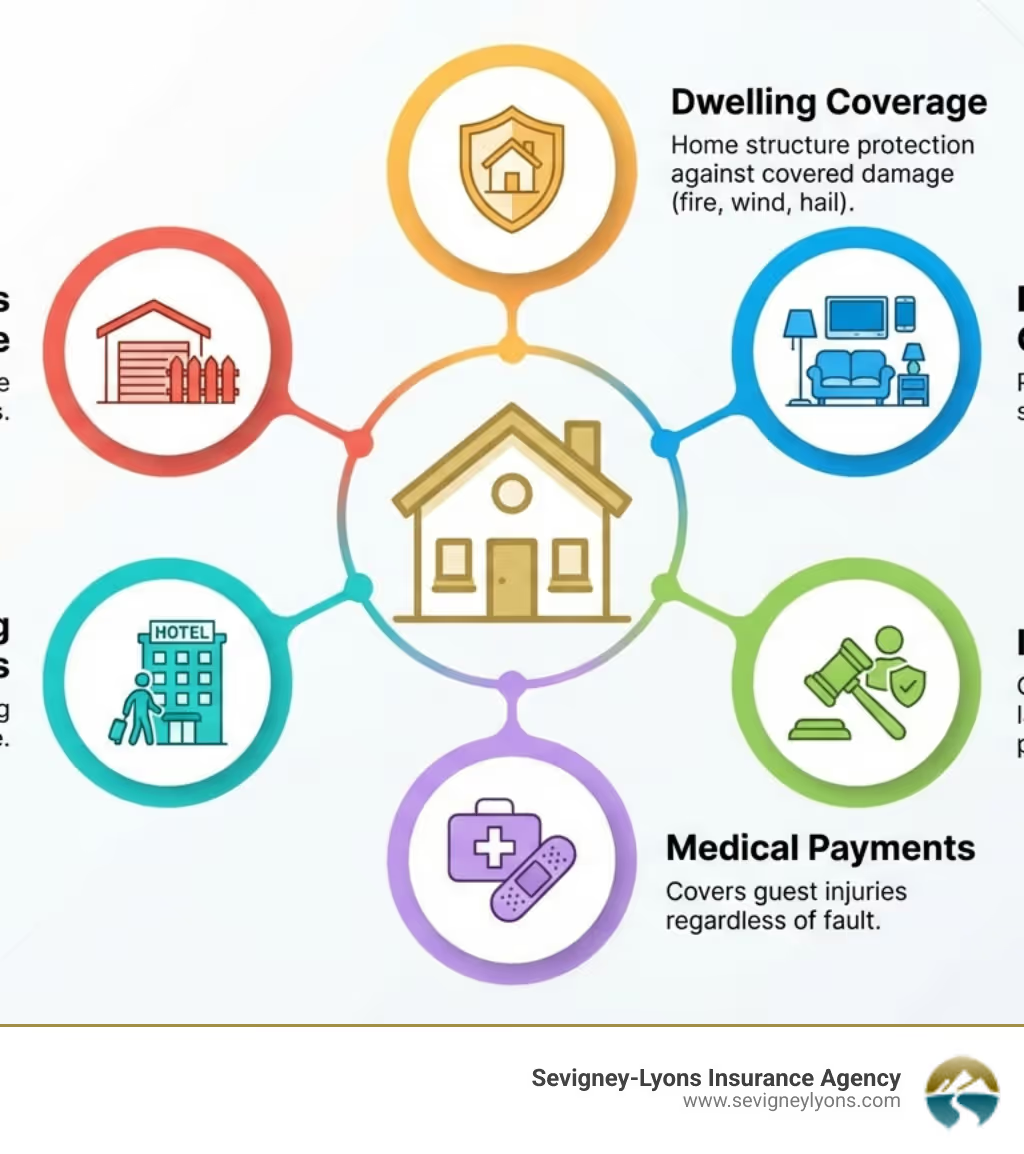
Homeownersinsurance provides financial protection for your home and belongings against damage, theft, and liability claims. Here's a quick overview of what a standard policy includes:
Quick Answer: What Homeowners Insurance Covers
- Dwelling Coverage - Repairs or rebuilds your home's structure after covered damage (fire, wind, hail)
- Personal Property - Replaces your belongings if stolen or destroyed
- Liability Protection - Covers legal costs if someone is injured on your property
- Additional Living Expenses - Pays for temporary housing if your home becomes unlivable
- Medical Payments - Covers guest injuries regardless of fault
For Maine homeowners, your home is your largest financial investment. Whether you own a cottage in Wells, a historic property in Kennebunk, or a family home in Biddeford, protecting that asset is essential. Most mortgage lenders require homeowners insurance, but even if you own your home outright, it provides crucial peace of mind against unexpected disasters.
However, policies can be filled with confusing jargon. Many homeowners don't understand their coverage until they file a claim—when it's too late to make changes. This guide breaks down homeowners insurance in simple terms, explaining what's covered, how premiums are calculated, and how to get the right protection for your Maine home without overpaying. With Maine's unique risks from coastal storms and harsh winters, understanding your options is more important than ever.
Homeownersinsurance word guide:
Deconstructing Your Policy: What's Inside?
Your homeownersinsurance policy is a detailed agreement outlining your coverage. The first page to know is the declarations page—your policy's summary. It lists your name, property address, policy number, coverage dates, and a breakdown of your coverages, limits, deductibles, and premium.
Policies cover damage based on either named perils (only listed dangers like fire or theft) or open perils (everything except what's specifically excluded). Most standard policies use a hybrid approach: open perils for your dwelling and named perils for personal belongings. For a deeper dive, see our guide on Maine Home Insurance Explained.
Dwelling & Other Structures Coverage
This is the core of your policy, protecting the physical structure of your house—from the foundation to the roof, plus attached structures like a garage or deck. Other Structures coverage protects things not attached to your house, like a shed, detached garage, or fence. This is typically set at 10% of your dwelling coverage. For example, if your home is insured for $300,000, you'd have $30,000 for other structures. You can increase this amount if you have a large barn or workshop. For more details, check out Maine Home Insurance Coverage Limits.
Personal Property Coverage
This coverage replaces your belongings—furniture, electronics, clothing, etc.—if they are damaged or stolen. It's usually set at 50% to 70% of your dwelling coverage. A key choice is between Actual Cash Value (ACV), which pays what your items are worth today (including depreciation), and Replacement Cost Value (RCV), which pays to buy new items of similar quality. RCV costs more but provides far better protection. Standard policies have low limits for valuables like jewelry, art, and firearms (often $1,000-$2,000). If you own such items, you'll need to schedule them separately. To simplify claims, create a home inventory. This list of your possessions will be invaluable if you need to file a claim.
Liability & Medical Payments Coverage
Personal liability coverage is your financial shield if you're sued because someone was injured on your property or you accidentally damaged their property. It covers legal defense costs and damages you're required to pay. A guest slipping on your icy steps in Wells or a baseball breaking a neighbor's window are common examples. Standard policies often start at $100,000, but we recommend at least $300,000 to $500,000. Medical payments coverage is for minor injuries to guests on your property, regardless of fault. It's designed to cover small medical bills (typically starting at $1,000) quickly and without lawsuits, keeping things friendly.
Additional Living Expenses (ALE)
If a covered event, like a fire or severe storm damage, makes your home uninhabitable, Additional Living Expenses (ALE) coverage is a lifesaver. Also called Loss of Use, it pays for the increased costs of living elsewhere during repairs. This includes hotel bills, temporary rent, restaurant meals, and other expenses needed to maintain your normal standard of living. Coverage is usually limited to a percentage of your dwelling coverage (often 20%) and for a set time, like 24 months. This peace of mind is priceless, especially for a Maine family displaced during a long winter.
Common Gaps in Coverage and How to Fill Them
Even a great homeownersinsurance policy has gaps. It's designed for sudden, accidental disasters, not every problem a home can face. Understanding these exclusions is crucial for Maine homeowners, but the good news is you can often fill these gaps with endorsements or separate policies.

Standard Exclusions to Be Aware Of
Your policy is not a maintenance plan. Common exclusions include:
- Normal wear and tear: An aging roof or old water heater are considered maintenance, not an insurable loss.
- Pest and rodent damage: Damage from termites, mice, or carpenter ants is typically not covered.
- Mold: Coverage is often limited or excluded, especially if it results from poor maintenance or ongoing moisture issues.
- Intentional damage: You can't intentionally damage your property and expect a payout.
- Business operations: A standard policy won't cover business-related liability or equipment. You need a separate business policy.
Regular preventive maintenance is the best way to avoid issues that insurance won't cover.
Critical Endorsements for Maine Homeowners
Maine's environment presents unique risks that require extra coverage.
- Flood damage: Standard homeowners insurance does not cover flooding. This includes water from storm surges, overflowing rivers, or ground seepage. For coastal towns like Ogunquit and Kennebunk, flood insurance is essential. Most policies are available through the National Flood Insurance Program (NFIP). Learn more with our guide to Maine Flood Insurance Near Me.
- Water and sewer backup: If water backs up through your drains or sump pump, a standard policy won't cover the damage. This endorsement is inexpensive and highly recommended for Maine homes with basements, given our heavy rains and spring snowmelt.
- Scheduled personal property: Standard policies have low limits on valuables. To insure items like jewelry, fine art, or antiques for their full appraised value, you need to "schedule" them with this endorsement. It provides broader protection for your most precious possessions.
- Earthquake coverage: While not a high-risk area, Maine does experience small tremors. If you own an older historic home, this endorsement can protect against damage that standard policies exclude.
How the Cost of Homeownersinsurance is Calculated
Ever wonder why your homeownersinsurance premium is different from your neighbor's? Insurers calculate premiums based on a complex assessment of risk. The more likely your home is to have a claim, the higher your premium will be. It's not personal—it's math based on a collective risk pool. For a look at typical costs, see How Much Is Maine Homeowners Insurance.
Key Factors That Influence Your Premium
Many factors determine your rate, including:
- Location: A coastal home in Ogunquit faces higher risks from wind and storm surge than a home further inland in Biddeford.
- Proximity to a fire station: Being closer to a fire department and hydrants can lower your premium.
- Age and construction: Older homes may have outdated systems, increasing risk. Newer homes built to modern codes often get discounts. Brick homes are typically cheaper to insure than frame homes.
- Replacement cost: The cost to rebuild your home is a primary driver of your premium. With construction costs up 55% from 2020-2022, coverage needs have increased, pushing premiums higher.
- Claims history: A history of frequent claims will increase your rates.
- Deductible: A higher deductible (the amount you pay out-of-pocket on a claim) will lower your annual premium.
- Roof age and condition: An old roof is a major red flag for insurers. A new roof can earn you a significant discount.
Smart Ways to Save on Your homeownersinsurance
Here are proven ways to lower your premium without sacrificing protection:
- Bundling your policies: Combining your home and auto insurance with one carrier can save you up to 20%.
- Install safety devices: Monitored burglar alarms, smoke detectors, and water leak sensors can qualify you for discounts.
- Ask about credits: New homes, a new roof, or updated electrical and plumbing systems can all lead to lower rates.
- Increase your deductible: Moving from a $1,000 to a $2,500 deductible can save you hundreds annually. Just be sure you can afford the higher out-of-pocket cost.
- Maintain good credit: In Maine, a strong credit score often translates to lower insurance premiums.
- Stay loyal: Many insurers offer loyalty discounts for long-term customers.
- Work with an independent agent: We can shop over 20 carriers to find you the best combination of coverage and price.
Your Homeowners Insurance Questions, Answered

Navigating homeownersinsurance can be confusing. Here are answers to common questions we hear from homeowners in Wells, Kennebunk, and beyond.
Why is insurance required by lenders?
If you have a mortgage, your home is the collateral for the loan. Lenders require homeownersinsurance to protect their investment. If a fire or storm destroys the house, the insurance provides funds to rebuild it. This is different from mortgage insurance (PMI), which protects the lender if you default on your loan. Many homeowners pay their insurance through an escrow account managed by their lender, which simplifies payments and ensures the policy doesn't lapse.
Homeowners vs. Condo vs. Renters Insurance
These policies protect you differently based on what you own:
- Homeowners insurance (HO-3) is for those who own a house. It covers the entire structure, your personal belongings, and liability.
- Condo insurance (HO-6) is for condo owners. Your association's master policy covers the building exterior and common areas. Your HO-6 policy covers everything from the walls in: your unit's interior (cabinets, flooring), personal belongings, and liability. If you own a condo in Ogunquit, know where the master policy ends and yours begins. Learn more about Comprehensive Condo Building Insurance Maine.
- Renters insurance (HO-4) is for tenants. It protects your personal belongings and provides liability coverage. Your landlord's insurance only covers the building itself, not your possessions.
What is the '80% Rule' for homeownersinsurance?
The 80% rule states that you must insure your home for at least 80% of its full replacement cost (the cost to rebuild it today, not its market value). If your coverage drops below this threshold, your insurer can impose a coinsurance penalty on claims. This means they would only pay a percentage of a partial loss, leaving you to cover the rest. For example, if your home's replacement cost is $400,000, you need at least $320,000 in coverage. With construction costs rising, it's critical to review your dwelling coverage annually to ensure you're not underinsured.
How do I file a claim?
Dealing with home damage is stressful. Follow these steps to make the claims process smoother:
- Prevent further damage: If it's safe, take temporary measures like shutting off the water or tarping a damaged roof. Keep receipts for these expenses.
- Document everything: Take extensive photos and videos of the damage before cleaning up.
- Contact us immediately: As your agent, we'll help you start the claim and explain what to expect. If theft occurred, file a police report.
- List damaged items: Create an inventory of damaged belongings with as much detail as possible (brand, age, value).
- Work with the adjuster: An insurance adjuster will assess the damage. We can be present during the inspection to advocate for you.
- Review the settlement: We'll help you review the settlement offer to ensure it's fair and accurate based on your policy.
- Complete repairs: Once you agree on a settlement, you can begin permanent repairs.
Conclusion: Partner with a Local Expert for Your Maine Home
You now have a clearer understanding of homeownersinsurance—from the core coverages that protect your structure and belongings to the endorsements that fill critical gaps for Maine homeowners. We've covered how premiums are calculated, how to save money, and what to do when you need to file a claim.
What matters most is that homeownersinsurance isn't one-size-fits-all. A beachfront property in Wells faces different risks than a historic home in Kennebunk. Navigating these nuances requires local knowledge. At Sevigney-Lyons Insurance Agency, we've spent decades helping our neighbors in Southern Maine protect what matters most.
As an independent agency with access to over 20 top carriers, we don't just quote policies—we have real conversations to find coverage that fits your life. You don't have to make these important decisions alone. Let our local expertise and personal service work for you.
Ready to ensure your Maine home is properly protected? Contact us today to get the best homeowners insurance coverage in Maine.