Blog Content
The Real Financial Risk You're Taking When You Drive Off the Lot
Is gap insurance worth it? For many Maine drivers who finance a new or newer used car with less than 20% down and a long loan term, the answer is yes. Gap insurance can protect you from owing thousands after a total loss for a small annual fee—far less than the $500-$700 dealerships often charge.
Quick Answer: When Gap Insurance Makes Sense
Imagine your car is totaled. Your insurance company pays its current value, say $27,000, but you still owe $32,000 on your loan. After your deductible, you could face a $5,500 bill for a car you can't even drive. This is the "gap" that gap insurance covers.
Guaranteed Asset Protection (GAP) insurance is a supplemental coverage that pays the difference between your car's current value (what your standard policy pays) and what you still owe on your loan or lease after a total loss.
This matters in Maine because new cars can lose 20-30% of their value in the first year. The moment you drive off a lot in Biddeford or Kennebunk, your car is worth less than your loan balance. For drivers in Southern Maine, understanding this coverage is key to avoiding a financial nightmare.

What is Maine Gap Insurance and How Does It Work?
Let's break down how gap insurance can save you thousands. When you finance or lease a car in Maine, it starts losing value the moment you drive off the lot—often 20-30% in the first year alone. The problem is your loan balance doesn't drop nearly as fast. The difference between what you owe and what your car is worth is the "gap."
Imagine your car is totaled in an accident between Kennebunk and Wells. Your standard auto insurance, even with "full coverage" (collision and comprehensive), pays the Actual Cash Value (ACV) of your car. That's its current market value, not what you paid. If your car's ACV is $28,000 but you still owe $32,000, you're on the hook for the remaining $4,000.
Without gap insurance, you pay that difference.
This is where Guaranteed Asset Protection (GAP) insurance becomes your financial safety net. It's a supplemental coverage that pays the difference between your car's ACV and your outstanding loan or lease balance. It pays the lender directly, clearing your debt. Think of it this way: full coverage protects your car; gap insurance protects your wallet.
Want to see how this works with your current policy? Take a look at your Maine Comprehensive Car Insurance Rates to understand what your standard coverage pays.

How Gap Insurance Differs from Full Coverage
A common misconception is that "full coverage" means you're protected from everything. "Full coverage" is just industry shorthand for having both collision and comprehensive coverage.
- Collision coverage handles damage from accidents.
- Comprehensive coverage handles theft, vandalism, fire, or hitting a deer.
Both pay out based on your car's Actual Cash Value (ACV). They repair or replace your car up to its depreciated value, but they won't cover a loan shortfall. That's the specific job of gap insurance. For a deeper look, check out our Full Coverage Auto Insurance Guide.
Gap Insurance for Leased vs. Financed Vehicles
Whether you finance or lease, gap insurance is often a smart move.
For financed vehicles, it protects you from paying out-of-pocket for a car you can no longer drive. This is especially important for Maine drivers with small down payments or long loan terms.
For leased vehicles, gap insurance is usually required. When you lease, you're always behind the depreciation curve. If your leased car is totaled, you're on the hook for all remaining payments without gap coverage. The good news is many lease agreements in Southern Maine automatically include it. Check your paperwork before buying it separately. Because of this risk, gap insurance is a wise financial decision for any lease.
The bottom line? If there's a gap between what you owe and what your car is worth, the answer to is gap insurance worth it is almost always yes.
The Financial Equation: Is Gap Insurance Worth It for Your Situation?
Whether gap insurance is worth it depends on your personal financial situation and car loan. The key factor is vehicle depreciation. Your car loses value the moment you drive it home, while your loan balance decreases much more slowly.

New cars can lose 20-30% of their value in the first year alone. A $35,000 vehicle bought in Kennebunk could be worth just $25,000 a year later, while you might still owe $30,000—creating a $5,000 gap. Some vehicles, like luxury cars and certain EVs, depreciate even faster. For Maine drivers, our harsh winters can also accelerate wear and tear, impacting your car's value.
When is Gap Insurance Worth It? A Checklist for Maine Drivers
Is gap insurance worth it for you? It's a strong "yes" if you:
- Put down less than 20% on your vehicle.
- Have a loan term of 60 months or longer.
- Rolled negative equity from a previous car into your new loan.
- Drive a high-depreciation vehicle (e.g., luxury cars, some EVs).
- Are a high-mileage driver, commuting daily from Ogunquit or Wells.
- Are leasing a vehicle (it's often required anyway).
For more guidance on comprehensive protection, check out our article on Do I Need Full Coverage Auto Insurance.
When is Gap Insurance NOT Worth It?
You can likely skip this coverage if you:
- Made a down payment of 20% or more.
- Have positive equity (your car is worth more than you owe).
- Have a short loan term (e.g., 36 months or less).
- Own your car outright or have paid off the loan.
- Have a large emergency fund and are comfortable self-insuring the risk.
- Drive an older, low-value car where the potential gap is minimal.
The key is to be honest about your financial situation. For most Maine drivers financing a newer vehicle, gap insurance offers valuable protection for a small cost.
The Cost vs. The Risk: A Maine Driver's Guide
Without gap insurance, a total loss can be financially devastating. If your car is totaled and you owe more than it's worth, that difference comes out of your pocket. For many Maine families, an unexpected bill for thousands of dollars can wipe out savings or lead to new debt.
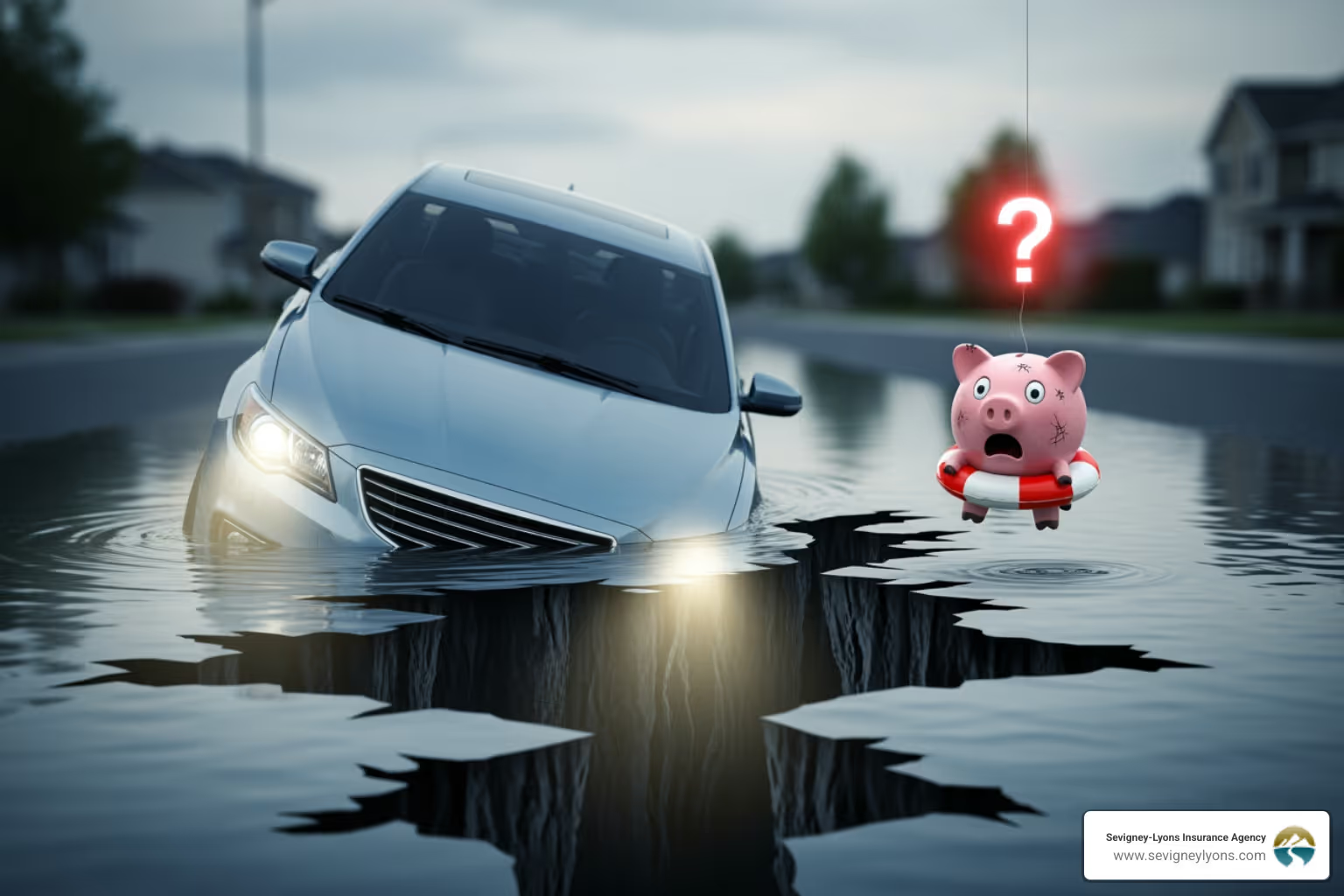
Worse, if you can't pay off the remaining loan, your lender may pursue collections, which can seriously damage your credit score for years. The small cost of gap insurance protects you from these significant risks.
How Much Does Gap Insurance Cost?
The cost of gap insurance varies wildly depending on where you buy it. Understanding the difference can save you hundreds.
Adding gap coverage through your auto insurer is the most affordable route, typically costing $20 to $60 per year. In contrast, dealerships often charge a $500 to $700 flat fee that gets rolled into your loan, meaning you pay interest on it. Our advice is to start with your insurance agent. At Sevigney-Lyons, we can find affordable gap coverage that fits your budget. For more tips, explore Cheap Full Coverage Maine Auto Insurance options.
Are There Alternatives to Gap Insurance?
While gap insurance is the most common solution, there are a couple of alternatives:
- New car replacement coverage: This pays to replace your totaled vehicle with a brand-new one of the same make and model. It's usually only available for cars in their first year or two and is more expensive, but it ensures you get back into a new car.
- Loan/lease payoff coverage: This is similar to gap insurance but often has a cap, typically paying only up to 25% of your vehicle's ACV toward the gap. It's better than nothing but may not cover the entire shortfall if you're significantly underwater.
For most, traditional gap insurance offers the best peace of mind that your entire loan will be paid off. An independent agent can help you compare these options across multiple carriers to find what truly fits your needs.
Frequently Asked Questions about Gap Insurance
We hear a lot of questions about gap insurance from drivers across Southern Maine—from Wells to Biddeford and everywhere in between. Let's tackle some of the most common ones we get at Sevigney-Lyons Insurance Agency.
Can I get Maine gap insurance for a used car?
Absolutely, and it can be just as valuable as it is for new cars! While gap insurance is often associated with brand-new vehicles because of their rapid initial depreciation, the real question of is gap insurance worth it for a used car comes down to your specific financing situation.
Here's the thing: if you're financing a used car and there's a gap between what you owe and what the car is actually worth, gap insurance makes sense. This scenario is surprisingly common, especially with newer used models. Maybe you bought a three-year-old sedan in Kennebunk with a small down payment and a 72-month loan. Or perhaps you rolled negative equity from your previous car into this loan. In either case, if your car gets totaled, you could easily owe thousands more than your insurance company will pay out.
The key is whether a gap exists between your loan balance and the car's value. If it does, gap insurance protects you from being stuck paying for a car you can no longer drive.
How long do I need gap insurance?
You only need gap insurance until your loan balance drops below your car's Actual Cash Value (ACV). Once you reach this point—what we call having "positive equity"—the gap has closed, and the coverage is no longer necessary.
For most drivers, this typically happens around the two-year mark, but it really varies. Your down payment size, loan term length, and how quickly your specific vehicle depreciates all play a role. A truck might hold its value better than a luxury sedan, for instance.
We recommend checking your car's current market value against your loan balance every six months or so. You can use online valuation tools to get a realistic estimate of what your car is worth today. Once you confirm you have positive equity, you can typically cancel your gap coverage and save those premium dollars. Just make sure to check with your insurer about any specific cancellation requirements or potential refunds for unused coverage.
Can I add gap insurance to my policy later?
Many insurance companies will let you add gap insurance after you've already purchased your vehicle, but there are usually some strings attached. Most insurers have time limits—you might need to add it within 12 months of buying the car, for example. Some may require that the vehicle be relatively new and that you're the original owner.
The rules vary from one insurer to another, so it's worth asking your current insurance provider about their specific requirements. That said, the easiest and most straightforward time to add gap coverage is right when you first buy or lease your vehicle. At that point, you're already setting up or adjusting your auto insurance policy anyway, and there are typically fewer hoops to jump through.
If you're in Southern Maine and wondering whether gap insurance makes sense for your situation—or if you want to add it to an existing policy—give us a call at Sevigney-Lyons Insurance Agency. We can walk you through your options and help you find the right coverage for your needs and budget.
Your Final Verdict and Next Steps
After exploring the ins and outs of gap insurance—from how it works to what it costs—let's bring it all together. Is gap insurance worth it for you? For most drivers in Southern Maine who are financing or leasing a vehicle, especially with less than 20% down, a loan term of 60 months or longer, or a vehicle that depreciates quickly, the answer is a clear yes. For just $20-$60 per year through your insurer, you're protecting yourself from potentially owing thousands of dollars on a car you can no longer drive. That's not just smart financial planning—it's peace of mind.
On the flip side, if you've put down 20% or more, you're close to paying off your loan, or you own your car outright, gap insurance probably isn't necessary. The same goes if you have substantial savings set aside that could cover any potential shortfall. The real question isn't whether gap insurance is "good" or "bad"—it's whether it makes sense for your specific situation.
Here's what matters most: assessing your personal financial situation honestly. Look at your loan balance, check your car's current market value, and think about what would happen if your car were totaled tomorrow. Could you afford to pay the difference? Would it drain your emergency fund or force you into debt? These are the questions that will guide your decision.
For drivers throughout Southern Maine—whether you're commuting from Wells to Portland or running errands around Kennebunk and Ogunquit—understanding your auto insurance policy isn't just about checking boxes. It's about making sure you're truly protected when life throws you a curveball.
At Sevigney-Lyons Insurance Agency, we've spent decades helping Maine families and businesses steer these exact decisions. We're not just insurance agents—we're your neighbors, and we understand the unique challenges of driving in Maine. From icy winter roads to summer tourist traffic in Biddeford, we know what risks you face, and we're here to help you find the right coverage at the right price.
To protect your investment and make sure you have the coverage you actually need, it's crucial to find the best auto insurance coverage in Maine. We're here to walk you through it, answer your questions, and build a policy that fits your life—not someone else's.
Contact us today for a personalized consultation. Let's make sure you're covered for whatever Maine roads throw your way.