
Blog Content
Understanding Maine Janitorial Bonds and How They Work
Maine janitorial bonds are a legally required form of financial protection for cleaning businesses operating in the state — and understanding them is essential before you open your doors.
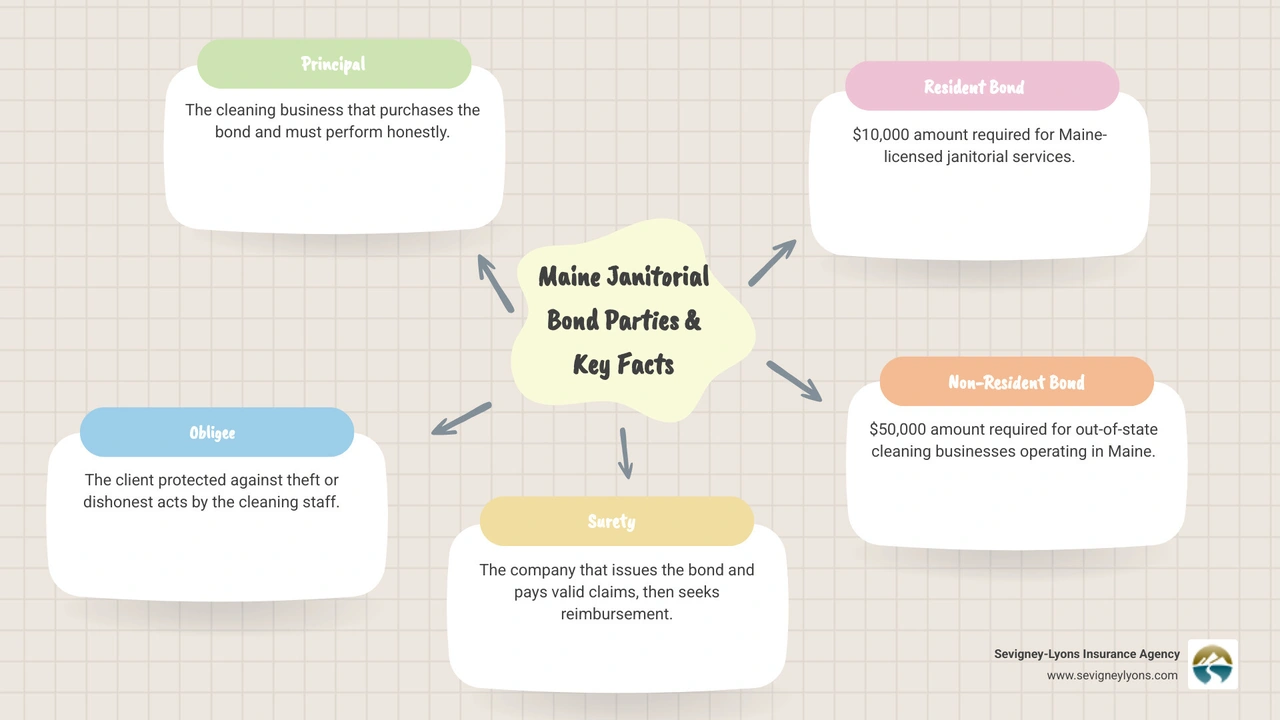
Here's what you need to know at a glance:
Running a cleaning business in Maine — whether you're serving vacation rentals in Ogunquit, commercial offices in Biddeford, or private homes in Wells or Kennebunk — means your employees regularly work inside clients' private spaces. That access creates real exposure.
If something goes missing, your client needs to know they're protected. That's exactly what a janitorial bond does.
It's a three-party agreement between you (the principal), your client (the obligee), and a surety company. The surety guarantees your honest conduct. If a valid claim is made against you, the surety pays — and you repay the surety.
This is different from liability insurance, which protects your business. A janitorial bond protects your client.
The Process for Obtaining Maine Janitorial Bonds
Getting your business bonded in Maine is a straightforward process, but it does require some preparation. Because these bonds are essentially a line of credit extended to your business by a surety company, they want to make sure you are a reliable "bet."
The first step is the application. You’ll provide basic business details, including your registration info and the number of employees you have. The surety company will then perform a credit assessment. For many smaller Maine janitorial bonds, this is a "soft" check that doesn't impact your score, and some providers even offer instant approval for lower bond amounts.
Once approved, you’ll receive a quote for the premium. After you pay this annual fee, the bond is issued. You’ll then sign the document and file it with the appropriate state or municipal office to maintain your licensing compliance.
Why Maine Janitorial Bonds Build Client Trust
In the competitive Southern Maine cleaning market, a bond is more than just a legal hurdle; it is a powerful marketing tool. When you bid on a commercial contract in Biddeford or a high-end vacation rental turnover in Ogunquit, being "Licensed, Bonded, and Insured" is often the bare minimum requirement to even get an interview.
Clients are inviting strangers into their most private or valuable spaces. A bond signals that you have been vetted by a financial institution and that you are willing to put your own money on the line to guarantee your team’s integrity. This level of professionalism provides a significant competitive advantage over unbonded "trunk-slappers" who might offer lower rates but zero financial security.
Legal Requirements and Bond Amounts Under Title 32 §9409
In Maine, the law doesn't just suggest you get a bond; for many, it demands it. Under Title 32, §9409: Bonding requirement, the state sets very specific financial thresholds that cleaning businesses must meet to operate legally.
The statute is designed to protect the public from misconduct. It requires that the bond be "conditioned upon the honest conduct" of the licensee. This means if an employee is caught stealing from a client, the bond provides a pool of money from which the client can be reimbursed.
Residency Definitions for Maine Cleaning Businesses
The amount of the bond you are required to hold depends heavily on your residency status. Maine law distinguishes between those who live and work here year-round and those who come from out-of-state to provide services.
- Resident Licensees: If you are a Maine resident or your business is primarily based here (for example, in Wells or Kennebunk), you are typically required to carry a $10,000 bond.
- Non-Resident Licensees: If your business is headquartered out-of-state but you are performing janitorial work within Maine borders, the requirement jumps significantly to a $50,000 bond.
This higher threshold for non-residents ensures that the state has sufficient financial recourse if an out-of-state entity commits a violation and then leaves the jurisdiction. For more context on how this fits into the broader picture of Maine business rules, see our Small Business Insurance Maine Guide.
The Cost and Coverage of a Janitorial Service Bond in Maine
One of the most common questions we hear at Sevigney-Lyons is, "How much is this going to cost me?" The good news is that for most small businesses in Southern Maine, Maine janitorial bonds are quite affordable.
Most businesses with clean records and decent credit will find themselves at the lower end of that percentage range (1% to 3%). In fact, many cleaning services with five or fewer employees can secure their bond for under $300 per year. You can stay updated on cost trends in our Maine Business Insurance Essential 2025 guide.
What the Bond Protects Against
It is vital to understand that a janitorial bond is a "fidelity" bond. It specifically covers employee dishonesty. This includes:
- Theft of a client's money or securities.
- Theft of a client's personal property (jewelry, electronics, etc.).
- Fraudulent acts committed by your staff while on the client's premises.
Does it cover the business owner? Usually, no. Most standard janitorial bonds are designed to protect the client from the employees. However, some policies allow for "Owner Coverage" riders if you are a sole proprietor. It also typically does not cover accidental breakage—that’s what your general liability insurance is for.
Factors Affecting Your Annual Premium
Several variables influence where you fall on the 1% to 15% premium scale. In markets like Kennebunk or Portland, surety companies look at:
- Creditworthiness: Your personal and business credit scores are the biggest factors.
- Number of Employees: More staff members mean more "points of risk" for the surety.
- Claims History: If you’ve had "sticky-fingered" employees in the past, your rates will go up.
- Team Size and Experience: Established businesses often get better rates than startups.
It's also worth noting that payroll-related bonds have their own set of rules under Title 10, §1495-E: Surety bonding, which is separate from standard janitorial fidelity bonds but important if you handle client funds.
Comparing Bonds, Liability Insurance, and Business Licenses
Many new entrepreneurs in Southern Maine use the terms "bonded," "insured," and "licensed" interchangeably, but they serve three very different purposes. To be fully protected, you usually need all three. You can explore the full range of options on our Business Insurance Coverage Maine page.
Janitorial Bonds vs. General Liability Insurance
Think of it this way: Insurance is for accidents; Bonds are for crimes.
If your cleaner accidentally knocks over an expensive Ming vase while dusting a home in Kennebunkport, your General Liability Insurance pays for the damage. If your cleaner intentionally puts that vase in their backpack and walks out the door, your Janitorial Bond covers the loss.
Insurance protects you from financial ruin due to accidents. The bond protects your client from financial loss due to your team's dishonesty. For contractors, this is a critical distinction explained further in our guide to Artisan Contractors Insurance Coverage.
Licensing Requirements for Maine Cleaning Services
A business license is your "permission slip" from the government to operate. While Maine doesn't have a single "janitorial license" that applies to every small maid service, many municipalities have their own codes. For example, operating in Biddeford might require a different local permit than operating in Portland. Often, proving you have the required Maine janitorial bonds is a prerequisite for receiving these local licenses.
Frequently Asked Questions about Maine Janitorial Bonds
Is a janitorial bond legally required for all Maine cleaning businesses?
Technically, it depends on the type of work you do and who your clients are. If you fall under the licensing requirements of Title 32 §9409, it is mandatory. Even if it isn't strictly required by the state for your specific niche, most commercial clients and high-end residential clients in Southern Maine will refuse to hire you without one. It is a "de facto" requirement for any serious business.
Does the bond cover independent contractors or volunteers?
Standard bonds typically cover W-2 employees. If you use independent contractors (1099 workers) or volunteers, they are often excluded from coverage unless you specifically add a rider to the bond. In the "gig economy" era, this is a common trap for cleaning services. Always check your bond language to ensure your entire team is covered.
What happens if a claim is filed against my bond?
If a client alleges theft, the surety company will conduct an investigation. If they find the claim is valid, they will pay the client up to the bond's limit. However, unlike insurance, you are required to indemnify the surety. This means you must pay the surety company back every penny they paid out, plus legal fees. A claim on your bond is a serious matter that can make it nearly impossible to get bonded again in the future.
Conclusion
Navigating Maine janitorial bonds doesn't have to be a headache. Whether you are just starting your cleaning business in Wells or you are looking to expand your commercial reach into Portland and Biddeford, having the right bond is the foundation of a trustworthy brand.
At Sevigney-Lyons Insurance Agency, we understand the Southern Maine business landscape because we live here. With offices in Wells, Ogunquit, Kennebunk, and beyond, we have deep community roots and decades of experience helping neighbors protect what they’ve built. We can help you navigate the requirements of Title 32 §9409 and find a bond that fits your team size and budget.
Ready to secure your business and start winning more clients? Buy Maine Business Insurance or contact us today to get a quote tailored to your local Maine business. We're here to make sure your business shines as brightly as the floors you clean.