Blog Content
Why Safe Driver Discounts Matter for Maine Drivers
Safe driver discount programs can reduce your auto insurance premiums by 5% to 40%, making them one of the most valuable ways to lower your costs. Whether you maintain a clean driving record or participate in a telematics program that tracks your habits, these discounts reward responsible behavior behind the wheel.
Here's what you need to know about safe driver discounts:
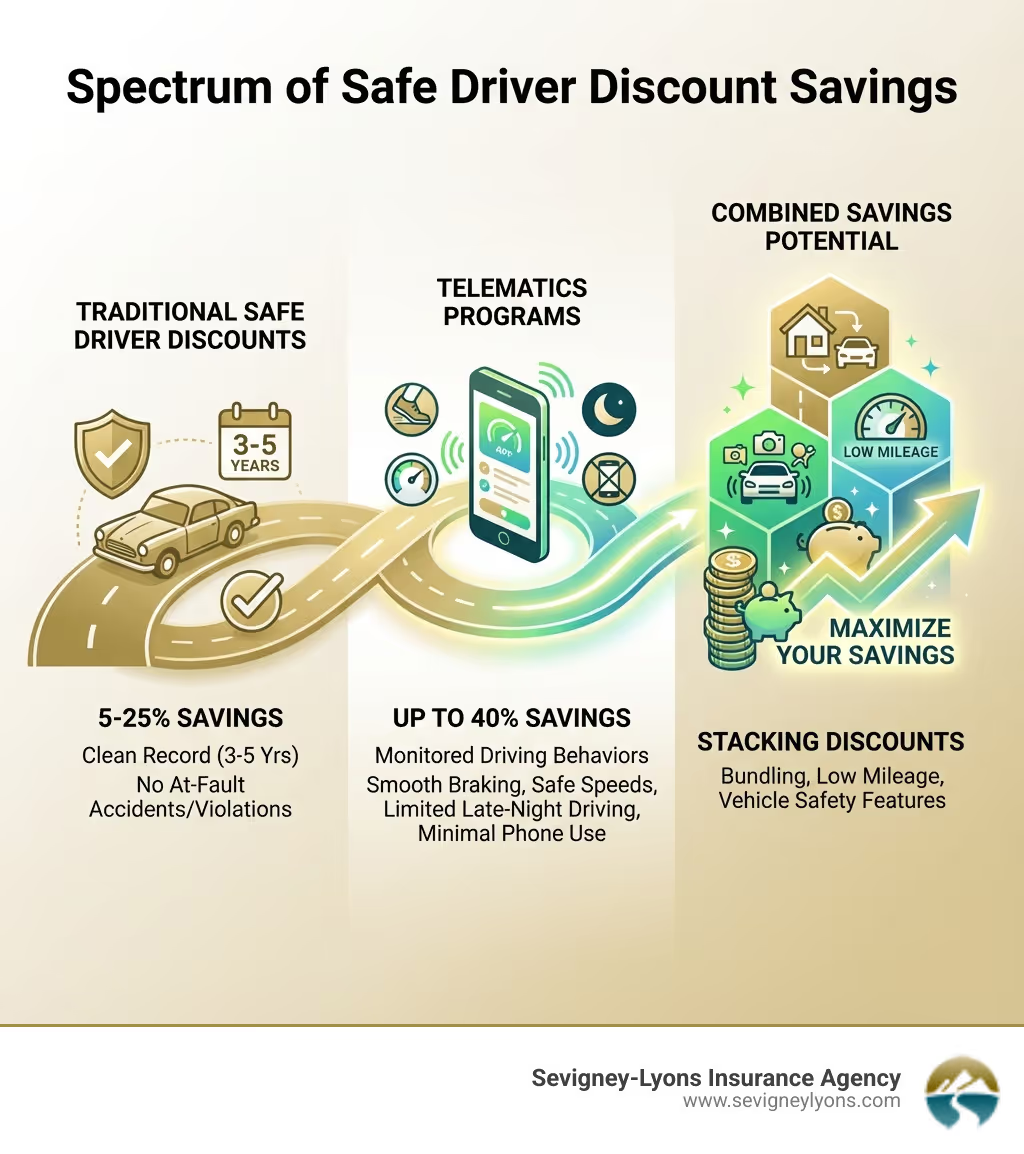
- Traditional safe driver discounts require 3-5 years without at-fault accidents or major violations (typically 5-25% savings)
- Telematics programs use smartphone apps or devices to monitor your driving habits (up to 40% savings possible)
- Eligibility varies by carrier - some apply discounts automatically, others require enrollment
- Maine drivers can combine safe driver discounts with other savings like bundling, low mileage, and defensive driving courses
The average driver can save anywhere from $150 to $500 per year by maintaining a clean record and demonstrating safe driving habits. For families with multiple vehicles in Wells, Kennebunk, or other Southern Maine communities, these savings multiply quickly.
But here's what many drivers don't realize: "safe driver" discounts aren't one-size-fits-all. Some insurance companies offer traditional discounts based solely on your driving record, while others use modern telematics technology to track how you drive in real-time. Each approach has different requirements, benefits, and potential drawbacks.
In this guide, we'll walk you through exactly how to qualify for safe driver discounts in Maine, what telematics programs really track (and what they don't tell you), and how to stack multiple discounts to maximize your savings. Whether you're driving Route 1 through Ogunquit or commuting to Biddeford, these strategies can help you keep more money in your pocket.
What is a Safe Driver Discount and How Do You Qualify?
A safe driver discount, often called a "good driver discount," is a reward from your auto insurance company for maintaining a clean driving record over a specified period. It's their way of saying, "Hey, thanks for not causing any headaches (or claims)!" Insurance carriers base their rates on the likelihood of you filing a claim, and a clean record signals that you're a lower risk. This means you're less likely to be involved in an accident, which translates to fewer payouts for them, and lower premiums for you. It's a win-win, really!
This discount typically comes in a few flavors:
- Accident-free discount: You haven't been involved in an at-fault accident for a certain number of years.
- Violation-free discount: You haven't received any speeding tickets or other moving violations.
- Combined safe driver discount: This is the most common, combining both accident-free and violation-free criteria.
To learn what might disqualify you, see our guide on auto insurance for ME high risk drivers.
Eligibility for a Traditional Safe Driver Discount
So, what does it take to join the "clean record club" and snag that sweet safe driver discount? While the exact requirements can vary slightly between insurance companies, here's what they generally look for:
- A clean driving record: This is the golden ticket. For most insurers, this means having no at-fault accidents, no major comprehensive claims, and no points on your driver's license from moving violations (like speeding, reckless driving, or DUI/DWI).
- A specific timeframe: You'll typically need to maintain this pristine record for a continuous period, often three to five years. Some companies might even offer increasing discounts the longer you keep your record spotless!
- No major violations: Serious infractions like DUIs (Driving Under the Influence) or DWIs (Driving While Intoxicated) are usually immediate disqualifiers, and they can stay on your record affecting your rates for many years.
- Points on your license: Accumulating points from minor moving violations (like a forgotten turn signal or a rolling stop) can also make you ineligible.
- State regulations: That insurance rules and definitions can vary by state. In Maine, our local regulations will dictate some aspects of what constitutes a "good driver" for discount purposes. For the latest on specific requirements, it's always a good idea to check Maine Car Insurance Laws 2025.
Maintaining a clean driving record isn't just about saving money; it's about being a responsible member of our Southern Maine community. Every time you drive safely through Wells, Kennebunk, or Biddeford, you're contributing to safer roads for everyone.
How Much Can You Save with a Safe Driver Discount?
Let's talk numbers! The most exciting part of being a safe driver is seeing those savings reflected in your wallet. While the exact amount can vary based on your insurance company, your policy, and where you live in Maine, the potential is significant.
Generally, you can save anywhere from 5% to 25% on your auto insurance costs with a safe driver discount. Imagine what that could mean for your monthly budget! Some insurance companies are even more generous, with some offering discounts as high as 25% and others providing an average of $231 a year in savings. We’ve seen data suggesting that if your driving habits truly shine, your rate could drop by as much as 40%!
Our research shows that many national carriers offer impressive savings through these programs. Discounts can range widely, with some reaching up to 25% or 30%, and others citing a maximum discount as high as 40%. Some programs even offer a one-time activation discount just for enrolling, with the overall discount potentially increasing at renewal.
These discounts are usually applied at your policy renewal, reflecting your driving behavior over the previous policy term. Some programs, however, offer a smaller upfront discount just for enrolling, with the full potential realized after a monitoring period.
Telematics Programs: Trading Driving Data for Discounts
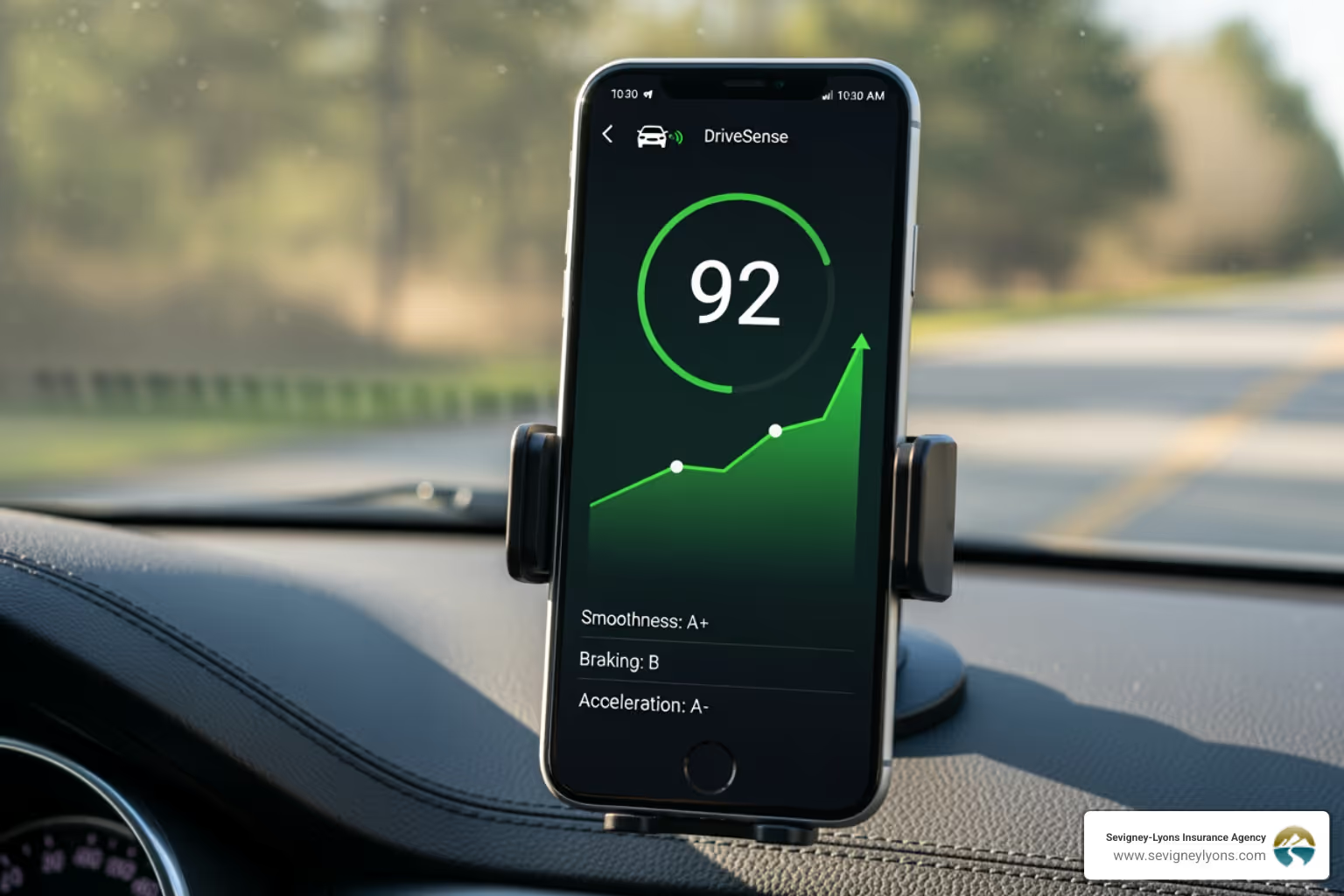
Beyond traditional discounts based on your driving history, many insurance companies now offer telematics programs (also known as Usage-Based Insurance or UBI). This is where things get a little high-tech! These programs use devices or smartphone apps to monitor how you drive in real-time, offering a personalized safe driver discount based on your actual habits. It's like having a driving coach that also saves you money.
While these programs can offer substantial savings, they also involve sharing your driving data. Hayley Tsukayama from the Electronic Frontier Foundation aptly notes, "It comes down to consent. Obviously, the insurance companies are incentivized to get people to sign up for these programs. So, [those agreements] are not always easy to decipher." We encourage you to be aware of the implications before signing up. For more on data privacy, see the Electronic Frontier Foundation's stance.
How Telematics Data is Collected and Used
So, how do these apps and devices know if you're a responsible motorist or a secret speed demon on the backroads of Kennebunk? They collect a surprising amount of data!
Common data points include:
- GPS data: This tracks your mileage, routes, and even the time of day you're driving. Driving less, especially during high-risk hours (like midnight to 4 a.m.), can boost your score.
- Acceleration and Hard Braking: Smooth acceleration and gentle braking indicate a calm, anticipatory driver. Sudden, harsh movements suggest aggressive driving.
- Cornering: How smoothly you take turns can also be monitored. Sharp turns often mean you're going too fast.
- Speed: While not always linked to specific speed limits, these programs can detect excessive speed or frequent rapid acceleration.
- Distracted Driving: Some apps use phone sensors to detect phone usage while the vehicle is in motion (e.g., if your screen is on and the phone is moving).
- Driving Score and Personalized Feedback: The collected data is crunched to generate a driving score, often presented with personalized feedback and tips to improve. This feedback can be incredibly useful for understanding and correcting habits you might not even realize you have.
The COVID-19 pandemic, with its unpredictable driving patterns, actually accelerated the adoption of telematics. Insurers needed a way to adjust rates based on actual behavior rather than broad assumptions, making these programs even more relevant.
Potential Risks and Downsides
While the allure of a significant safe driver discount is strong, it's crucial to understand the potential risks and downsides of telematics programs. We believe in transparency, and that means looking at both sides of the coin.
- Data Privacy and Sharing: This is often the biggest concern. These apps collect a lot of personal driving data. While many companies state they don't sell personally identifiable data to third parties, their privacy policies might allow for sharing with affiliates, for marketing purposes, or as required by law. For instance, some privacy notices indicate that customer data from telematics apps may be shared with companies performing marketing services or other financial institutions. Other privacy statements also note data sharing to "service your insurance policy, detect or prevent fraud, perform research, market our or our affiliates’ products and services to you or as required or permitted by law." It's essential to read the fine print!
- Potential for Rate Increases: This is a big one. While some companies have stated their premiums are not raised as a result of telematics data, other companies might increase your rates if the app rates you as an unsafe driver. Some reports even note that a percentage of drivers who enroll in these programs see their insurance premiums increase. So, while you could save up to 40%, you could also see your rates go up.
- Inaccurate Trip Recording: Apps aren't perfect. Sometimes, they might misinterpret driving situations, or even identify you as the driver when you were a passenger. According to J.D. Power, only 38% of customers who use safe-driving apps say the data collected is always accurate. While most programs allow corrections, the process can be time-consuming. Some insurers, for example, give users 10 days to update that they were a passenger.
- App Malfunctions: Technology can be finicky. Apps can glitch, drain your phone battery, or fail to record trips correctly.
- Passenger vs. Driver Detection: Although apps try to distinguish between a driver and a passenger (e.g., by how your phone moves when you enter the vehicle), errors can occur. Most programs offer a way to correct these, but it adds an extra step for you.
Before you jump into a telematics program, we recommend carefully reviewing the insurer's terms and conditions, especially their privacy policy. Weigh the potential savings against your comfort level with data sharing and the possibility of a rate increase. It's a personal decision, but an informed one is always best.
Beyond the Safe Driver Discount: More Ways to Save in Maine
While the safe driver discount is a fantastic way to lower your auto insurance premiums, it's far from the only one! We want to help our clients in Southern Maine stack up as many savings as possible. Think of it like building a delicious lobster roll—you don't just want the lobster; you want the buttered bun, a sprinkle of chives, maybe a side of slaw!

Many other discounts are available, and combining them can lead to substantial reductions in your overall costs.
Common Auto Insurance Discounts in Maine
Here’s a list of some popular auto insurance discounts you might qualify for, specifically custom for our Maine drivers:
- Bundling Discounts: This is one of the biggest money-savers! When you purchase multiple insurance policies (like auto and homeowners, renters, or even life insurance) from the same company, you often get a significant discount on each. If you own a home in Wells or a condo in Ogunquit, bundling your policies is a smart move.
- Defensive Driving Course Discount: Completing an approved defensive driving course can not only make you a safer driver but also earn you a discount. These courses teach valuable tactics to avoid accidents, which is always a good thing, especially when navigating our beautiful (but sometimes challenging!) Maine roads.
- Vehicle Safety Features Discount: Does your car have anti-lock brakes (ABS), airbags, daytime running lights, or an anti-theft system? Many insurers offer discounts for vehicles equipped with these safety and security features. A new car discount might also apply if you're the first owner of a current or previous year's model.
- Good Student Discount: If you have a high school or college student on your policy who maintains good grades (typically a B average or 3.0 GPA), they might qualify for this discount, saving anywhere from 5% to 25%. We love rewarding academic achievement! For more on youth savings, read about Maine auto insurance for young drivers.
- Driver Training Discount: For younger drivers (under 21), completing an approved driver education course can lead to savings.
- Student Away at School Discount: If your student is away at college more than 100 miles from home and doesn't take their car with them, you could get a discount on their portion of the policy.
- Low Mileage Discount: Do you work from home in Kennebunk or only use your car for short trips around Biddeford? Driving fewer miles means less risk, and some insurers offer discounts for low annual mileage (e.g., under 7,500 or 12,000 miles per year).
- Multi-Vehicle Discount: Insuring more than one car on the same policy with the same company often results in a discount, sometimes up to 25%.
- Loyalty Discount: Many insurers reward long-term customers. The longer you stay with them, the more you might save.
- Paid-in-Full Discount: If you pay your entire six-month or annual premium upfront, you could see a 5% to 10% discount.
- Electronic Billing and Autopay Discount: Opting for paperless billing and setting up automatic payments can also earn you a small discount, usually around 3% to 10%. Plus, it's easier and better for the environment!
- Homeowner Discount: Even if you don't bundle your home and auto policies with the same insurer, simply owning a home can sometimes qualify you for a discount on your auto insurance.
For the definitive list of what's available in our state, see the official state list of Auto Insurance Discounts | PFR Insurance - Maine.gov. We at Sevigney-Lyons are always happy to help you steer these options.
Frequently Asked Questions About Maine Auto Insurance Discounts
We hear a lot of questions about how to save on auto insurance, and that's great! It shows you're being proactive about managing your costs. Here are some of the most common questions we get from our clients in Southern Maine regarding safe driver discounts and other savings opportunities.
How do I find out if I qualify for a safe driver discount?
The best way to determine if you qualify for a safe driver discount with your current insurer is straightforward:
- Review your policy documents: Sometimes, these discounts are automatically applied if you meet the criteria. Your policy declaration page or renewal notice might list them.
- Check your insurer's website: Most insurance companies have a dedicated section on their website detailing available discounts and their eligibility requirements.
- Contact your insurance agent: This is often the easiest and most effective method. Your agent can look up your specific policy, review your driving record, and tell you exactly which discounts you qualify for. They can also explain the differences between traditional and telematics-based discounts offered by your carrier. We're here to help you every step of the way!
- Inquire about your driving record: If you're unsure about the status of your driving record (e.g., how long it's been since your last ticket or accident), your agent can often provide insight or guide you on how to check with the Maine Bureau of Motor Vehicles.
Don't be shy! Asking a few questions can lead to significant savings.
Can a bad score from a telematics app increase my premium?
This is a critical question, and the answer is: it depends on the insurance carrier.
- Some companies guarantee no rate increases: For example, some insurers have explicitly stated that your premiums will not be raised as a direct result of data collected through their telematics programs. For these insurers, the program can only help you save money or have no impact on your rate.
- Others may surcharge for risky driving: However, other carriers have indicated that a rate increase is possible if the app determines you are an unsafe driver. Some even note on their websites that rate increases are possible, with reports indicating that a portion of drivers who enroll see their premiums increase.
Therefore, it's absolutely essential to always read the program's terms and conditions before enrolling. Understand your specific insurer's policy on rate adjustments based on telematics data. If you're concerned about a potential increase, choosing a program that guarantees no negative impact might be a better fit for you.
What driving habits should I focus on to get the best discount?
Whether you're aiming for a traditional safe driver discount or participating in a telematics program, cultivating excellent driving habits is key. Here are some tips to help you shine on the roads of Maine:
- Avoid hard braking and sudden acceleration: Smooth driving is efficient driving. Abrupt stops and starts not only waste fuel but can flag you in telematics programs. Practice gentle acceleration and anticipate stops, especially on busy routes in Biddeford.
- Obey speed limits: This one seems obvious, but it's crucial. Telematics programs often monitor your speed, and excessive speeding will negatively impact your score. Plus, it's safer for everyone!
- Minimize late-night driving (midnight to 4 a.m.): Many insurers consider these hours higher risk due to fatigue and decreased visibility. If possible, limit your driving during this timeframe.
- Avoid phone use while driving: Distracted driving is a major hazard and is increasingly detected by telematics apps. Keep your eyes on the road, not on your phone, especially when navigating the scenic (and sometimes winding) roads around Ogunquit and Wells.
- Practice defensive driving: Always be aware of your surroundings, anticipate other drivers' actions, and maintain a safe following distance. This proactive approach helps prevent accidents and reflects positively on your driving record.
By consistently practicing these habits, you'll not only contribute to safer roads in Southern Maine but also significantly increase your chances of earning and maximizing your auto insurance discounts.
Start Saving Today with a Personalized Insurance Review
We've covered a lot of ground today, from the ins and outs of the safe driver discount to the complexities of telematics programs and the wide array of other savings opportunities available. The takeaway is clear: being a responsible driver and proactively seeking out discounts can lead to substantial savings on your auto insurance premiums.
Maintaining a clean driving record is the cornerstone of many discounts, but exploring all available options is where the real magic happens. Don't leave money on the table!
As a local independent agency, Sevigney-Lyons Insurance Agency is deeply rooted in the Southern Maine community. We work with over 20 top carriers, which means we can shop around to find the best coverage and the most discounts custom specifically for you, whether you're in Wells, Kennebunk, Ogunquit, Biddeford, or anywhere else in our beautiful state. We understand the unique driving conditions and insurance needs of Maine residents.
Ready to see how much you could save? Don't hesitate to reach out. Get a free Maine insurance coverage quote today, and let us help you drive down your costs while keeping you safely covered. We're committed to you, our neighbors, and our community.