Blog Content
When a Remodel Starts, Your Standard Policy May Stop Protecting You
Builders risk for renovations is a specialized insurance policy that protects a property — and the materials, labor, and costs tied to it — while remodeling work is underway. It fills a critical gap that standard homeowners or commercial property policies often leave wide open.
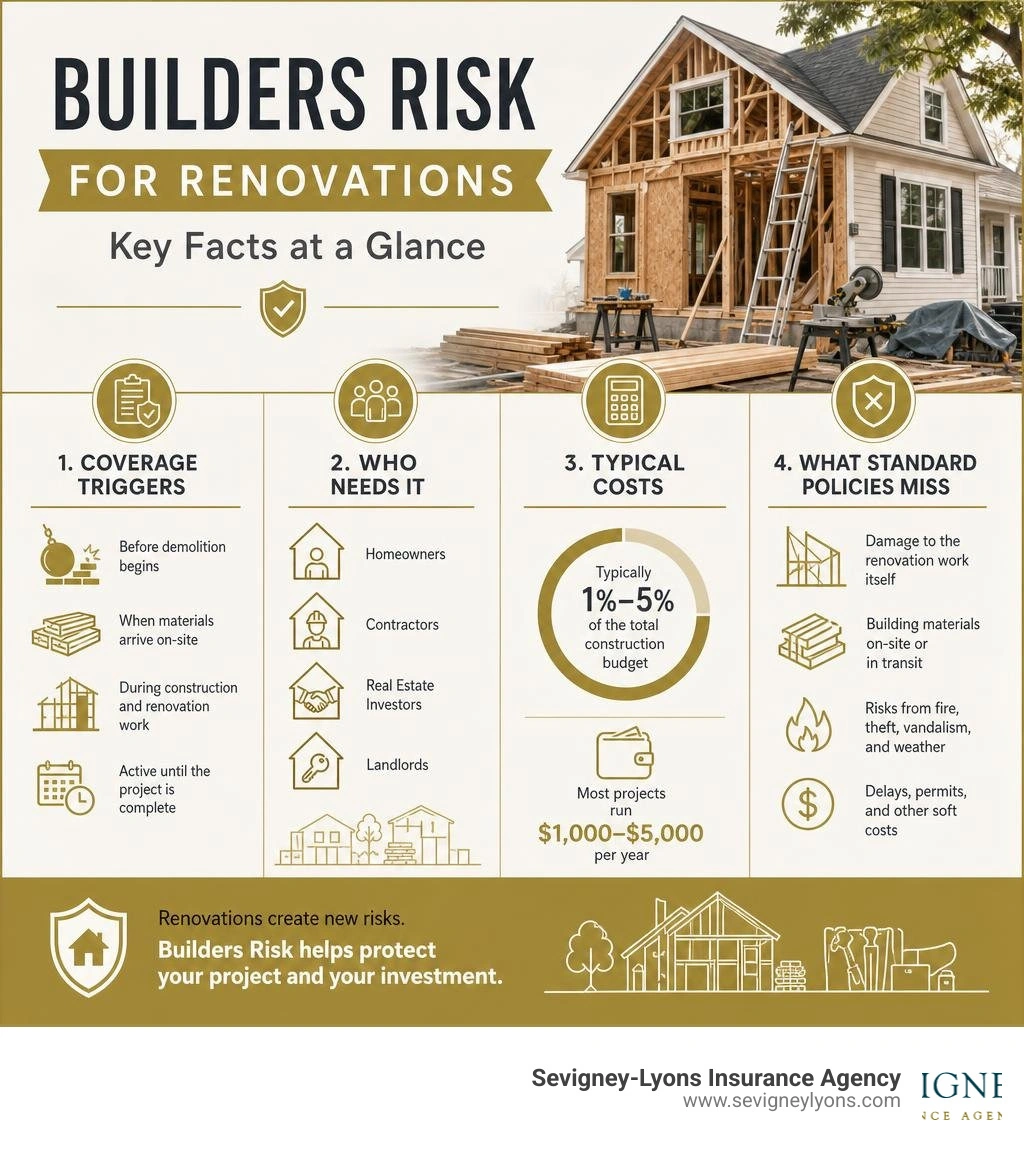
Quick answer — here's what you need to know:
- What it covers: The renovation work itself, building materials on-site or in transit, temporary structures, and sometimes soft costs like permits and loan interest
- Who needs it: Homeowners, contractors, real estate investors, and landlords doing significant remodeling work
- When to get it: Before demolition begins or materials arrive on-site
- Why it matters: Standard homeowners policies often restrict or exclude coverage once major construction starts — especially if the home is vacant
- What it costs: Typically 1% to 5% of the total construction budget, with most projects running $1,000 to $5,000 per year
If you own property in Maine — whether a beach cottage near Wells, a commercial building in Biddeford, or a historic home in Kennebunk — a renovation project changes your risk profile dramatically. Open walls, stored materials, heavy foot traffic from trades, and potential vacancy all create exposures your regular policy wasn't designed to handle.
The problem most property owners don't realize until it's too late: the moment you start significant structural work, your existing coverage may quietly step back — or stop applying altogether.
This guide breaks down exactly how builders risk coverage works for renovations, what it covers, who should buy it, and what it costs — so you can protect your investment before the first wall comes down.
What is Builders Risk for Renovations and How Does It Work?
At its core, builders risk for renovations (also known as course of construction insurance) is a unique policy class underwritten as inland marine insurance. Why inland marine? Because it is designed to cover property that is highly mobile or in transition—such as building materials traveling in trucks to your job site or sitting in temporary storage.
If you are planning a project, you might assume your standard homeowners or landlord policy has your back. However, standard policies are designed for completed, occupied buildings. Once you introduce the chaos of a construction zone, standard policies reveal massive coverage gaps.
A builders risk policy steps in to protect the building under construction, the materials waiting to be installed, and even the labor costs incurred. It handles the high-exposure period between the day demolition starts and the day you move back in.
To keep your project moving forward smoothly, we often pair builders risk with comprehensive Builders Risk Insurance Maine policies to ensure absolute protection. Let's look at how standard homeowners insurance compares directly to a dedicated builders risk policy:
Why Standard Homeowners Policies Fall Short During a Remodel
Standard homeowners policies contain two major "gotchas" that trigger during renovations: the vacancy clause and the structural alteration exclusion.
First, let's talk about vacancy. If you have to move out of your home in Kennebunk or Ogunquit for three months while a crew guts your kitchen and bathrooms, your home is technically vacant. Most standard home policies state that if a property is left vacant or unoccupied for more than 30 or 60 consecutive days, coverage for vandalism, glass breakage, and water damage is automatically suspended.
Second, standard policies are built on the assumption that your home is structurally stable. The moment a contractor cuts into load-bearing walls or peels off the roof, the risk of a catastrophic collapse skyrockets. Standard policies often exclude losses arising directly from major construction activities. If a sudden coastal storm rips through Wells and pours water into your roofless home, a standard home policy will likely deny the claim, leaving you with a massive out-of-pocket bill.
Understanding the CP 11 13 Endorsement for Existing Structures
When structuring a policy for a renovation, one of the biggest questions is: What happens to the existing building?
If you already have a permanent property policy, you might want the builders risk policy to cover only the new construction work. To do this, underwriters use a specific industry tool called the CP 11 13-Builders Risk Renovations endorsement.
This endorsement modifies standard builders risk forms to exclude the value of the existing structure from the policy's coverage limit and premium calculations. This is highly beneficial if you have a separate, active property policy covering the existing shell and only want to pay builders risk premiums on the value of the new improvements.
However, you must be extremely careful. If you use the CP 11 13 endorsement to "go bare" on the existing structure, any damage to the old part of the building during construction will not be covered by the builders risk policy. We always recommend a detailed review of your permanent property policy to make sure it will actually cover the existing structure while construction is underway.
Eligible Projects and Coverage Scope for Remodeling
Whether you are updating a classic coastal home in Ogunquit or renovating a commercial storefront in Portland, builders risk policies are highly flexible. However, the exact policy structure depends entirely on the scope of your project.
Project Types Covered by Builders Risk for Renovations
We generally classify renovation projects into three categories to determine eligibility and underwriting requirements:
- Basic Remodels (Cosmetic): These projects involve no structural changes. Think of replacing kitchen cabinets, upgrading countertops, installing hardwood floors, or painting. These projects have the lowest risk profile and are easily eligible for standard coverage.
- Minor Structural Changes: These projects involve non-cosmetic alterations that do not compromise the core integrity of the building. Examples include replacing a roof, adding a small ground-floor porch, or relocating windows and doors.
- Major Structural Renovations: This is where things get complex. It includes moving load-bearing walls, adding a second story, completing foundation repairs, or installing stairways and elevators. If you are lifting a historic home in Biddeford to pour a new foundation, this is a major structural renovation.
For these major projects, underwriters will look closely at the experience of your general contractor. Generally, carriers require the lead builder to have at least two years of active general contracting experience before approving coverage for complex structural work.
What Does Builders Risk for Renovations Actually Cover?
A comprehensive builders risk policy covers far more than just the wood and drywall used to build your new rooms.
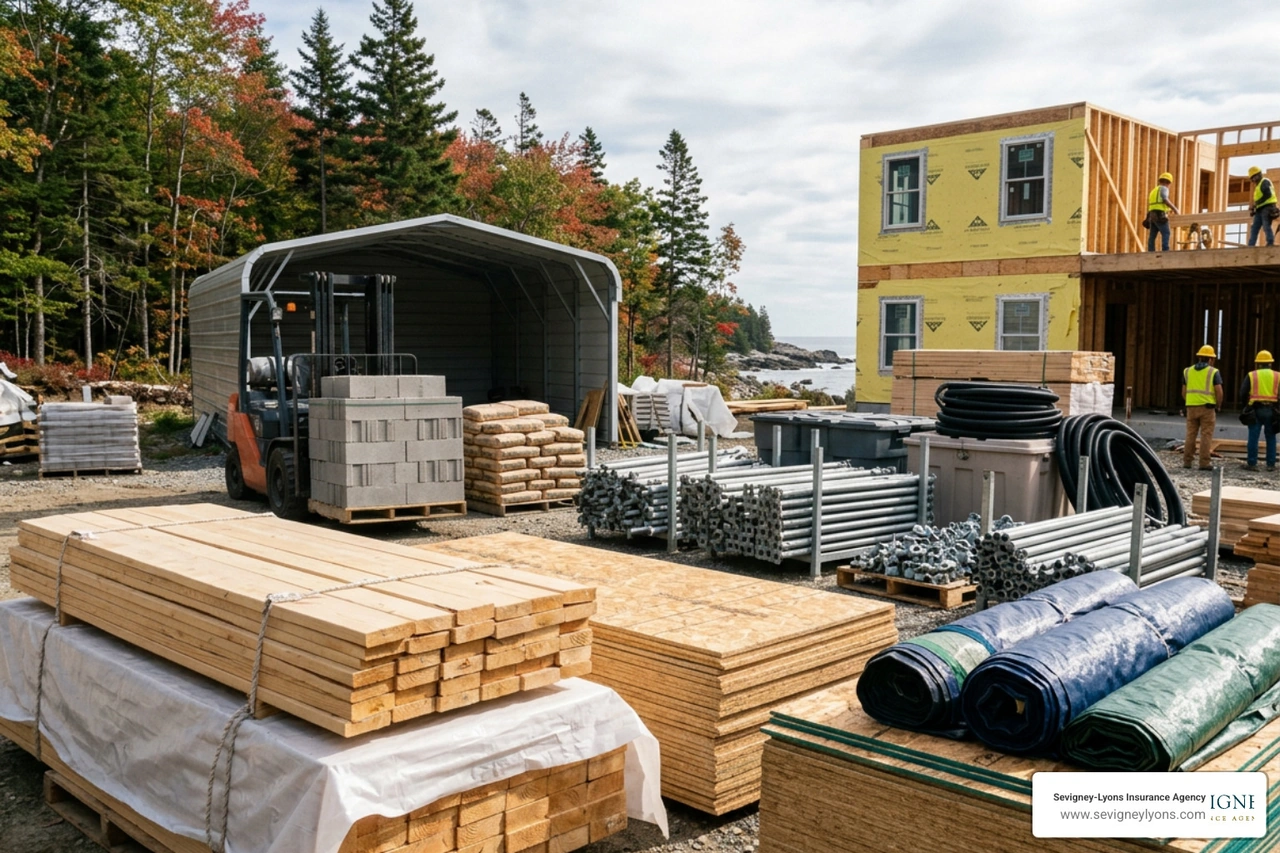
A standard policy covers:
- The Renovation Improvements: The actual labor and materials that make up the new portion of the build.
- The Existing Structure (Optional): If selected, the policy can cover the pre-existing building alongside the new work, ensuring there are no finger-pointing disputes between different insurance companies if a loss occurs.
- Building Materials in Transit and Off-Site Storage: If a shipment of high-end plumbing fixtures is stolen from a delivery truck on its way to Kennebunk, or damaged in a temporary warehouse in Portland, the policy covers the loss.
- Temporary Structures and Scaffolding: Construction forms, scaffolding, and temporary fencing on the job site are covered, provided they aren't already insured under a contractor's equipment policy.
- Soft Costs: This is a crucial endorsement. If a fire delays your renovation by four months, you will face unexpected costs. Soft costs coverage pays for additional loan interest, real estate taxes, architect fees, and municipal permit fees resulting from a covered delay. For commercial projects, this can also extend to cover lost rental income.
If you are managing a commercial remodel, you can read more about broad commercial property protections in our Commercial Property Insurance Guide.
Policy Terms, Costs, and Exclusions in Maine
Because renovations are temporary, builders risk policies are written on a short-term basis—typically for terms of 6, 9, or 12 months. For residential and small commercial projects, these single-structure policies can usually be renewed or extended for up to two additional years if winter weather or supply chain delays slow down your progress.
Typical Costs and Deductibles for Maine Projects
How much should you budget for builders risk for renovations?
As a general rule of thumb, builders risk insurance costs between 1% and 5% of the total construction budget. For example, if you are doing a $150,000 kitchen and living room remodel in Wells, your premium will likely range from $1,500 to $7,500 for a one-year policy, which breaks down to roughly $125 to $625 per month.
Key pricing factors include:
- The total completed value of the project
- The construction materials used (wood frame vs. masonry)
- The location of the project (coastal wind exposures in Ogunquit vs. protected city lots in Biddeford)
- The security measures on-site
In most states, including Maine, a standard deductible of $1,000 applies to these policies, and there is typically a minimum premium of $375 for "one-shot" single-project policies.
Common Exclusions and Limitations to Keep in Mind
While builders risk is often written on an "all-risk" basis, it is not a blank check for every mishap on the job site. There are several standard exclusions you must keep in mind:
- Faulty Workmanship and Design Defects: If your contractor frames a wall incorrectly and it sags, builders risk will not pay to fix their mistake. That is a professional liability issue. You can learn more about how contractors protect themselves against these risks in our guide to Business Insurance for Contractors.
- Employee Theft: If a subcontractor walks off the site with a box of expensive tools or copper piping, standard policies exclude this "inside job" theft.
- Flood and Earth Movement: Standard policies exclude damage from coastal flooding, sewer backups, and earthquakes. If your project is near the water in Wells or Ogunquit, you may need to purchase separate flood endorsements.
- Wear, Tear, and Rust: Gradual deterioration, mechanical breakdown, or rust on stored materials is not covered.
Determining Responsibility: Who Buys the Policy?
One of the most common points of confusion in any remodel is deciding who actually buys the builders risk policy: the property owner or the general contractor?
The short answer is: it depends on your contract.
Standard construction agreements, such as the industry-standard American Institute of Architects (AIA) contracts, typically state that the property owner is responsible for purchasing the builders risk policy. Why? Because the owner has the ultimate insurable interest in the property. If the house burns down mid-remodel, the owner is the one holding the deed and the mortgage.
However, some contracts shift this responsibility to the contractor. Regardless of who physically writes the check for the premium, the cost is almost always factored into the overall project bid.
Homeowner vs. Contractor Obligations
No matter who purchases the policy, it is vital to structure it correctly. The policy should list the property owner, the general contractor, and the lending bank (if the project is financed) as "named insureds" or "loss payees." This ensures that if a major loss occurs, the insurance payout is distributed fairly to cover the owner's property loss and the contractor's unpaid labor and materials.
We also highly recommend verifying your contractor's commercial general liability (CGL) and workers' compensation coverage before work begins. While builders risk covers physical damage to the structure, it does not cover bodily injuries to workers on-site. For a deeper look at contractor insurance structures in Maine, check out our guide on Best Maine Artisan Contractors Insurance.
Occupancy Rules and Transitioning to Permanent Coverage
One of the most critical rules of builders risk insurance involves occupancy.
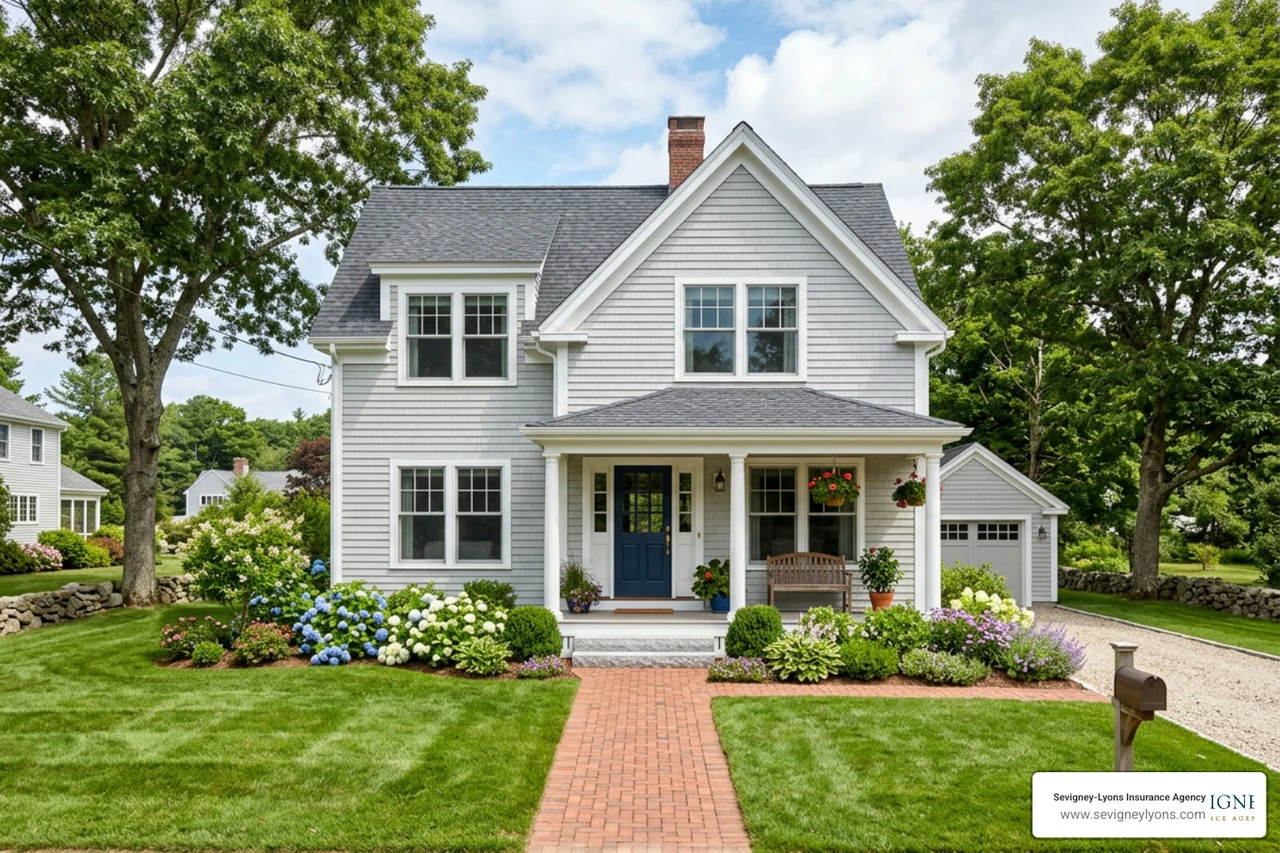
Builders risk policies are designed for unoccupied structures under construction. If you move back into your home in Kennebunk before the project is officially signed off, or if a landlord allows a tenant to occupy a newly renovated apartment in Portland, the builders risk policy may automatically terminate.
Generally, coverage ceases 60 to 90 days after the building is occupied or put to its intended use. Once your project is complete, you must immediately contact us to transition your coverage back to a standard homeowners policy or commercial property policy. This ensures continuous, seamless protection for your newly upgraded space.
Frequently Asked Questions about Builders Risk for Renovations
Is builders risk for renovations required by law in Maine?
No, builders risk insurance is not mandated by Maine state law. However, it is almost always required by lenders if your project is financed through a construction loan or an FHA 203(k) renovation loan. Additionally, local municipalities in Southern Maine may require proof of active builders risk coverage before issuing building permits for major commercial projects.
Can I get builders risk for renovations if the work has already started?
Yes, but it is much harder. Most insurance carriers have a "percent complete" threshold—usually around 30%. If your renovation is already half-finished and you suddenly realize you need coverage, standard carriers may decline the risk.
If they do approve it, underwriters will require detailed photo documentation of the existing progress, signed affidavits from the contractor, and a clear explanation of why coverage wasn't placed before groundbreaking. It is always best—and cheapest—to secure coverage before work begins.
How does the 20% rule affect coverage for the existing structure?
If you want your builders risk policy to cover both the new renovation work and the existing structure, most carriers apply the 20% rule. This rule states that the renovation construction limit must be at least 20% of the value of the existing structure.
For example, if your home in Kennebunk is valued at $500,000, your renovation budget must be at least $100,000 to qualify for a policy that packages both the old and new structures together under one limit. If your project is smaller, you will likely need to rely on your standard homeowners policy to cover the existing shell while using a smaller builders risk policy for the new work.
Protect Your Investment with Southern Maine's Insurance Experts
A renovation project is an exciting milestone, but it introduces unique risks that standard insurance policies simply aren't built to handle. From coastal wind risks in Ogunquit to historic preservation projects in Portland, the team at Sevigney-Lyons Insurance Agency has decades of local experience helping families and businesses secure their properties.
As an independent agency, we have access to over 20 of the nation's top insurance carriers, allowing us to build a customized, highly competitive policy tailored to your exact budget and timeline.
Before you break ground, let us help you build a solid safety net. Contact Sevigney-Lyons Insurance Agency for a Free Quote today, or visit us at our offices in Wells, Kennebunk, Ogunquit, Biddeford, or Portland to discuss your project in person. Let's make sure your dream remodel stays on track, no matter what comes your way.