Blog Content
What is Commercial Property Insurance and What Does It Cover?
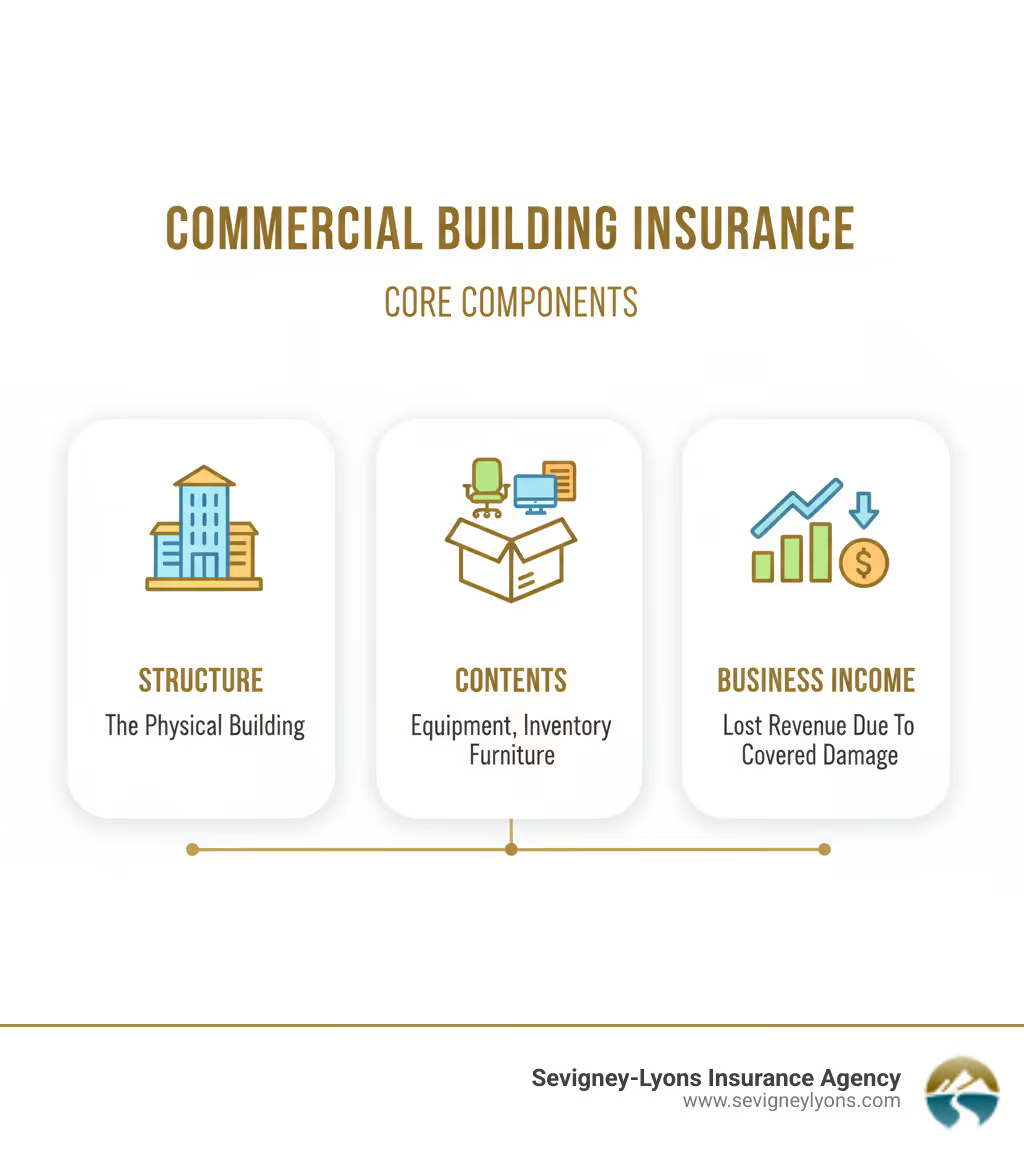
Every business owner in Maine, from Wells and Kennebunk to Ogunquit and Biddeford, faces risks. Understanding building insurance for commercial properties is key to protecting your investment. This insurance shields your business's physical assets—including buildings, equipment, inventory, and furniture—from unexpected events like fire, theft, and water damage.
Crucially, it also includes business interruption coverage, which helps replace lost income and cover ongoing expenses if your business must temporarily close due to a covered event. This prevents you from paying for major repairs or replacements out-of-pocket, securing your financial future. Studies show that more than 40% of small businesses are likely to experience a claim in the next 10 years, making this coverage essential.
Terms related to building insurance for commercial:
For more details, explore our Commercial Property Insurance Guide.

Who Needs Building Insurance for Commercial Properties?
If your business relies on a physical location or tangible assets, you need building insurance for commercial properties. This includes retail stores, restaurants, offices, warehouses, manufacturing facilities, and landlords. Even service-based and home-based businesses need protection for their equipment and workspace, as a standard homeowners policy is often insufficient. Learn more in our guide on Business Insurance for a Maine LLC.
The Main Types of Commercial Property Policies
Commercial property policies are distinguished by the risks, or "perils," they cover:
- Basic Form: Covers only specific perils named in the policy, such as fire, lightning, and vandalism.
- Broad Form: Covers all perils in the basic form plus additional named perils like falling objects and weight of snow or ice.
- Special Form (Open Peril): The most comprehensive option, this form covers all risks of physical loss unless a peril is specifically excluded. Most businesses prefer this broader protection.
Understanding the difference between "named perils" (Basic/Broad) and "open perils" (Special) is key to selecting the right coverage for your Maine business.
Key Differences for Owners vs. Renters
Responsibilities for building insurance for commercial properties differ based on whether you own or rent.
- Building Owners (Landlords): You are responsible for insuring the physical structure. We recommend insuring for the cost to rebuild, not the market value.
- Renters (Tenants): Your landlord typically insures the building, but you need coverage for your business's personal property (inventory, equipment, furniture) and any improvements you've made. Always review your lease, as some agreements may shift responsibility for insuring the building to you.
For more information for tenants, see our guide on Commercial Renters Insurance in Maine.
Understanding Your Coverage: Inclusions, Exclusions, and Endorsements
Navigating building insurance for commercial properties means understanding what is and isn't covered. Standard policies provide a foundation of protection, but endorsements are often needed to fill critical gaps.
Most policies include coverage for common risks such as:
- Fire and Lightning
- Theft and Vandalism
- Wind Damage
- Water Damage (from burst pipes or sprinklers)
- Falling Objects
- Riot and Civil Commotion
These inclusions form the backbone of your protection, helping you recover when the unexpected happens.
What's Typically Excluded?
While comprehensive, building insurance for commercial properties has standard exclusions. It's vital to know these gaps to ensure you're fully protected. Common exclusions include:
- Earthquakes and Floods: These major natural disasters require separate, specialized insurance policies. For coastal Maine businesses, flood insurance is particularly critical.
- Wear and Tear: Insurance covers sudden and accidental events, not gradual deterioration or damage from a lack of maintenance.
- Employee Dishonesty: Theft by employees requires a separate crime insurance policy.
- Vehicles and Watercraft: These are covered by commercial auto or marine insurance.
- War and Terrorism: These are almost universally excluded, though separate terrorism coverage is available.
- Electronic Data: Standard policies offer limited coverage for data and computer networks, making specialized Electronic Data Processing (EDP) insurance necessary for many businesses.
Policy Endorsements: Filling the Gaps
Endorsements are add-ons that tailor your building insurance for commercial policy to your specific needs, covering risks that are normally excluded.
- Ordinance or Law Coverage: Covers the increased cost to rebuild to current, more expensive building codes after a loss.
- Spoilage Coverage: Essential for restaurants or grocers, this protects against inventory loss from power outages or equipment failure.
- Equipment Breakdown Coverage: Protects against mechanical or electrical failure of critical machinery, which is typically excluded from standard policies.
- Inland Marine Insurance: Vital for contractors, this covers equipment and tools while they are off-site or in transit.
- Electronic Data Processing (EDP) Insurance: Offers broader protection for computer equipment and data against perils like power surges.
Understanding these components helps craft a policy that truly protects your Maine business. For related liability information, see our guide on General Liability Insurance in Maine.
Determining Value and Cost for Your Building Insurance for Commercial Property
Understanding how insurers value your property and calculate your premium for building insurance for commercial properties helps you make informed decisions. The unique story of your Maine business directly influences your insurance needs and costs.
Several factors shape your premium:
- Location: A business in a coastal area like Wells or a high-crime zone may have higher premiums.
- Construction: Fire-resistant materials (like brick) typically cost less to insure than older wooden structures.
- Occupancy: A restaurant with a kitchen carries different risks and costs than a retail boutique.
- Fire Protection: Sprinkler systems, modern alarms, and proximity to a fire station can lead to discounts.
- Age and Condition: Newer buildings with modern safety features generally cost less to insure.
- Value of Property: The amount of inventory and equipment you insure directly impacts your premium.
While average costs can vary, your actual cost will depend on your specific situation. For related cost insights, see our article on Maine Business Liability Insurance Cost.
How Property Value is Determined for Insurance
Correctly valuing your property is the foundation of your protection. Insurers use two primary methods:
- Actual Cash Value (ACV): Pays to repair or replace your property minus depreciation. This means lower premiums but a smaller payout that may not cover the full replacement cost.
- Replacement Cost Value (RCV): Pays the full cost to repair or replace your property with new items of similar quality, without deducting for depreciation. Premiums are higher, but it provides the funds to truly rebuild, offering greater peace of mind.
Crucially, you should insure your commercial building for its cost to rebuild, not its market value. Rebuilding costs—including demolition, labor, and materials—can far exceed the property's sale price. An appraisal can help determine an accurate replacement cost.
Also, be aware of the coinsurance clause. Most policies require you to insure your property for a minimum percentage (often 80-90%) of its value. If you fail to meet this, your insurer may only pay a portion of your claim, even if the loss is below your policy limit.
Deductibles, Claims, and Proof of Insurance
- Deductible: This is the amount you pay out-of-pocket before your insurance kicks in. A higher deductible lowers your premium but increases your upfront cost during a claim.
- Filing a Claim: After an incident, take steps to prevent further damage, document everything with photos, and create an inventory of lost items. Contact your insurance agent as soon as possible to start the process.
- Proof of Insurance: You will often need a Certificate of Insurance (COI) when signing a lease or securing a loan. This document summarizes your coverage, limits, and policy dates.
How Commercial Building Insurance Compares to Other Policies
It's easy to confuse building insurance for commercial properties with other business policies, but each serves a distinct purpose. Understanding the differences ensures your Maine business is fully protected without dangerous gaps.
- Commercial Property Insurance: Protects your physical assets—the building, equipment, and inventory—from damage or loss.
- General Liability Insurance: Protects you from claims by others for bodily injury or property damage. If a customer slips and falls at your Kennebunk shop, this policy responds.
- Builders Risk Insurance: A temporary policy that covers a structure during construction or renovation. Once the project is complete, it's replaced by a standard commercial property policy.
Many businesses need all three, but for different reasons and at different times. For more on liability, see our guide on General Liability Insurance in Maine.
Business Owner's Policy (BOP)
For many small businesses in Maine, a Business Owner's Policy (BOP) is a great solution. A BOP bundles three essential coverages into one cost-effective package:
- Commercial Property Insurance
- General Liability Insurance
- Business Income Insurance
This streamlined approach is often cheaper than buying each policy separately and is ideal for businesses like restaurants, retail stores, and offices. To see how it works for a specific industry, explore our insights on the Best Restaurant BOP Insurance in Maine.
Builders Risk vs. Commercial Property
The difference is all about timing. Builders risk insurance is for the construction phase, covering the structure and materials on-site while a building is being erected or renovated. Once the project is complete and occupied, the builders risk policy ends, and permanent commercial property insurance takes over to protect the finished, operational building. If you're planning a project, learn more about Builders Risk Insurance in Maine.
Homeowners vs. Commercial Property
A common and dangerous misconception is that a homeowners policy will cover a home-based business. It almost never does. Homeowners insurance is for your personal dwelling and belongings, and it typically excludes business-related liability and property claims.
To properly protect your business equipment, inventory, and liability, you need a separate commercial policy or a specific business endorsement on your homeowners policy. We help home-based business owners across Wells, Kennebunk, and surrounding areas close these critical coverage gaps.
Navigating Maine's Unique Risks: Key Coverages for Coastal Businesses
Operating a business along Maine's coast in towns like Wells, Kennebunk, Ogunquit, and Biddeford presents unique challenges. Understanding these local perils is essential for tailoring your building insurance for commercial properties.
Maine businesses face distinct weather events:
- Coastal Storms and Nor'easters: These bring high winds and storm surges that can cause severe structural damage.
- Flooding: A risk from both coastal surges and heavy inland rain. Standard commercial property policies do not cover flood damage, making a separate policy vital for businesses in flood-prone areas.
- Snow Load and Ice Dams: Heavy winter snow can cause roof collapse, while ice dams can lead to costly interior water damage.
- Wind Damage: A constant threat that can damage roofs, signage, and building structures.
With natural disasters causing billions in insured losses annually nationwide, a proactive insurance strategy is crucial. We recommend Maine businesses consider a separate flood policy and ensure their plan includes robust windstorm, equipment breakdown, and business interruption coverage. For more details, see our Maine Flood Insurance Guide.
How to Reduce Your Commercial Property Risks
While insurance is your financial safety net, proactive risk management can prevent claims and potentially lower your premiums. Key steps include:
- Regular Maintenance: Routinely inspect your roof, plumbing, electrical, and HVAC systems to fix small issues before they become major problems.
- Security Systems: Install alarms, cameras, and good lighting to deter theft and vandalism.
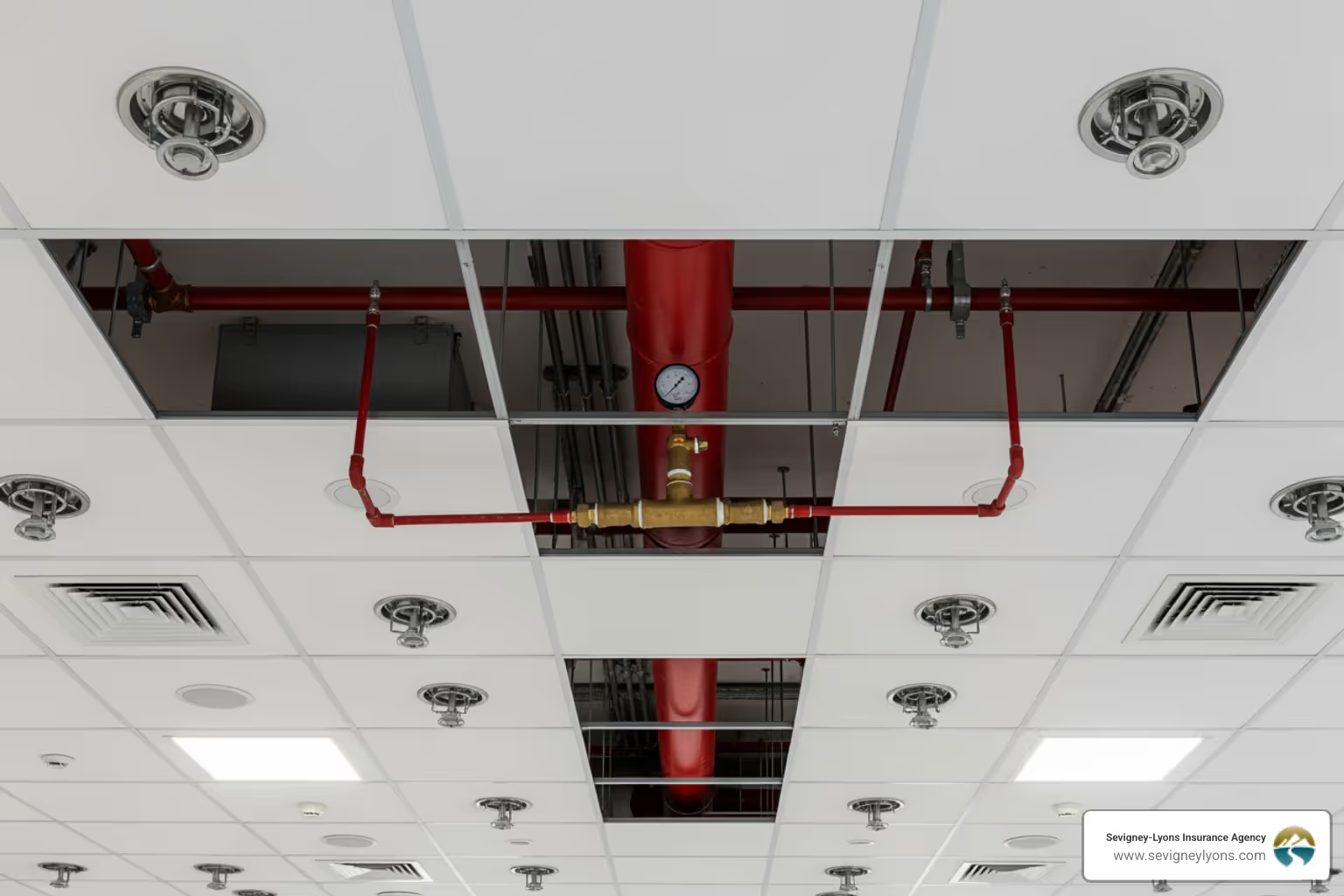
- Fire Safety: Regularly test fire alarms and sprinkler systems, keep extinguishers accessible, and train employees on safety protocols.
- Weather Preparedness: Secure outdoor items and reinforce your building for windstorms. For winter, insulate pipes and clear snow promptly to prevent ice dams and roof strain.
- Employee Training: Educate staff on safety procedures and proper equipment handling to minimize accidents.
- Inventory Management: Keep detailed records of your business personal property to streamline the claims process.
Frequently Asked Questions about Commercial Building Insurance
Here are concise answers to common questions we hear from Maine business owners about building insurance for commercial properties.
Is building insurance for commercial properties required by law in Maine?
No, the state of Maine does not legally mandate commercial property insurance. However, it is almost always a contractual requirement. If you have a mortgage, your lender will require it to protect their investment. Likewise, most landlord lease agreements stipulate that tenants must carry specific insurance coverages.
Beyond any requirement, forgoing this insurance poses an immense financial risk. The cost to rebuild after a fire or major storm could force a business to close permanently. It is a non-negotiable part of responsible business ownership.
How much business interruption coverage do I need?
To determine the right amount, you need to estimate your potential losses during a shutdown. This calculation should include:
- Lost Net Income: The profit your business would have earned.
- Continuing Operating Expenses: Fixed costs like rent, utilities, and loan payments.
- Payroll: Costs to retain essential employees.
- Extra Expenses: The cost of operating from a temporary location.
We work with our Maine clients to analyze their financials and estimate a realistic recovery period to tailor coverage that will keep their business afloat.
Can I get coverage for a vacant commercial building?
Yes, but it requires a specific approach. Insurers view vacant properties as higher risk due to potential vandalism, theft, and undetected damage (like a slow water leak). Because of this, most standard commercial property policies contain a "vacancy clause" that can limit or void coverage if a building is unoccupied for a set period, often 30 to 60 days.
If your property is or will become vacant, you must notify your insurer immediately. You will likely need a special vacancy endorsement or a standalone vacant property insurance policy to maintain protection. These policies typically have higher premiums and more limited coverage but are essential for protecting an unoccupied asset.
Secure Your Business's Future with the Right Coverage
You've poured your heart into your Maine business, whether it's in Wells, Kennebunk, Ogunquit, or Biddeford. Protecting that investment from the unexpected is vital. Building insurance for commercial properties is the financial shield that safeguards your hard work and dreams.
From coastal storms to accidental fires, the right coverage ensures you can recover quickly and continue serving your community. At Sevigney-Lyons Insurance Agency, we don't believe in one-size-fits-all solutions. With deep roots in the community, we take the time to understand your unique operation and its risks.
We'll help you steer the complexities of commercial property insurance, ensuring your policy is perfectly custom to protect what matters most. It's about more than a policy; it's about a partnership that provides genuine peace of mind.
Don't let the unpredictable catch you off guard. Let our experts guide you through a comprehensive review of your commercial insurance needs.