Blog Content
Why Your Business Vehicle Needs Specialized Protection
Business auto insurance providers offer protection that goes far beyond a personal car insurance policy. If your company uses vehicles for any work-related purpose—like deliveries, client visits, or transporting equipment—you need a commercial auto policy. It's essential for legal compliance in Maine and for protecting your business from devastating financial losses.
Top considerations when choosing a provider:
- Financial Strength: Ensure the carrier has an A.M. Best rating of A+ or higher.
- Coverage Options: Look for liability, collision, comprehensive, and uninsured motorist protection.
- Local Expertise: An independent agency can find the best fit for your Maine business.
- Claims Handling: Check NAIC complaint indices (a score under 1.0 is ideal).
- Industry Experience: Seek providers familiar with your business type (e.g., contractors, delivery services).
In Maine, using vehicles for business requires commercial auto insurance. Personal policies explicitly exclude business use, which can lead to denied claims and penalties. While costs vary, this investment safeguards your business assets from liability claims that can reach hundreds of thousands of dollars, ensuring you can continue operating after an accident.
For businesses in Wells, Kennebunk, Ogunquit, and Biddeford, understanding your unique needs and how to evaluate providers is the key to finding the right protection.
Understanding the Essentials of Maine Commercial Auto Insurance
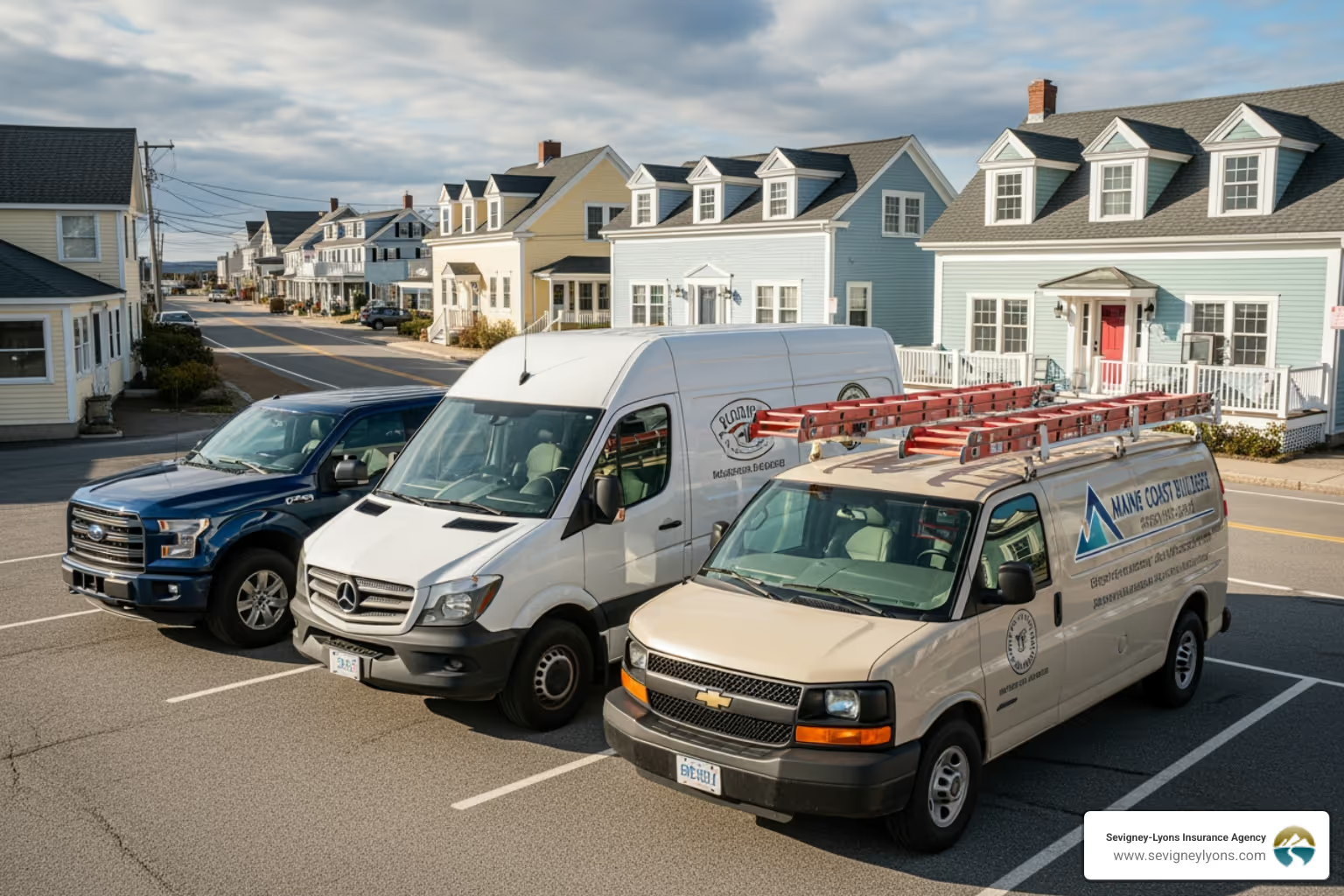
The key question is: how do you use your vehicle? A regular commute to a fixed office is personal use. But if your vehicle is involved in generating revenue—making deliveries, hauling equipment, or transporting clients—it's business use.
Business auto insurance providers recognize that commercial vehicles have a different risk profile. They often log more miles, operate in busier environments like downtown Portland, and carry valuable goods or equipment. This increased risk is why commercial policies feature much higher liability limits, with providers typically recommending at least $500,000 in coverage.
Who Needs a Commercial Auto Policy in Maine?
If a vehicle is integral to your business operations, it needs a commercial policy. Guessing wrong can lead to a denied claim that devastates a business. This includes:
- Contractors: Your truck is your mobile office. Commercial auto insurance for contractors protects this essential asset.
- Landscapers: A truck pulling a trailer of equipment represents a significant investment and liability.
- Delivery Services: Any vehicle used for deliveries, from flowers in Ogunquit to groceries in Biddeford, needs commercial coverage.
- Food Trucks: These mobile restaurants require specialized commercial policies.
- Real Estate Agents: Driving clients is a business activity not typically covered by personal auto insurance.
- Businesses with Company Cars: If the business owns the vehicle, it must have a commercial policy.
- Employees Using Personal Vehicles: If your team runs errands in their own cars, your business could be liable in an accident. A commercial policy can cover this "non-owned auto" exposure.
Vehicles and Businesses Requiring Coverage
Commercial auto insurance isn't just for large trucks. Common vehicles requiring coverage include:
- Cars: Used by salespeople, real estate agents, or for business errands.
- Pickup Trucks: The workhorse for contractors, landscapers, and service businesses in Maine.
- Box Trucks and Vans: Essential for delivery, moving, and service companies.
- Trailers: Any trailer attached to a commercial vehicle needs coverage.
Industries with built-in needs include construction, food service (including restaurants offering delivery), retail, and service-based businesses like plumbers and electricians. If your business uses vehicles to get work done, commercial auto insurance is a must. Business insurance for Maine restaurants often includes this as a critical component.
Commercial vs. Personal Auto Insurance: The Critical Differences
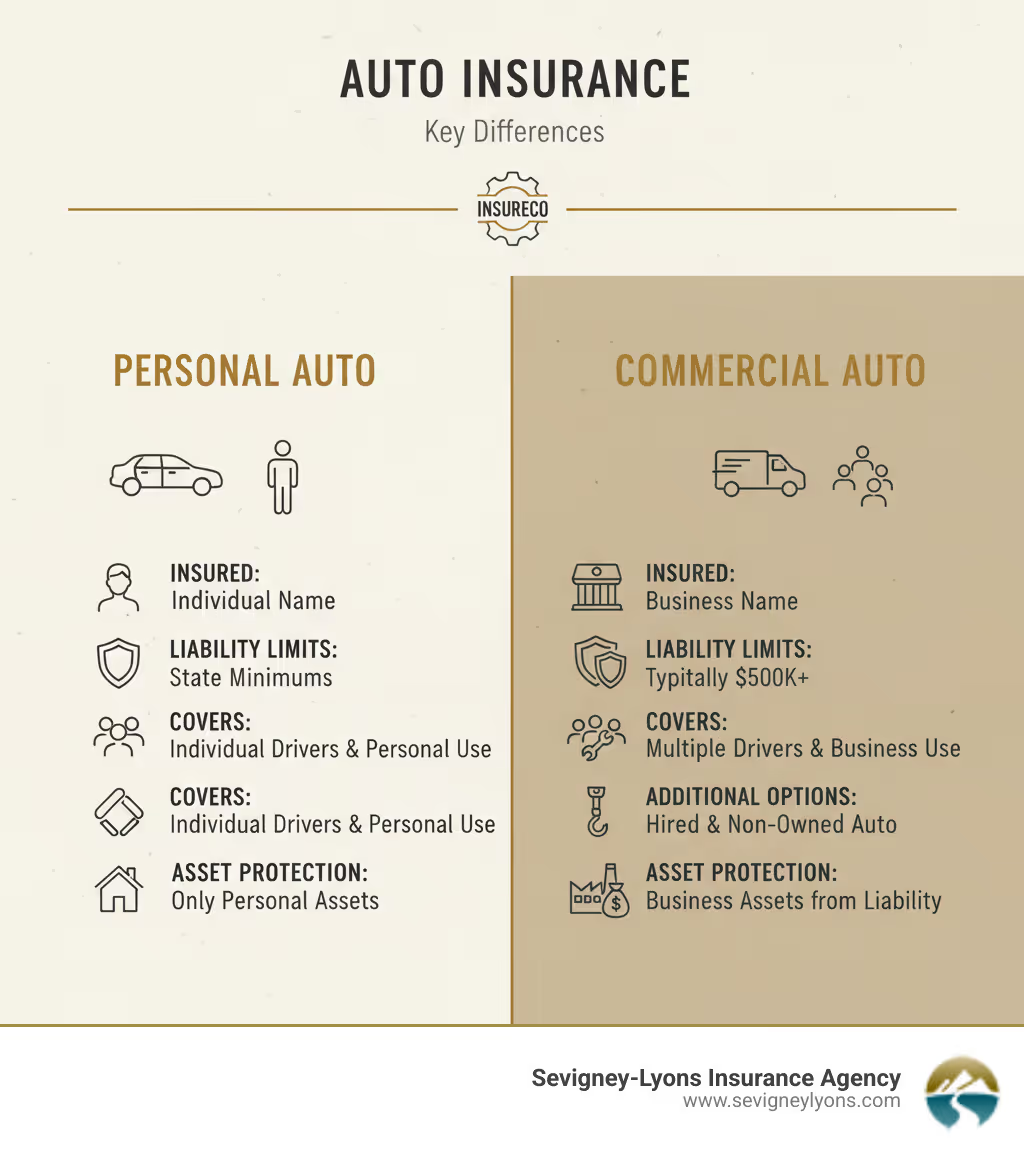
Assuming your personal policy covers business use is a costly mistake. Here are the key differences:
- Policy Ownership: Commercial policies list the business entity (LLC, corporation) as the insured, not an individual.
- Coverage Limits: Commercial policies start with much higher liability limits (e.g., $500,000 or more) to protect against the catastrophic financial consequences of a business-related accident.
- Covered Individuals: Commercial policies are designed to cover employees who operate company vehicles.
- Exclusions: Most personal auto policies have explicit exclusions for business use. An accident during a work-related task can result in a denied claim, leaving your business exposed. Research confirms that drivers using personal auto insurance policies for business vehicle use could face penalties or denied coverage claims.
- Cost: Commercial auto insurance costs more than personal coverage due to the increased risks. However, this investment is essential to protect your business assets, employees, and livelihood.
Decoding Your Policy: Core Commercial Auto Coverages

A commercial auto policy has two main jobs: protecting your business from liability if you cause an accident and covering damage to your own vehicles. Understanding the core components helps you make informed decisions.
Standard Coverages Every Maine Business Should Have
These foundational coverages are essential for operating safely on Maine roads.
- Bodily Injury Liability: Covers medical bills, lost wages, and other costs if you or an employee injure someone in an accident. Providers often recommend limits of $500,000 or more.
- Property Damage Liability: Pays for damage your vehicle causes to someone else's property, like their car or building. Together with bodily injury, this forms your business auto liability coverage in Maine.
- Collision Coverage: Pays to repair or replace your business vehicle if it's damaged in a collision, regardless of fault. This is vital for getting your business back on track quickly.
- Comprehensive Coverage: Protects against non-collision damage, such as theft, vandalism, fire, falling objects, or hitting a deer on a Maine road.
- Uninsured/Underinsured Motorist Coverage: Protects you if an at-fault driver has insufficient or no insurance to cover your injuries or vehicle damage.
- Medical Payments (MedPay)/Personal Injury Protection (PIP): Covers medical expenses for you, your employees, and passengers after an accident, regardless of fault, ensuring immediate care.
Common Optional Coverages and Endorsements
Customize your policy with endorsements that address your specific business needs.
- Hired and Non-Owned Auto Coverage: This is crucial. "Hired" covers vehicles you rent or borrow for business. "Non-owned" extends liability coverage when employees use their personal cars for company business, protecting you from a major exposure.
- Rental Reimbursement: Pays for a rental vehicle if your commercial vehicle is being repaired after a covered accident, preventing business interruptions.
- Roadside Assistance: Provides help for flat tires, dead batteries, lockouts, and towing, keeping your employees on the move.
- Coverage for Permanently Attached Equipment: Standard policies may not cover modifications like snowplows or custom shelving. This endorsement ensures that valuable, permanently attached equipment is protected.
- Gap Insurance: If you've financed a vehicle, gap insurance for car loan can cover the difference between the vehicle's value and what you owe if it's a total loss.
The right business auto insurance providers will help you build a policy that fits your Maine business without being over- or under-insured.
Navigating Costs and Finding the Right Business Auto Insurance Providers
Commercial auto insurance is a significant business expense, but understanding what drives costs can help you find value. The goal isn't just the cheapest policy, but comprehensive protection from business auto insurance providers at a fair price.
Key Factors That Influence Your Insurance Premiums
Providers consider many factors when calculating your premium:
- Vehicle Type and Value: A new, expensive truck will cost more to insure than an older sedan.
- Driving Records: Employees with clean driving records help keep premiums down.
- Business Industry and Use: A high-mileage delivery service in Portland faces more risk than a consultant who occasionally drives to clients.
- Garaging Location: Rates can vary based on local traffic density and theft rates in areas like Biddeford versus quieter towns.
- Coverage Limits and Deductibles: Higher limits increase premiums, while higher deductibles can lower them.
- Claims History: A history of frequent or severe claims signals higher risk and leads to higher premiums.
Strategies to Manage Your Premiums
You can take practical steps to manage your insurance costs:
- Bundle Your Policies: Combine commercial auto with other policies, like business property insurance in Maine, for significant discounts.
- Implement a Fleet Safety Program: Demonstrating a commitment to safety with driver training and vehicle maintenance can lower costs. A sample fleet safety program can provide a good starting point.
- Consider Telematics: Some insurers offer programs that monitor driving habits and reward safe driving with discounts.
- Choose Higher Deductibles Wisely: A higher deductible lowers your premium, but ensure your business can afford the out-of-pocket cost if you file a claim.
- Invest in Driver Training: Ongoing education in defensive driving can improve your safety record over time.
How to Choose the Right Business Auto Insurance Providers
Choosing the right provider is about finding a partner who offers the right mix of coverage, service, and value.
- Financial Strength: Stick with carriers rated A+ or higher by A.M. Best to ensure they can pay claims.
- Claims Handling: Look for a low NAIC complaint index (under 1.0 is best), which indicates fewer-than-average complaints.
- Local Expertise: Providers who understand Maine's unique conditions offer better-suited coverage. This is where the role of independent insurance brokers is invaluable.
- Comprehensive Coverage Options: Ensure the provider offers the standard coverages and specialized endorsements your business needs.
At Sevigney-Lyons Insurance Agency, we leverage our relationships with over 20 top-rated carriers to find the right fit for your Maine business. Our loyalty is to you, not a single insurer.
Advanced Considerations for Maine Businesses
Once you've got the fundamentals of commercial auto insurance down, it's time to think about the more nuanced situations your Maine business might face. Real-world operations are rarely simple, and understanding how your coverage responds to common claim scenarios, what happens when your trucks cross state lines, and how to protect your investment over the long haul will give you a significant advantage.
Common Claim Scenarios and How They're Handled
Let's walk through some situations we see regularly with Maine businesses, because knowing what to expect can make all the difference when something goes wrong.
Imagine one of your employees is at fault in a collision while making a delivery in Portland. Your bodily injury and property damage liability coverage steps in immediately to cover the other party's medical bills, vehicle repairs, and any other damages they're entitled to. Meanwhile, your collision coverage takes care of your business vehicle's repairs, minus whatever deductible you've chosen. This is the bread-and-butter of commercial auto claims, and it's why those liability limits we discussed earlier are so important.
Now picture this: you wake up Monday morning to find your work truck has been vandalized overnight in a Biddeford parking lot, or worse, it's been stolen from a job site in Wells. This is exactly what comprehensive coverage is designed for. It covers these non-collision incidents—vandalism, theft, fire, weather damage—ensuring you can get your business back on the road without shouldering the entire financial burden yourself.
Here's a scenario that catches many business owners off guard: one of your employees uses their personal vehicle to pick up supplies for your company, and they cause an accident. Their personal auto policy is typically the first line of defense. But what happens if their coverage limits aren't enough, or if their insurer denies the claim because they were on business? Your business could still be held liable. This is precisely why non-owned auto liability coverage is so critical—it fills these dangerous gaps.
One more important note: if you're transporting valuable goods, equipment, or materials, your commercial auto policy covers the vehicle itself, but typically not what's inside. For contractors hauling expensive tools or businesses delivering products, you'll want to explore inland marine insurance to protect your cargo.
We always recommend keeping an accident report kit in your vehicles so your drivers can document everything properly at the scene, which makes the claims process much smoother.
Operating Across State Lines or into Canada
Maine's location means many businesses naturally operate beyond our borders—whether that's regular trips to New Hampshire, occasional ventures into Massachusetts, or even deliveries into Canada. Each of these scenarios requires careful consideration when it comes to your commercial auto coverage.
Most commercial auto policies from reputable business auto insurance providers are designed to extend coverage when your vehicles travel to other states, but it's not something you should assume. Interstate commerce regulations require that your policy complies with the laws of every state you operate in, which is why working with experienced agents who understand these complexities is so valuable.
If your business regularly sends vehicles into New Hampshire, you'll want to confirm your policy meets their specific requirements. While Maine and New Hampshire have similar insurance frameworks, there can be important differences in minimum liability limits or other coverage requirements that you need to address.
Cross-border operations into Canada introduce another layer of complexity. If you're sending trucks north of the border—whether for deliveries, service calls, or equipment transport—you'll typically need a special endorsement. This is often called a "Canadian Non-Resident Inter-Province Motor Vehicle Liability Insurance Card," sometimes referred to as a "Yellow Card." Without this endorsement, your coverage might not be recognized by Canadian authorities, leaving you exposed to serious liability.
The overarching goal here is ensuring continuous coverage no matter where your business takes you. There should never be a moment when your vehicles are operating without proper protection, whether they're on Route 1 in Ogunquit or crossing the bridge into Portsmouth or heading to Montreal. We'll work with you to make sure your policy seamlessly covers your operations across all the jurisdictions where you do business, giving you the confidence to focus on what you do best—running your company.
Frequently Asked Questions about Commercial Auto Insurance
We hear a lot of great questions from Maine business owners about commercial auto insurance. Let's tackle some of the most common ones to clear up any confusion and help you understand exactly what your business needs.
Do I need commercial auto insurance if I'm self-employed?
Yes, absolutely! This is one of the biggest misunderstandings we encounter. Even if you're a sole proprietor or self-employed in Maine, the moment you use your vehicle for business purposes—delivering goods, meeting clients, transporting equipment, or even just carrying work supplies—your personal auto policy likely won't cover an accident that occurs during these activities.
Personal policies are designed specifically for personal use. If your insurer finds that an accident happened while you were conducting business, they can deny your claim entirely, leaving you personally responsible for all damages and injuries. This could mean thousands or even hundreds of thousands of dollars out of your own pocket.
Business auto insurance providers understand the realities of self-employment. A commercial policy protects both your business assets and your personal financial security when you're using your vehicle to earn a living. Whether you're a self-employed contractor in Wells or a freelance consultant in Portland, if your vehicle helps you make money, it needs commercial coverage.
Does commercial auto insurance cover tools or equipment in my vehicle?
This is where many Maine business owners get caught off guard. A standard commercial auto insurance policy covers your vehicle itself and provides liability protection for accidents while you're driving. However, it typically does not cover the tools, equipment, or products you're carrying inside the vehicle.
If your work truck full of expensive power tools gets stolen from a job site in Kennebunk, or if equipment is damaged in an accident, you'll need separate coverage called Inland Marine insurance. Despite the confusing name, this coverage has nothing to do with boats—it protects your business property while it's in transit or away from your primary business location.
For contractors, landscapers, and artisans throughout Southern Maine who depend on their tools to earn a living, Inland Marine coverage is essential. We can help you explore best Maine artisan contractors insurance options that include comprehensive protection for your valuable equipment. Some policies may offer limited coverage for permanently attached equipment through specific endorsements, but portable tools and gear almost always require this separate coverage to be fully protected.
Can I add and remove drivers from my policy?
Yes, and this is actually an important part of keeping your policy current and valid. As your business grows or changes—especially if you're in one of our seasonal tourism areas like Ogunquit or Biddeford—you'll likely need to adjust who's covered under your commercial auto policy.
Most business auto insurance providers allow you to add named drivers to your policy as you hire new employees. When you add a driver, the insurer will typically run an MVR (motor vehicle record) check to review their driving history. A clean driving record can help keep your premiums manageable, while a history of accidents or violations might increase your costs.
Some commercial policies offer "blanket coverage" that automatically covers any employee who drives a company vehicle with your permission. This can be convenient for businesses with multiple drivers or frequent turnover. However, even with blanket coverage, it's best practice to inform your insurer about new drivers and keep accurate records of who's operating your vehicles.
You should also promptly notify your insurer when employees leave or when someone should no longer be driving company vehicles. Keeping your policy updated ensures there are no gaps in coverage and helps avoid potential claim denials. We make this process straightforward, helping you adjust your coverage as your team grows and changes throughout the year.
Your Local Partner for Business Auto Insurance in Maine
We've covered a lot of ground today—from understanding why your personal auto policy won't cut it for business use, to decoding the coverages that truly protect your livelihood, to navigating the real costs of commercial auto insurance. If there's one message to take away, it's this: protecting your business vehicles isn't optional. It's as essential as the vehicles themselves.
The right business auto insurance providers make all the difference. You need a partner who understands that your pickup truck isn't just transportation—it's how you get to job sites, haul materials, and keep your business moving. You need coverage that's built around your specific operations, whether you're a contractor in Kennebunk, a food truck owner in Biddeford, or a delivery service in Portland.
That's where we come in. At Sevigney-Lyons Insurance Agency, we've spent decades building relationships right here in Southern Maine. We know the roads you travel, the challenges you face, and the risks that keep you up at night. As an independent agency, we work with over 20 top-rated carriers, which means we're not tied to just one company's products. Instead, we compare policies across multiple business auto insurance providers to find the coverage that fits your needs and your budget.
This isn't about selling you the most expensive policy or the cheapest one. It's about finding the right one—the policy that gives you confidence every time one of your vehicles hits the road. We take the time to understand your business, explain your options in plain English (no insurance jargon, we promise), and build a relationship that lasts well beyond the initial quote.
Your business is your livelihood, and we take that seriously. Whether you're just starting out in Wells or you've been serving the Ogunquit community for generations, we're here to make sure your vehicles—and by extension, your business—are properly protected.
Ready to get started? Get a free quote for your Maine commercial auto insurance needs today. Let's have a conversation about what matters most to your business, and let's build coverage that truly works for you. Because when you're protected, you can focus on what you do best—growing your business and serving your community.