Blog Content
Why Every Maine Business Owner Needs to Understand Crime Insurance
Business crime insurance protects your company from financial losses due to crimes like employee theft, forgery, and embezzlement. Unlike commercial property insurance that covers physical damage, crime insurance specifically targets the loss of money, securities, and inventory from criminal acts by employees or outsiders.
What Business Crime Insurance Covers:
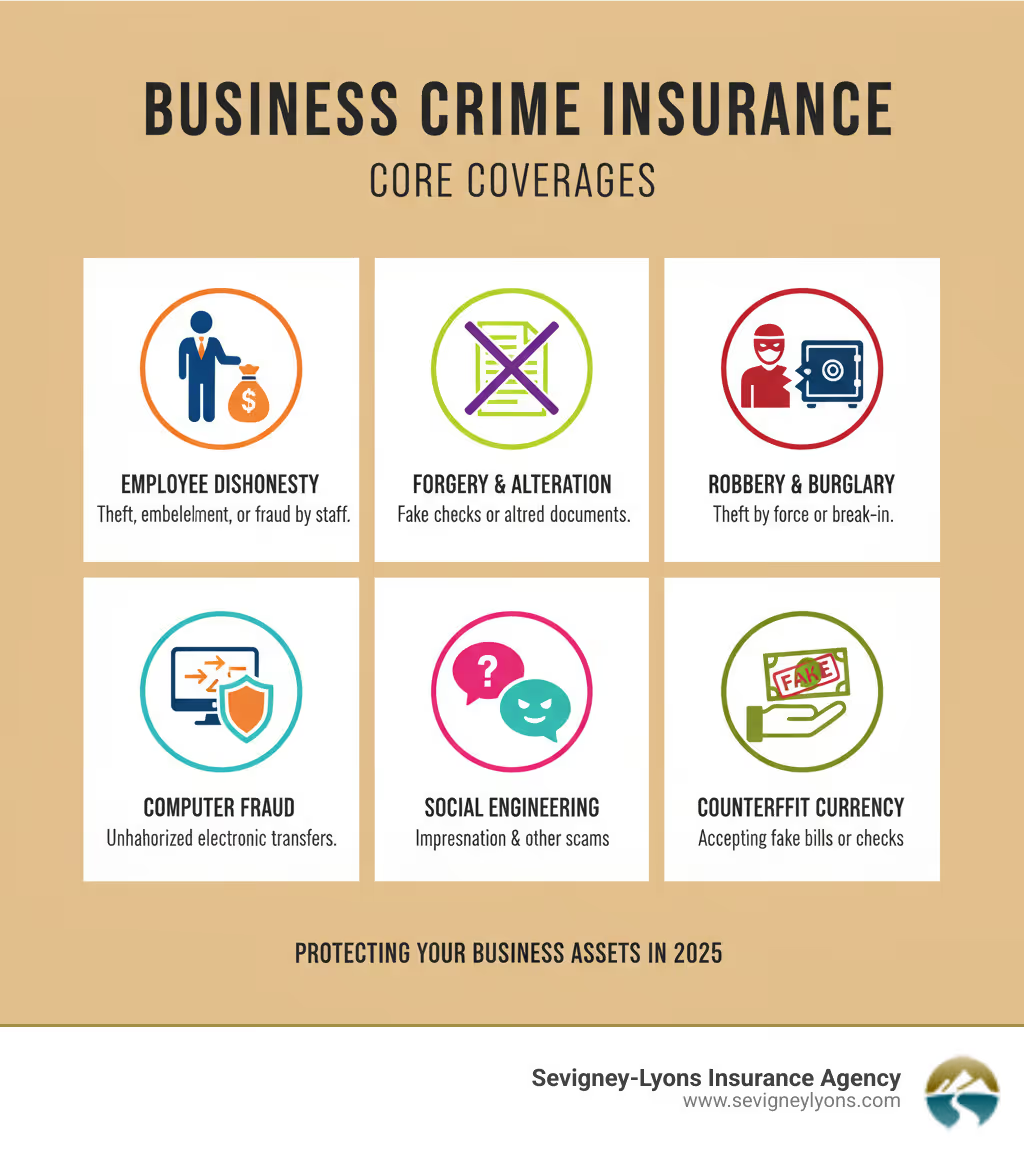
- Employee dishonesty - theft, embezzlement, or fraud by staff members
- Forgery or alteration - fake checks or altered financial documents
- Robbery and burglary - theft by force or break-in
- Computer fraud - unauthorized electronic transfers
- Social engineering - scams where criminals impersonate executives or vendors
- Counterfeit currency - accepting fake bills or checks
The numbers are sobering. Companies lose about 5% of their revenue to fraud annually. For small businesses, the risk is even greater; companies with fewer employees suffer the highest median losses, around $150,000 in 2022. Critically, 90% of all significant theft losses come from employees.
Many Maine business owners mistakenly believe their commercial property policy covers these crimes. It doesn’t. Crime-related financial losses require separate coverage, a gap many find only after it’s too late.
Whether you run a seasonal restaurant in Ogunquit, a retail shop in Kennebunk, or a professional services firm in Southern Maine, your business handles money and trusts employees with valuable assets. That makes you vulnerable.
This guide breaks down what you need to know about business crime insurance in plain language, offering practical information to help you protect what you’ve built.
What is Business Crime Insurance and What Does It Cover?
Business crime insurance—or commercial crime insurance—is a financial safety net protecting your company’s assets like cash, securities, and property from theft, fraud, and dishonesty.
It addresses the real threats Maine businesses face daily, from an employee moving money into a personal account to a scammer tricking your bookkeeper. This coverage is valuable because it addresses both internal threats (from employees) and external threats (from outside criminals). Standard insurance policies typically don’t cover these crimes, which is why crime insurance is essential.
Common Crimes Covered by Your Policy
These policies cast a wide net to protect against evolving criminal tactics.
Employee theft and embezzlement covers money, securities, or property stolen by an employee. When your bookkeeper in Kennebunk diverts company funds or your warehouse manager in Biddeford skims inventory, this coverage responds. With 90% of significant theft losses coming from employees, preparing for this uncomfortable reality protects your business.
Forgery and alteration protects you when someone forges your signature on company checks or alters legitimate payment documents, including fraudulent checks, drafts, and other written payment orders.
Robbery and burglary specifically addresses money and securities stolen from your premises. Robbery is theft by force, while burglary involves forced entry when you're closed. If your Wells storefront is broken into, this coverage helps you recover.
Computer fraud and funds transfer fraud cover losses from someone fraudulently altering data in your systems (computer fraud) or sending fraudulent instructions to your bank to move money from your account (funds transfer fraud). This protects you from unauthorized wire transfers initiated by hackers.
Counterfeit currency fraud helps recover losses if your Ogunquit restaurant or retail shop accepts fake bills or counterfeit money orders. It provides peace of mind for businesses handling lots of cash. You can learn more about specific coverage for restaurants at business insurance for Maine restaurants.
Social engineering fraud covers losses when criminals trick your employees into voluntarily handing over money by impersonating a CEO, vendor, or client. For example, your accounting department receives a fake-but-urgent email from the "president" requesting a wire transfer. This coverage can save your business when these sophisticated scams succeed.
Who is Covered Under the Policy?
Business crime insurance policies define "employee" broadly to protect you from dishonest acts by a wide range of people associated with your business. This comprehensive definition exists because theft can be committed by anyone with access, regardless of their employment status. Coverage typically includes:
- Full-time, part-time, and seasonal staff: This is crucial for Maine’s tourism businesses in Wells, Kennebunk, and Ogunquit that rely on seasonal help.
- Temporary workers and consultants: Contract workers with access to your financial systems or assets are usually included.
- Volunteers: For nonprofit organizations, volunteers who handle donations or sensitive information are often covered.
This broad protection is vital for any organization. For more information about how different worker classifications are treated in insurance, check out more info about workers compensation insurance in Maine.
The High Stakes for Maine Businesses: Why Coverage is Crucial

The uncomfortable truth is that pretending the risk of crime doesn't exist won't protect your business when it happens.
As noted in the Occupational Fraud 2022: A Report to the Nations, companies lose about 5% of their annual revenue to fraud. Smaller businesses are hit hardest, with companies under 100 employees suffering median losses around $150,000 per incident. This is often because smaller operations can't afford the extensive internal controls of larger corporations.
Beyond the direct financial loss, your reputation can take a beating, especially in tight-knit Maine communities like Wells or Kennebunk. Customers may question if their information is safe, and suppliers might doubt your financial stability.
The operational chaos is also significant. You'll spend hours with investigators instead of managing your business, your team will be demoralized, and opportunities can be lost. Some businesses never fully recover from this disruption.
Maine's business landscape makes certain industries especially vulnerable. The business insurance for Maine restaurants sector requires careful attention to crime coverage, as restaurants in Ogunquit handle substantial cash during tourist season. Cash-heavy businesses in Kennebunk and Ogunquit face risks simply because physical money is easier to steal.
But it's not just about cash. Professional service firms and tech companies across Southern Maine face digital threats like computer fraud and social engineering that can empty accounts in minutes.
Without business crime insurance, a single incident can wipe out years of profit. The right coverage can be the difference between a recoverable setback and a catastrophic loss.
Decoding Your Coverage: Key Differences and Modern Threats
Most business crime insurance policies operate on a "findy basis," meaning coverage applies when you find the loss, not when the crime occurred. This is critical, as fraud can go unnoticed for months or years. You can get this coverage as a standalone policy customized to your risks or as an endorsement to a broader package like a Business Owner's Policy (BOP). We help businesses in Wells, Kennebunk, and Biddeford determine the best approach.
A common point of confusion is the difference between business crime and commercial property insurance. Your commercial property policy covers physical damage to your building or inventory from events like fire or storms. It will not help if an employee embezzles funds or a scammer tricks you into wiring money. In short: Commercial property insurance protects your physical assets from physical damage. Business crime insurance protects your money and financial assets from criminal acts. They are designed to work together. For a deeper look at what property coverage actually does, check out more info about business property insurance in Maine.
Fidelity Bonds vs. Your Business Crime Insurance Policy
Another area of confusion is fidelity bonds versus a full business crime insurance policy.
Fidelity bonds are narrowly focused on protecting you from losses caused by a specific dishonest employee, often one in a position of trust. They are sometimes required by law for certain professions.
Commercial crime insurance, however, is far more comprehensive. It includes employee dishonesty (the fidelity protection) but also covers forgery, robbery, computer fraud, social engineering, and more. It also typically offers higher coverage limits. For most Southern Maine businesses, a comprehensive crime policy offers much better protection than a fidelity bond alone.
The Rise of Cybercrime and Your Business Crime Insurance Needs
Digital change has created new criminal opportunities, and small businesses in Biddeford and Wells are targets for sophisticated phishing and impersonation scams.
Many crime policies have evolved to address these threats. Social engineering coverage protects against scams where criminals impersonate executives or vendors to trick employees into sending money. Funds transfer fraud coverage protects against unauthorized electronic transfers by hackers. Computer fraud coverage applies when a criminal alters data in your system to steal money.
However, crime insurance covers the direct financial loss from these digital crimes. It typically doesn't cover other costs of a cyberattack, like forensic investigations, customer notification, or restoring systems. Those costs usually fall under a separate cyber liability insurance policy. For many Maine businesses, the strongest protection comes from having both business crime insurance and cyber liability coverage. If you're curious about how cyber insurance fits into your overall protection strategy, it's a topic worth discussing with your insurance professional.
Proactive Protection: Lowering Your Risk and Insurance Costs

You have more control over your business crime insurance costs than you might think. Combining insurance with strong risk management not only keeps you safer but can also lower your premiums. Insurers reward businesses that take security seriously.
Factors That Influence Your Insurance Costs
When calculating your premium, insurers measure your risk. Key factors include:
- Business size and revenue: Larger operations with more transactions have more exposure.
- Industry type: Cash-heavy businesses, like retail shops in Kennebunk or inns in Ogunquit, carry higher risk.
- Number of employees: More people with access to assets can mean more vulnerability.
- Internal financial controls: Strong controls signal you're serious about prevention and can significantly lower your premium.
- Claims history: Previous crime-related claims increase perceived risk.
- Coverage limits and deductible: Higher limits or lower deductibles increase premiums.
For a broader perspective on how these elements impact your overall business protection costs, you can explore what influences Maine business liability insurance cost, as many factors overlap.
How to Reduce Your Premiums
The same strategies that protect your business can also lower your premiums.
- Implement strong internal controls: Your foundation is the segregation of duties—the person who writes checks shouldn't be the one who reconciles bank statements. This simple practice deters most internal theft.
- Conduct background checks: Before hiring anyone who will handle money or sensitive data, a thorough background check is a small cost that can prevent huge losses.
- Perform regular audits: Periodic reviews of your books by an internal or external party create accountability. Scrutinize bank statements for anything suspicious.
- Invest in physical security: For businesses handling cash or valuable inventory, quality locks, alarms, and surveillance cameras are essential deterrents. Use a safe and vary bank deposit times.
- Train employees: Educate your staff on fraud awareness and security protocols. Teach them to recognize social engineering scams, turning them into your first line of defense.
- Use cybersecurity measures: Require strong passwords and two-factor authentication for financial systems. Good cybersecurity reduces your risk of computer and funds transfer fraud that business crime insurance covers.
Insurers want to work with businesses that demonstrate a commitment to security. These actions show you're a smart risk, which can lead to better rates. For more detailed guidance on protecting your business, we can help you develop a comprehensive security plan.
Frequently Asked Questions about Business Crime Insurance
Here are answers to common questions we hear from business owners in Wells, Kennebunk, and across Southern Maine.
Isn't employee theft covered by my general liability policy?
No. This is a critical misconception. General liability insurance protects you when your business causes harm to someone else (e.g., a slip-and-fall accident). It does not protect your business from theft. Business crime insurance is specifically designed to cover financial losses your company suffers from criminal acts like employee embezzlement, burglary, or fraud.
How much crime insurance coverage does my small business need?
There is no one-size-fits-all answer; the right amount depends on your unique business. We consider factors like your annual revenue, daily cash flow, inventory value, and internal controls. A busy Kennebunk restaurant has different needs than a consulting firm. Considering the median fraud loss for small businesses is around $150,000, many owners are surprised by how quickly losses can add up. Our goal is to find the sweet spot where you are adequately protected without overpaying.
What's the first thing I should do if I suspect a crime has occurred?
Suspecting fraud is stressful, but a calm, methodical response is crucial for your investigation and insurance claim.
- Secure evidence: Quietly gather documents, screenshots, or security footage without alerting the suspect. Do not alter anything.
- Contact us immediately: As your insurance agency, we will guide you through the claims process and help you document everything properly.
- Consult with legal counsel: An attorney experienced in business fraud can advise you on your rights and legal options.
- Do not confront the suspect: While it's a natural instinct, confronting an individual can compromise the investigation, create liability issues, or escalate the situation. Let professionals guide the process.
Secure Your Maine Business for the Future
Crime is a genuine threat to businesses right here in Maine, from restaurants in Ogunquit to professional firms in Portland. As statistics show, small businesses often suffer the highest losses from fraud—a risk no owner can afford to ignore. Your standard commercial property insurance won't protect you from employee theft, phishing scams, or forged checks, leaving a dangerous gap in your coverage.
This knowledge is meant to empower you. Taking a proactive stance by implementing strong internal controls, training your team, and securing the right business crime insurance creates a safety net that lets you run your business with confidence.
At Sevigney-Lyons Insurance Agency, we are your neighbors in Wells, Biddeford, and across Southern Maine. We understand the unique challenges of our local economy. This knowledge, combined with our access to over 20 top carriers, allows us to craft custom coverage that fits your specific situation, not a cookie-cutter policy that leaves you exposed.
Your business is your livelihood and legacy. Don't wait until after a loss to find you weren't adequately protected. Let's have a conversation about your unique needs and build a plan that gives you real peace of mind. Get a free Maine insurance coverage quote today, and let's secure your future together.