Blog Content
Protecting Your Maine Business in a Shared Space
Comercial condo insurance protects businesses that own or operate within a commercial condominium unit. If you own a retail shop in Kennebunk, an office in Wells, or a service business in Biddeford located in a shared building, you need specialized coverage that works alongside your condo association's master policy.
Quick Answer: What You Need to Know
- Two policies required: Your condo association has a master policy for common areas and the building structure. You need your own unit owner policy for everything inside your space.
- Covers your business assets: Equipment, inventory, interior improvements, and fixtures you've added to your unit.
- Protects against liability: Claims from customers or clients injured in your unit.
- Replaces lost income: If your business closes temporarily due to a covered loss like fire or water damage.
- Not legally required in Maine, but often mandated by lenders, landlords, or your condo association's bylaws.
Running a business in a commercial condo is different from owning a standalone building. You share walls, common areas, and responsibilities, meaning standard commercial property insurance isn't enough. In Maine's coastal communities like Ogunquit and Kennebunk, these condos house diverse businesses, each with unique risks.
The challenge is understanding where your condo association's insurance ends and yours must begin. Many business owners find too late that the master policy doesn't cover their inventory, custom build-outs, or liability within their unit. That gap can cost tens of thousands of dollars when disaster strikes.
This guide explains how to protect your Maine business in a commercial condo, from decoding association bylaws to choosing the right coverage.
Essential comercial condo insurance terms:
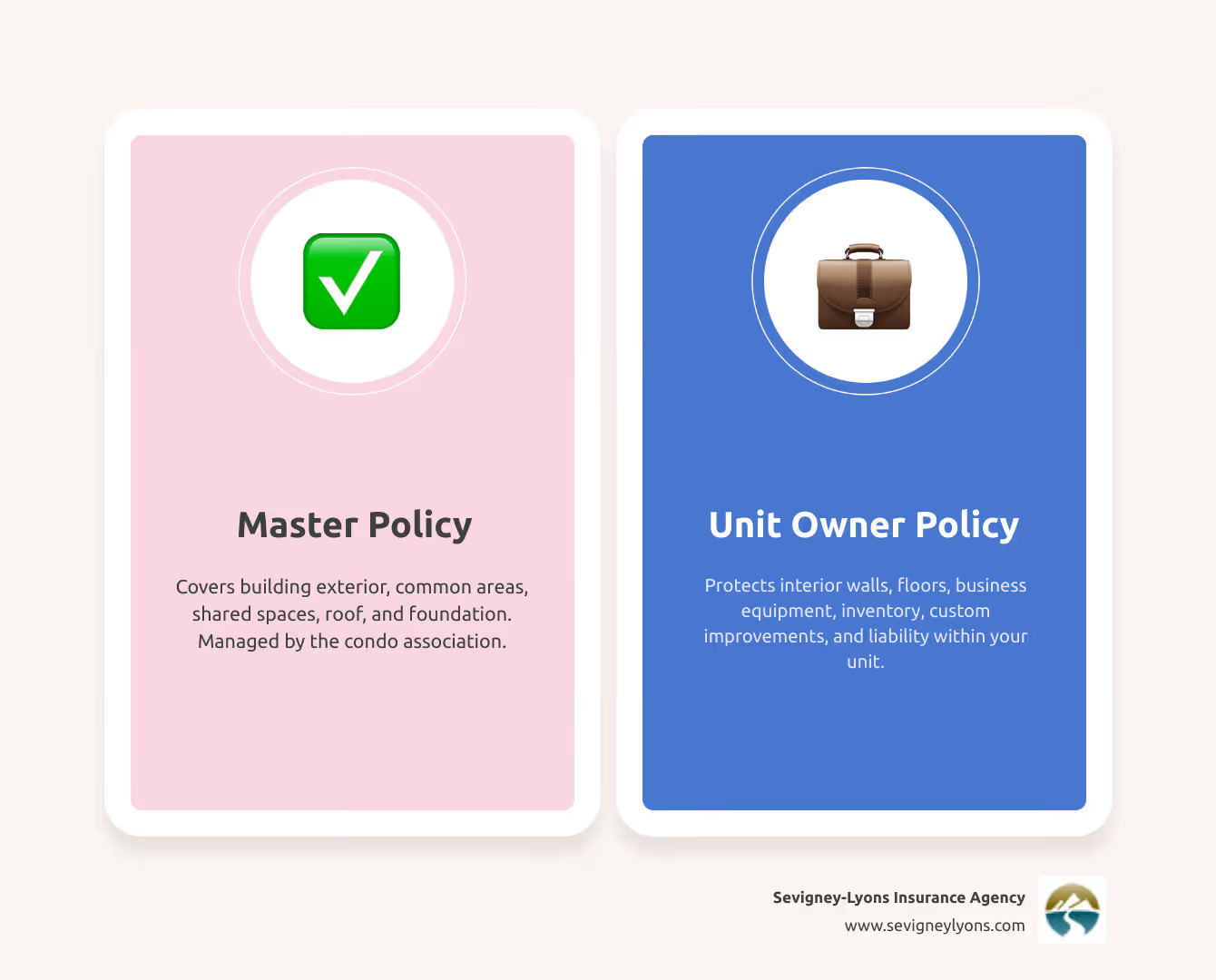
The Two-Policy System: Master Insurance vs. Your Unit's Policy
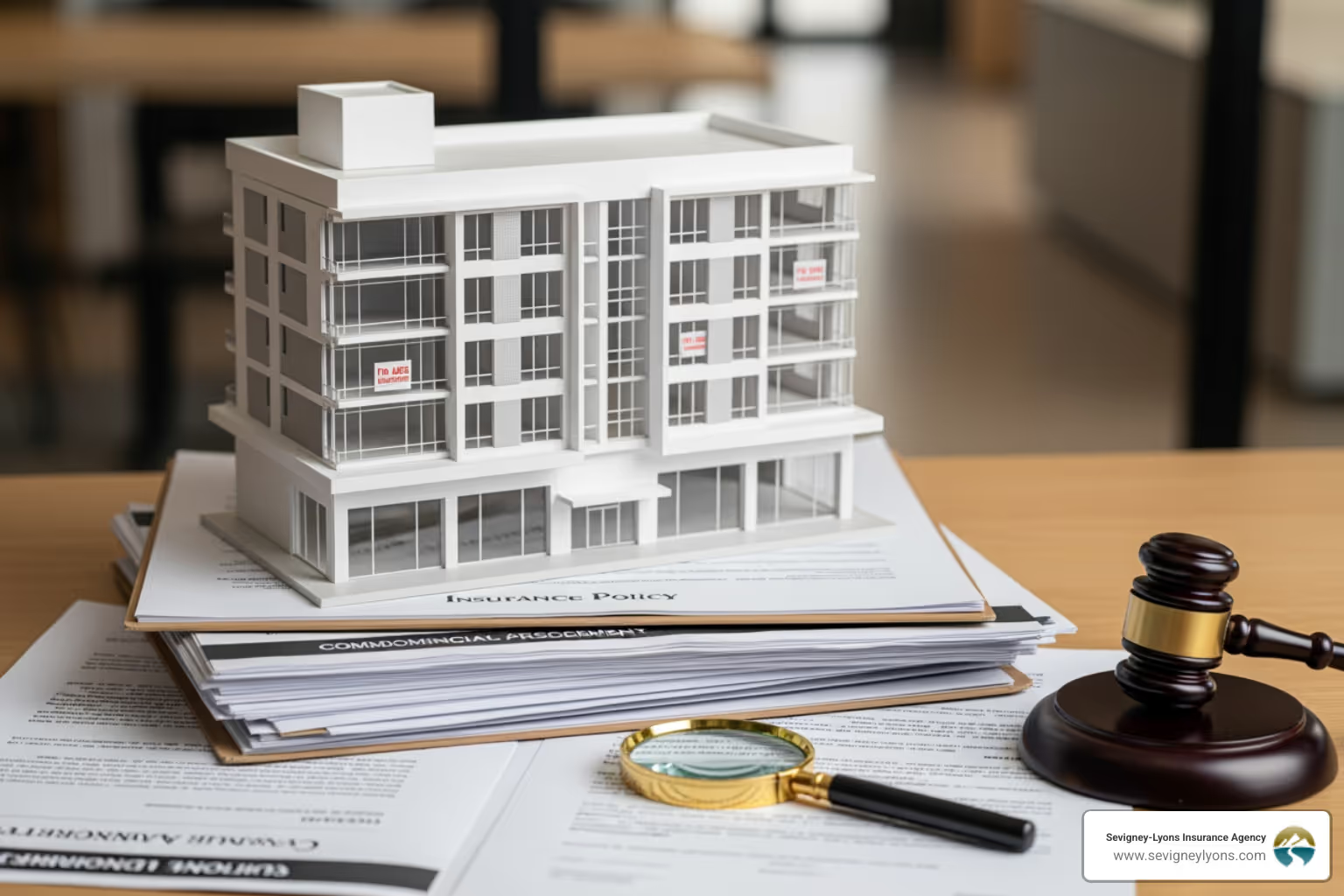
Here's something we explain almost daily at our Wells office: owning a commercial condo unit means you need two separate insurance policies working together. Many Maine business owners assume the condo association's master policy covers everything. It doesn't.
Think of it this way: the association's policy protects the shared building, while your policy protects everything that makes your business yours. Without both, you're exposed to potentially devastating financial losses.
The Condo Association's Master Policy
The master policy is purchased by your condo association to cover the entire building and everything unit owners share. This includes:
- The building structure: The exterior walls, roof, foundation, and structural framework. If a winter storm damages the roof over your Kennebunk office, the master policy handles the repair.
- Common areas: Lobbies, hallways, elevators, parking lots, and other shared facilities. If someone slips on ice in the parking lot, the association's general liability responds.
- Shared property and systems: The main HVAC equipment, electrical panels, and property the association owns (like lobby furniture).
- Directors & Officers (D&O) Liability: This protects board members from lawsuits related to their decisions managing the association.
Master policies come in three main types, and you must know which one your association has:
- "Bare walls-in": The most basic type, covering only the structure and common areas—nothing inside your unit.
- "Single entity": Covers the original builder-grade fixtures inside your unit, but not any upgrades you've made.
- "All-in": The most comprehensive, covering the building, common areas, and all fixtures and improvements within units, including your renovations.
We always tell our Ogunquit and Biddeford clients to review their condo association's bylaws and declarations. These documents spell out exactly where the master policy ends and your responsibility begins, which determines the comercial condo insurance you need.
For more details, see our guide on Condo Association Insurance Coverage.
Your Business's Individual Unit Owner Policy
This is where your comercial condo insurance protects your specific business assets and livelihood. Key coverages include:
- "Walls-in" coverage: Protects everything inside your unit's walls, including interior walls (if not covered by the master policy), flooring, ceilings, and fixtures you've installed.
- Business personal property: Covers everything that makes your business run: inventory, computers, office furniture, specialized equipment, and signage. If a pipe bursts in your Wells boutique, this coverage helps replace damaged merchandise and equipment.
- Improvements and betterments: Protects upgrades you've made beyond the original construction, like custom cabinetry or specialized electrical work.
- Loss assessment coverage: This is crucial. If a major repair exceeds the master policy's limits, the association may assess each unit owner a share of the cost. This coverage helps pay your portion.
- Liability within your unit: The master policy covers common areas, but if a customer is injured inside your Kennebunk shop, your policy covers their medical expenses and your legal defense.
A fire in a neighboring unit could cause smoke damage to your inventory and interior. The master policy would repair the building's structure, but your unit owner policy would be responsible for repainting your walls, replacing your custom shelving, and covering your lost inventory. Without it, you'd face those costs out-of-pocket.
For a deeper dive, visit our page on Commercial Condo Insurance Coverage.
What Does a Comprehensive Comercial Condo Insurance Policy Cover?
A comprehensive comercial condo insurance policy is a safety net that protects your Maine business from financial hits that could otherwise shut you down. Whether you're in Kennebunk, Wells, or Biddeford, these core coverages help you operate with confidence.

Protecting Your Physical Assets and Build-Outs
The property coverage in your policy protects your physical space and the things inside it. This includes:
- Building interior, fixtures, and improvements: This covers the walls, floors, and ceilings, plus permanent additions like built-in shelving, custom reception desks, or specialized lighting. If a pipe bursts and ruins your custom flooring, your policy responds.
- Equipment and inventory: All your computers, desks, tools, machinery, and merchandise are protected. For a retail shop in Ogunquit, this can mean the difference between reopening after a fire or closing for good.
Most policies offer "open perils" coverage, meaning they cover everything except what's specifically excluded, such as fire, theft, vandalism, and windstorms. Specialized add-ons like equipment breakdown insurance (for mechanical failures) and crime insurance (for employee dishonesty) can fill common gaps.
For more insights, visit our page on Commercial Condo Insurance.
Shielding Your Business from Liability Claims
Commercial General Liability protects you when your business operations cause harm to others. If a client slips in your Wells office or a customer trips over a display in your Kennebunk shop, you could face significant medical bills and legal fees.
Your liability coverage handles:
- Medical expenses for injured parties.
- Legal defense costs, even if a claim is groundless.
- Settlements or judgments if you're found responsible.
- Property damage your business causes to others.
- Advertising injury claims like slander, libel, or copyright infringement.
A single lawsuit can be devastating. Robust liability protection is non-negotiable for Maine businesses.
Keeping Your Business Afloat with Business Interruption Coverage
This might be the most important coverage you have. It keeps money flowing if a disaster forces you to close temporarily. Imagine a fire or storm damage makes your Biddeford office unusable for months. You have no revenue, but the bills keep coming.
Business interruption coverage acts as a financial bridge by covering:
- Lost income you would have earned while open.
- Ongoing expenses like payroll, rent, utilities, and taxes.
- Temporary relocation costs if you need to operate from another location during repairs.
This coverage gives you the breathing room to rebuild without scrambling to cover basic expenses. It turns a potential catastrophe into a manageable setback, ensuring your Maine business survives.
Navigating Costs, Exclusions, and Maine Requirements
Understanding comercial condo insurance means knowing what's covered, what's not, how costs are calculated, and what Maine requirements you must meet. Let's break down the fine print for business owners in Wells, Kennebunk, and Ogunquit.
What's Generally Excluded from Coverage?
No policy covers everything. Knowing the common exclusions helps you avoid expensive surprises.
- Flood damage: Standard policies do not cover damage from flooding or storm surge. For coastal Maine businesses, a separate policy, often available through the National Flood Insurance Program, is essential.
- Earthquake damage: This also requires a separate policy or endorsement.
- Wear and tear: Insurance covers sudden accidents, not gradual deterioration from aging or poor maintenance.
- Intentional acts: Damage caused intentionally by you or your employees is not covered.
- Employee theft: This requires a separate Crime Insurance policy.
- Other exclusions: Common exclusions also include government actions, pollution, faulty workmanship, and cyber risks like data breaches, which require dedicated Cyber Liability Insurance.
Always read your policy and ask us about anything that's unclear. We're here to help you understand your protection.
How is the Cost of Comercial Condo Insurance Calculated?
Insurers consider several factors to determine your premium. While average costs vary, your specific rate in Maine will depend on:
- Location: A coastal Kennebunk property has different risks (e.g., windstorms) than an inland Biddeford location.
- Building construction: Newer buildings with modern fire suppression and updated electrical systems are cheaper to insure.
- Business type: A quiet office has lower risk and premiums than a busy restaurant.
- Claims history: A clean record can lower your costs, while multiple claims will increase them.
- Coverage limits and deductibles: Higher limits increase premiums, but a higher deductible can lower them.
- Safety measures: Alarms, sprinklers, and security cameras can earn you discounts.
- Value of business assets: The total value of your inventory, equipment, and improvements affects the cost.
For more on liability costs, see our article on Maine Business Liability Insurance Cost.
Is Comercial Condo Insurance Required by Law in Maine?
While Maine state law doesn't require most businesses to carry comercial condo insurance, it's rarely optional. In practice, coverage is almost always mandatory because:
- Lenders require it: If you have a mortgage on your unit, your bank will mandate insurance to protect their investment.
- Condo associations require it: Your association's bylaws will almost certainly require you to have your own policy to protect the community.
- Leases require it: If you rent your unit, your lease will specify the insurance you must carry.
Beyond these requirements, the financial risk of a fire, theft, or lawsuit makes coverage a practical necessity for survival. We consider it essential for any Maine business in a shared commercial space. For a broader look, explore our guide on Maine Business Insurance Essential 2025.
Frequently Asked Questions about Commercial Condo Insurance in Maine
We've helped business owners across Southern Maine steer comercial condo insurance. Here are answers to the questions we hear most often from clients in Wells, Kennebunk, Ogunquit, and Biddeford.
What is loss assessment coverage and why is it important?
Loss assessment coverage protects you if your condo association issues a special assessment to all unit owners. This happens when a major loss to a common area exceeds the association's master policy limits or deductible. For example, if a major storm causes damage, the association may assess each unit owner thousands of dollars to cover the shortfall. Your loss assessment coverage would pay your share of that bill, up to your policy limit. Given Maine's harsh weather, this is a vital protection.
What's the difference between "replacement cost" and "actual cash value" for my property?
This distinction is critical at claim time.
- Replacement cost pays to replace your damaged property with new items of similar quality, without deducting for depreciation. If a fire destroys your five-year-old computer system, this coverage pays for a brand-new one.
- Actual cash value (ACV) pays the replacement cost minus depreciation. For that same five-year-old computer, you'd only receive what it was worth right before the fire, leaving you to pay the difference for a new system.
We almost always recommend replacement cost coverage. It costs slightly more, but it ensures you can get your business back up and running without facing a large out-of-pocket expense.
Do I still need this insurance if I rent my commercial condo to another business?
Yes, absolutely. As the landlord of a commercial condo unit in Maine, you need your own policy, and your tenant needs their own as well. The two policies provide complementary protection.
- Your landlord policy protects your investment: the unit's interior structure, your fixtures, and your liability as the property owner. It can also include loss of rental income coverage, which replaces lost rent if a covered event like a fire makes the unit uninhabitable.
- Your tenant's policy covers their business: their equipment, inventory, and liability for their operations.
This dual-insurance approach ensures both your investment and your tenant's business are properly protected. For more on this, see our page on Maine Condo Insurance for Landlords.
How to Secure the Best Coverage for Your Maine Business
Comprehensive comercial condo insurance is a foundation of security for your Maine business. It provides peace of mind and the financial protection to recover quickly from a disaster, turning a potential crisis into a manageable situation.
When a pipe bursts in your Wells unit or a customer is injured in your Kennebunk shop, the right policy means you won't have to drain your savings to rebuild or defend against a lawsuit. Business interruption coverage can keep your business afloat, allowing you to pay bills and employees while you get back on your feet.
Finding the right coverage starts with a few key steps:
- Assess your needs: Understand the full replacement cost of your equipment, inventory, and improvements.
- Review your condo documents: Decode your association's master policy and bylaws to identify your specific responsibilities.
- Work with an independent agent: This is where we make the difference.
At Sevigney-Lyons Insurance Agency, we aren't tied to a single carrier. With access to over 20 top insurance companies, we shop the market to find the best coverage and price for your unique business. Our local expertise in Southern Maine means we understand the risks facing businesses in Wells, Ogunquit, Biddeford, and beyond.
We build custom solutions for Maine businesses like yours. Let's have a conversation about your situation and create a comercial condo insurance policy that gives you the confidence to focus on running your business.
Get a quote for comprehensive condo building insurance in Maine