Blog Content
Why Finding the Right Home Insurance Matters More Than Ever
To find best Maine home insurance, compare quotes from multiple insurers, choose replacement cost coverage (RCV), ensure your dwelling coverage meets the 80% rule, and evaluate companies on more than just price. For Maine homeowners, this also means understanding coastal risks like storm surge and inland threats like ice dams.
Your home, whether it's a historic property in Kennebunk or a cottage in Wells, is your biggest investment. Yet many homeowners simply renew their policy without a second thought, an approach that can leave you dangerously underinsured.
The stakes are high in Maine. Coastal communities face Nor'easters, while inland areas deal with heavy snow. With construction costs surging 40% recently and disaster-related losses climbing, having the right coverage is more critical than ever.
The good news is that a strategic approach can help you find comprehensive coverage without breaking your budget. This guide will walk you through everything you need to know to find the best home insurance for your specific situation in Maine.

Learn more about find best home insurance:
Understanding Your Home Insurance Needs in Maine
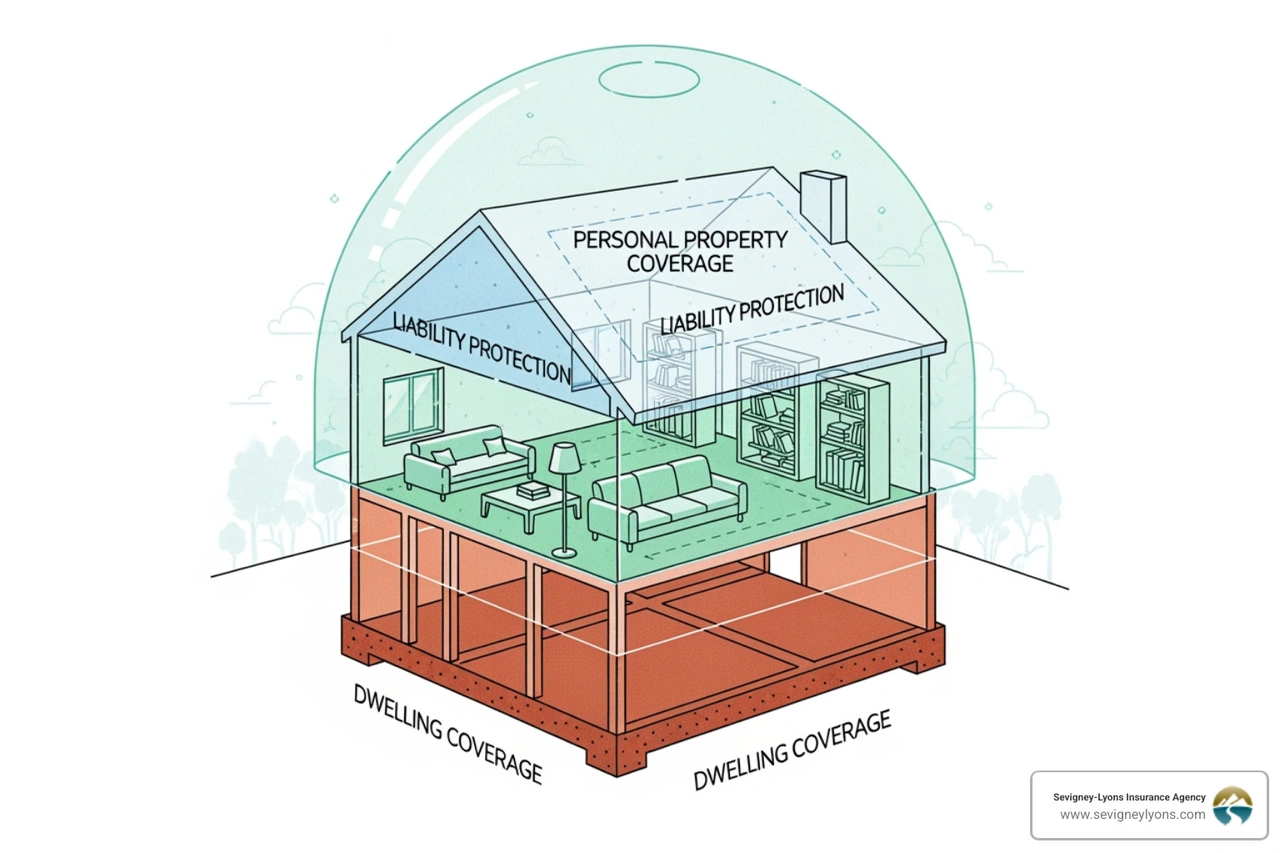
Finding the best home insurance starts with understanding what your policy protects. In Maine, where we face everything from Nor'easters to ice dams, making informed choices is crucial.
Decoding Home Insurance Policies
When you look to find best home insurance, you'll see terms like HO-3 and HO-5. These are the most common policy forms, and their differences are important. While most insurers use standard forms, some use their own versions, so it's always wise to ask your agent about the specifics. The main difference is how they cover your personal property:
- HO-3 (Special Form): This is the most common policy. It provides "open perils" coverage for your home's structure, meaning it's covered for all causes of loss unless specifically excluded. However, your personal belongings are covered on a "named perils" basis, meaning they are only covered for the 16 specific perils listed in the policy (like fire, theft, or wind).
- HO-5 (Comprehensive Form): This policy offers superior "open perils" coverage for both your home's structure and your personal property. This means your belongings are covered for all causes of loss unless explicitly excluded, which simplifies the claims process and puts the odds in your favor.
More info about Maine home insurance options.
What's Covered vs. What's Not: Common Maine Exclusions
Standard policies typically cover:
- Dwelling: The structure of your home.
- Other Structures: Detached garages, sheds, etc.
- Personal Property: Your belongings, like furniture and electronics.
- Liability: Financial protection if someone is injured on your property.
- Additional Living Expenses (ALE): Covers costs like hotel stays if your home is uninhabitable after a covered loss.
However, know what's not covered, especially in Maine:
- Flooding: Standard policies do not cover damage from external flooding, including storm surge along the coast in towns like Wells and Kennebunk. You need a separate flood insurance policy, available through the National Flood Insurance Program (NFIP) or a private insurer.
- Earthquakes: Damage from earth movement is typically excluded.
- Normal Wear and Tear: Policies are not maintenance plans; gradual deterioration is not covered.
- Sewer Backups: This is usually excluded, but you can often add coverage with an endorsement.
More on Maine storm damage and Understanding Maine flood maps can help you prepare.
Replacement Cost (RCV) vs. Actual Cash Value (ACV): A Critical Choice
This choice determines how you're paid for damaged belongings.
- Replacement Cost Value (RCV): Pays to replace your damaged items with new ones of similar quality, without deducting for depreciation. If your five-year-old sofa is destroyed, RCV pays for a new one.
- Actual Cash Value (ACV): Pays the replacement cost minus depreciation (age, wear, and tear). For that same sofa, ACV would only pay what a five-year-old sofa was worth, leaving you to cover the difference for a new one.
While ACV policies have lower premiums, RCV provides greater financial security. When you find best home insurance, prioritizing RCV for your personal property is a smart move.
The 80% Rule Explained
The "80% rule" states that you must insure your home for at least 80% of its full replacement value. If you don't, your insurer can impose a coinsurance penalty, reducing your claim payout.
For example, if your home's replacement cost is $300,000, you need at least $240,000 (80%) in dwelling coverage. If you have that amount and suffer a $50,000 loss, you'll be paid in full (minus your deductible). But if you only carry $180,000 of coverage, the insurer might only pay a portion of your loss, leaving you with a significant out-of-pocket expense.
With construction costs rising, it's easy to become underinsured. Regularly review your dwelling coverage with your agent to ensure it reflects the current cost to rebuild.
Key Factors That Influence Your Maine Home Insurance Costs
To find best home insurance, it helps to know what affects your premium. Insurers assess a variety of risk factors to calculate your rate.
Your Home's Profile: Location, Age, and Construction
Your home's specific traits play a huge role in your premium.
- Location Risks: This is a major factor in Maine. Homes in coastal towns like Wells, Kennebunk, and Ogunquit face higher risks from Nor'easters and storm surge. Proximity to a fire station and local crime rates also influence costs.
- Home's Age and Condition: Older homes can have higher premiums due to outdated systems. For those with Insurance for historic Maine homes, specialized policies may be needed.
- Construction and Roof: The materials used to build your home and the age and condition of your roof are critical. A newer roof often results in a lower premium.
For more insights, Learn about Maine insurance costs.
Opening up Savings: Common Home Insurance Discounts
When you find best home insurance, always ask about discounts. Common savings opportunities include:
- Bundling: Combining your home and auto policies with one insurer is often the biggest money-saver.
- Protective Devices: Installing smoke detectors, security systems, and even deadbolt locks can earn you discounts.
- New Roof: A recently replaced roof can qualify you for savings.
- Claims-Free History: A history without claims is often rewarded with lower premiums.
- Loyalty: Staying with the same insurer for several years can earn you a discount.
- Home Renovations: Some insurers offer discounts for recent updates to plumbing, electrical, or HVAC systems.
The Pros and Cons of Bundling Home and Auto Insurance
Bundling is a popular strategy, but it's important to weigh the pros and cons.
Pros of Bundling:
- Significant Savings: The discount for combining policies can be substantial.
- Convenience: Managing your insurance is simpler with one company, one bill, and one renewal date.
- Single Deductible Potential: Some insurers may only require you to pay one deductible if a single event (like a storm) damages both your home and car.
Cons of Bundling:
- May Not Always Be Cheapest: It's not a guarantee. Sometimes, two separate policies from different companies might cost less.
- Potential for Coverage Gaps: Focusing only on the discount could lead you to choose a policy with inadequate coverage.
The key is to do your homework. Compare the bundled rate against separate quotes for similar coverage to ensure you're getting the best deal.
How to Find the Best Home Insurance and Compare Quotes
Now you're ready to find best home insurance that fits your needs. This section provides a practical roadmap for shopping for a policy that offers true value.
Gathering Your Information for an Accurate Quote
Before you start, gather your home's "resume" to ensure you get accurate quotes. You'll typically need:
- Property address and year built
- Square footage and construction details (exterior, roof type and age)
- Details on heating, plumbing, and electrical systems, including any recent upgrades
- Information on safety features (smoke detectors, security systems)
- Your personal information and any past claims history
- Mortgage lender information, if applicable
Having this ready will speed up the process. Creating a detailed home inventory is also helpful for insuring your belongings.
A Step-by-Step Guide to Effectively Compare Quotes
It's time to shop like a savvy consumer.
- Get Multiple Quotes: The industry standard is to get at least three quotes. The more you compare, the better your chances of finding the optimal balance of coverage and price.
- Ensure "Apples-to-Apples" Comparison: Don't just look at the premium. Make sure each quote has comparable coverage types (e.g., HO-3 vs. HO-5) and limits.
- Compare Deductibles: A higher deductible lowers your premium. Ensure the deductibles are the same across quotes for a fair comparison. Be aware of separate, higher deductibles for perils like windstorms in coastal Maine.
- Check Coverage Limits: Verify that the limits for your dwelling, personal property, and liability are sufficient. Remember the 80% rule for your dwelling!
- Review Endorsements: If you need extra coverage for things like water backup or valuable jewelry, make sure it's included in the quotes.
For personalized assistance, you can always Get help with Maine home insurance quotes.
How to evaluate a provider to find the best home insurance
When you're trying to find best home insurance, the lowest price isn't always the best value. A cheap policy is worthless if it doesn't pay when you need it. Here’s what else to consider:
- Customer Service & Claims Satisfaction: How does an insurer treat its customers, especially during a claim? This is the true test of an insurance company. Look for third-party ratings and consumer surveys that measure claims satisfaction.
- Financial Stability Ratings: Can the company pay out large claims? Check ratings from agencies like AM Best and Standard & Poor's, which assess an insurer's financial strength.
- Company Characteristics: Consider if the insurer offers user-friendly online tools, local agents for personalized service (especially valuable in Maine), and a good range of discounts.
By looking at the whole picture, you can choose a provider that gives you confidence and peace of mind.
Navigating Special Situations and Industry Trends
The insurance landscape is constantly evolving. This section covers emerging trends and options for hard-to-insure properties, helping you find best home insurance even in challenging circumstances.
Current Trends Shaping the Maine Insurance Market
Several recent shifts in the industry directly impact Maine homeowners:
- Rising Rates: The average cost of homeowners insurance is increasing. This is driven by inflation in construction costs (which rose 40% recently) and a significant increase in natural disaster-related losses nationwide. These trends mean it costs insurers more to repair or rebuild homes, and those costs are passed on in premiums.
- Technological Advancements: Insurers are increasingly using artificial intelligence for underwriting and claims processing, leading to more precise risk assessment that can impact your premium.
- Climate Change Impact: The broader trend of climate change is affecting insurance availability and rates in vulnerable areas, a relevant concern for Maine's coastal communities.
These trends underscore the importance of regularly reviewing your policy and shopping around.
When Standard Policies Aren't an Option: High-Risk Coverage
Sometimes, a property's location or unique features make it difficult to insure through standard carriers. This can apply to coastal homes in flood-prone areas like Wells or Ogunquit, or older homes with un-updated systems. If you're in this situation, you still have options:
- FAIR Plans (Fair Access to Insurance Requirements): These are state-mandated, last-resort plans for high-risk homeowners who can't get coverage elsewhere. They typically offer more basic coverage at a higher cost but provide an essential safety net.
- Excess & Surplus (E&S) Lines: These policies come from specialized insurers that cover unique or high-risk properties that traditional carriers won't. An independent agent can help you access these markets, but it's crucial to review the policy details carefully.
For guidance on state-specific programs, you can contact your state's insurance department.
The Home Insurance Claims Process: What to Do When Disaster Strikes
Knowing how to steer the claims process is as important as finding the right policy. This section outlines the essential steps to take after a loss.
Step-by-Step: How to File a Homeowners Insurance Claim
Filing a claim can be stressful, but a clear process helps.
- Prioritize Safety: Evacuate if there is any danger.
- Prevent Further Damage: If it's safe, make temporary repairs like covering a broken window or tarping a roof. Keep all receipts.
- Document Everything: Before cleaning up, take extensive photos and videos of all damage. Create a list of damaged or destroyed items.
- Contact Your Insurer Promptly: Report the loss to your insurance company or agent as soon as possible.
- File a Police Report: If the claim involves theft or vandalism, file a police report immediately. Your insurer will need it.
- Keep Detailed Records: Log all communications with your insurer and keep copies of all documents.
Understanding the Role of the Insurance Adjuster
After you file, an adjuster will be assigned to investigate the damage and estimate the cost of repairs.
- What to Expect: The adjuster will visit your home to inspect the damage. Be prepared with your documentation, photos, and list of damaged items.
- Working with the Adjuster: Be present for the inspection to point out all damage. Ask questions about the process and what's covered. Don't feel pressured to accept a settlement offer immediately.
- Company vs. Public Adjuster: The company adjuster works for your insurer. You also have the option to hire a public adjuster, who works for you to advocate on your behalf, which can be helpful for large or complex claims.
After the assessment, you'll receive a settlement offer. Review it carefully. If you disagree, you can negotiate with your insurer or seek other remedies.
Frequently Asked Questions about Finding Home Insurance
How many quotes should I get when shopping for homeowners insurance?
To find best home insurance, we recommend getting at least three quotes. Comparing multiple offers from different carriers is the most effective way to find the right balance of coverage, service, and price for your specific needs.
What is the difference between replacement cost and actual cash value?
This is a critical distinction for how you are paid after a claim.
- Replacement Cost Value (RCV): Pays to replace your damaged property with new items of similar quality, without deducting for depreciation. This is highly recommended for personal property.
- Actual Cash Value (ACV): Pays the replacement cost minus depreciation. This payout is almost always lower than RCV, leaving you with out-of-pocket costs to buy new items.
Does standard home insurance cover flooding in Maine?
No. Standard homeowners policies exclude damage from external flooding, including storm surge in coastal towns like Wells, Ogunquit, and Kennebunk. To be covered for flood damage, you must purchase a separate flood insurance policy, which is available through the National Flood Insurance Program (NFIP) or private insurers.
Your Partner in Protection
Finding the right homeowners insurance in Maine requires understanding your needs, comparing options, and focusing on value over price. By evaluating coverage, costs, and claims service, you can secure a policy that truly protects your home. An independent insurance agency like Sevigney-Lyons is an invaluable partner in this process. We use our local expertise and access to multiple carriers to steer the complexities and find the optimal solution for you. Protect your piece of Maine with confidence. Find the best homeowners insurance coverage in Maine today.