

Blog Content
Your Guide to Navigating Maine Home Insurance
While Maine home insurance isn't legally required, mortgage lenders mandate it to protect your investment. For homeowners in Wells, Kennebunk, Ogunquit, and Biddeford, understanding your policy is crucial, especially given Maine's unique risks like coastal storms and harsh winters.
Quick Answer: Key Maine Home Insurance Regulations
- No state mandate - Maine doesn't require homeowners insurance by law, but lenders do.
- Cancellation rules - Insurers can only cancel after 90 days for specific reasons like non-payment or fraud.
- Appraisal clause - You have the right to dispute claim amounts through a binding appraisal process.
- 180-day window - You must file supplemental replacement cost claims within 180 days of receiving an ACV payment.
- No grace period - Premium payments are due by the date specified in your policy.
- Required coverage levels - Most policies require you to insure your home for 80-100% of its replacement cost.
Maine's weather, from nor'easters to ice dams, creates risks that standard policies may not fully cover. For instance, flood damage from rising water is not covered by a standard policy. This guide breaks down Maine's home insurance regulations, helping you understand your rights, your coverage, and the rules insurers must follow.
Easy **Maine home insurance *** glossary:
Understanding Your Standard Maine Homeowners Policy
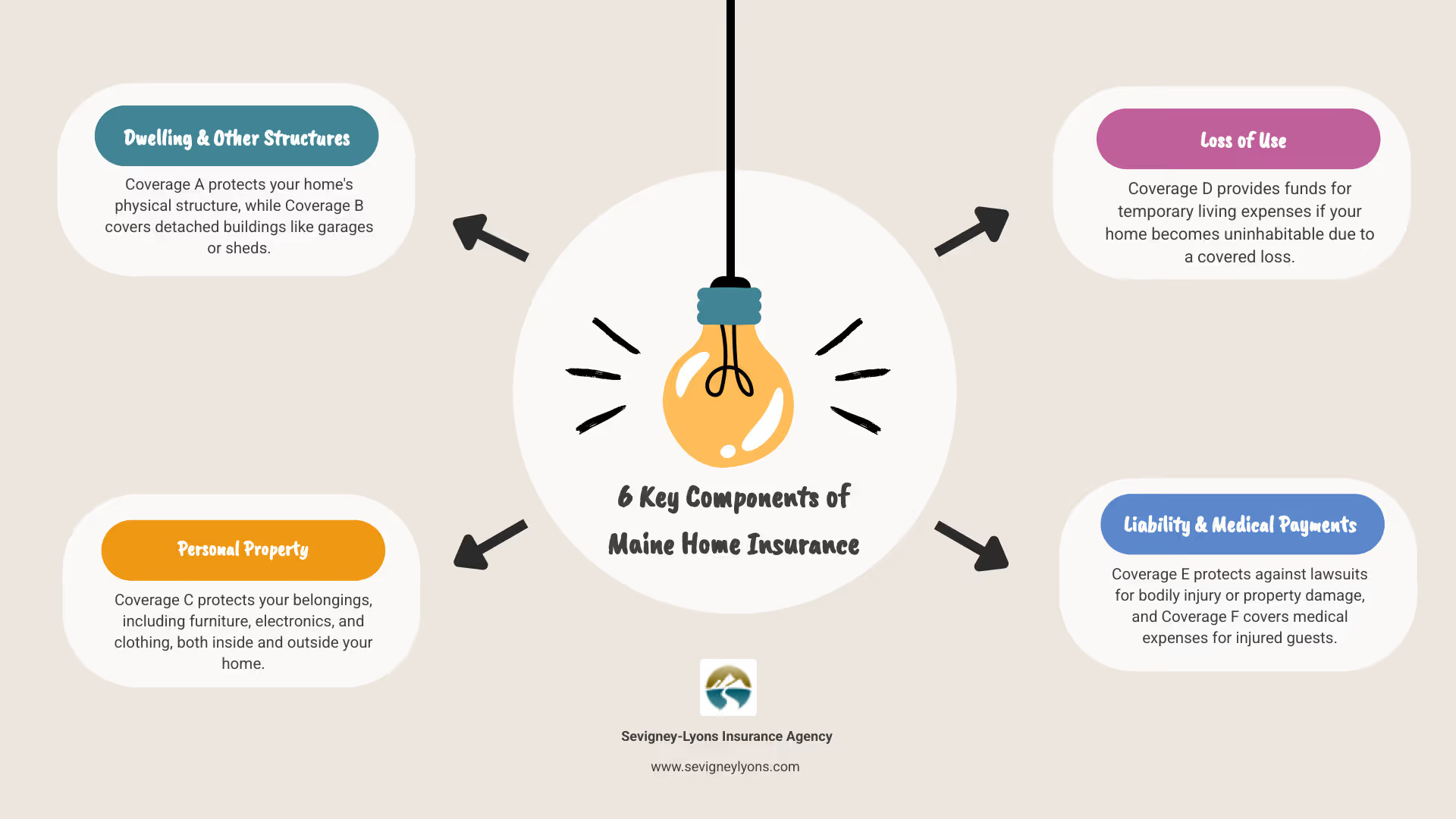
When we talk about Maine home insurance, we're typically referring to a package of coverages designed to protect your home and belongings. Most standard policies include six core components.
Let's break down these essential coverages:
- Dwelling Coverage (Coverage A): This covers the physical structure of your home, including attached structures and built-in systems like plumbing and heating. It helps pay for repairs or rebuilding after a covered event like a fire or windstorm.
- Other Structures Coverage (Coverage B): This protects structures not attached to your home, such as detached garages, sheds, and fences, from the same perils as your main dwelling.
- Personal Property Coverage (Coverage C): This helps repair or replace your belongings—furniture, electronics, clothing—if they are damaged or stolen. This coverage often applies even when your items are away from home.
- Loss of Use Coverage (Coverage D): Also known as additional living expenses, this helps pay for temporary housing and other necessary costs if a covered peril makes your home uninhabitable during repairs.
- Personal Liability Coverage (Coverage E): This protects you from costly lawsuits if a guest is injured on your property and you are found legally responsible. It covers legal fees and potential judgments.
- Medical Payments to Others (Coverage F): This is a "no-fault" coverage that pays for minor medical expenses for guests injured on your property, regardless of who was at fault, helping to prevent larger claims.
For a deeper dive, explore the Maine Bureau of Insurance's "What the Policy Covers" guide or our insights on Maine Home Insurance Coverage Options.
Is Homeowners Insurance Legally Required in Maine?
No, the state of Maine does not legally require homeowners insurance. However, if you have a mortgage, your lender will almost certainly require you to maintain a policy to protect their financial investment. If your coverage lapses, the lender may purchase more expensive, less comprehensive "force-placed" insurance on your behalf.
Even if you own your home outright, going without insurance is a significant risk. A policy provides crucial financial security against unexpected events like fires, storms, or theft.
Decoding Your Policy: Replacement Cost vs. Actual Cash Value (ACV)
When you file a claim, your property will be valued based on either Actual Cash Value (ACV) or Replacement Cost. The difference significantly impacts your payout.
Actual Cash Value (ACV) is an item's replacement cost minus depreciation for age and wear. It pays what an item is worth today.
Replacement Cost coverage pays the cost to buy a new, similar item without deducting for depreciation. This offers more complete financial recovery. Typically, you first receive an ACV payment, then submit receipts for new items to claim the remaining amount. In Maine, you have 180 days from the ACV payment to file this supplemental claim.
Here's a quick comparison:
We generally recommend Replacement Cost coverage for your dwelling and personal property to ensure you can fully rebuild and replace what you've lost. For more insights, check out our guide on Maine Home Insurance Explained.
Maine-Specific Risks and Necessary Additional Coverage
Living in Maine, especially in coastal towns like Wells and Kennebunk, means facing unique weather risks. Standard Maine home insurance provides a solid foundation, but our regional challenges often require additional coverage.
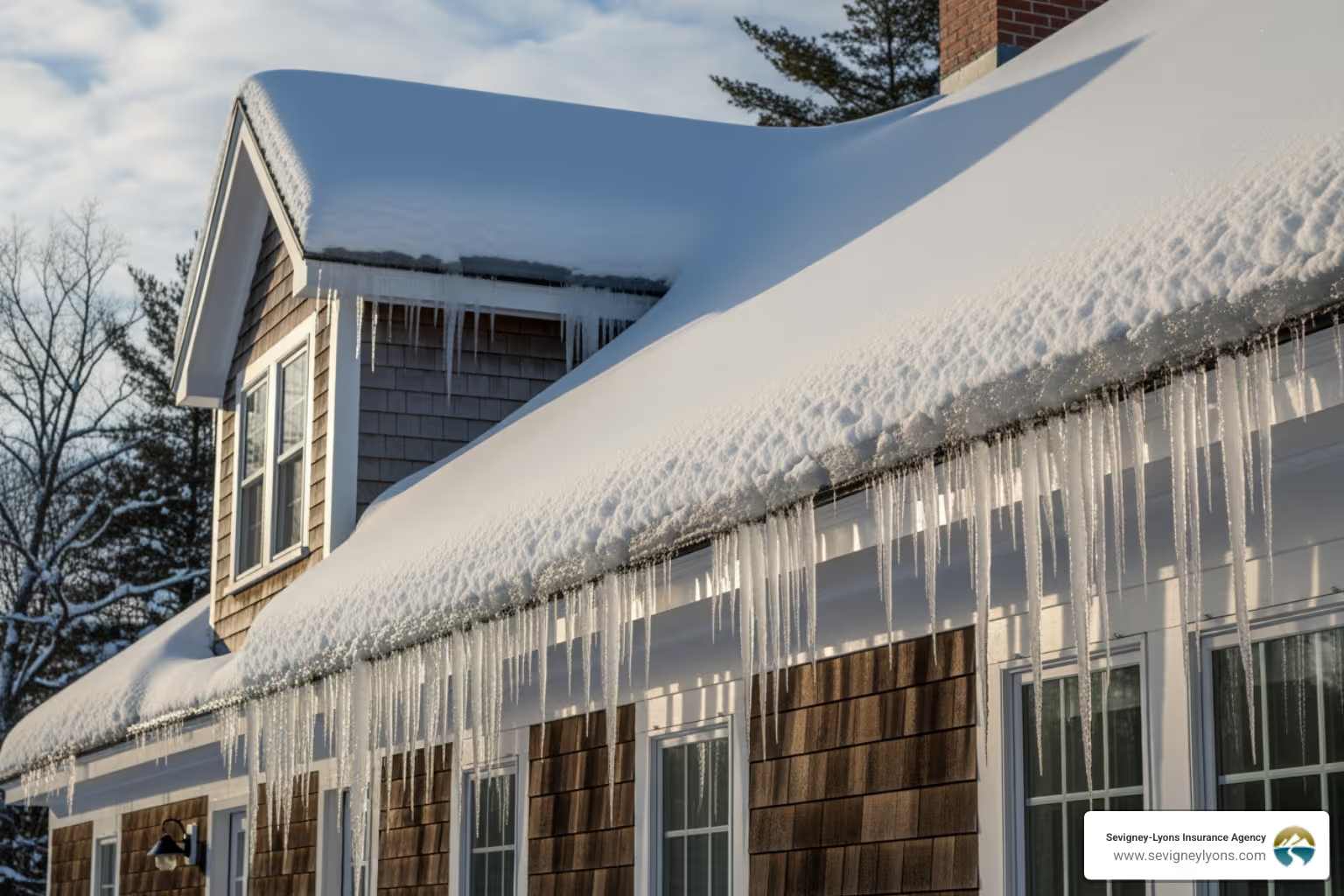
Our winters bring heavy snow and ice, which can cause roof damage, ice dams, and frozen pipes. While policies may cover water damage from burst pipes, they often require that you maintained heat in the home. Nor'easters can bring strong winds and coastal flooding. Understanding these risks is key to ensuring you're protected. For more on storm prep, see our article on Maine Home Insurance for Storm Damage.
Do You Need Flood Insurance in Coastal and Inland Maine?
A critical point for all homeowners: standard Maine home insurance policies do NOT cover flood damage. This is a universal exclusion. If rising rivers, heavy rains, or coastal storm surges damage your home in Biddeford or Kennebunk, your homeowners policy won't cover it.
Flood insurance is a separate policy, typically purchased through the National Flood Insurance Program (NFIP). Even if you're not in a high-risk flood zone, we encourage all Maine homeowners to consider it. For coastal communities like Wells and Ogunquit, it's a necessity. There's usually a 30-day waiting period before coverage begins. To learn more about adding this crucial protection, explore our insights on Maine Hazard Home Insurance.
Endorsements for Valuables and Unique Properties
Sometimes a standard policy isn't enough. Endorsements (or riders) add specific coverages for your unique needs.
If you own valuable items like jewelry, art, or antiques, standard policies have coverage limits. Scheduled Personal Property coverage insures these items for their full appraised value. This is essential for collectors of Maine Antiques Insurance.
Another key endorsement is Water Backup and Sump Overflow coverage. Standard policies don't cover damage from backed-up sewers or failed sump pumps, making this a valuable addition.
Other endorsements to consider include Identity Theft Protection and Equipment Breakdown Coverage. For specialized properties, explore our guides on Home Insurance for Maine Historic Homes and Best Second Home Insurance Maine.
The Rules of the Game: Maine Home Insurance * Regulations
While Maine home insurance isn't state-mandated, Maine has clear regulations governing how insurers operate and protecting your rights as a policyholder. The Maine Bureau of Insurance is the primary resource for these rules.
These regulations are designed to ensure fair practices, from policy requirements to the rules for cancellation. Knowing them empowers you to handle disputes and make informed decisions. The Maine Bureau of Insurance's Homeowners or Renters Insurance page provides detailed information.
Understanding the Appraisal Clause in Your Policy
If you and your insurer disagree on the cost of a covered loss, the appraisal clause in your Maine home insurance policy provides a way to resolve the dispute. It addresses disagreements over the monetary value of a loss, not whether the loss is covered.
Here's how it works: you and your insurer each hire an independent appraiser. If they can't agree, they select a neutral umpire. A decision agreed upon by any two of the three is binding on both parties. This process offers a structured resolution without resorting to litigation.
Why Can an Insurer Cancel or Not Renew Your Policy?
Insurers can't drop your Maine home insurance policy without cause. Maine law specifies the reasons they can cancel or non-renew.
Cancellation within the First 90 Days: An insurer has more leeway, but cannot cancel for reasons prohibited by law (e.g., solely based on age or credit score).
Mid-Term Cancellation (After 90 Days): After 90 days, an insurer can only cancel for specific reasons defined by the Maine Property Insurance Cancellation Control Act, including:
- Non-payment of Premium: Timely payment is essential as there is no legal grace period.
- Fraud or Material Misrepresentation: Providing false information on an application or claim.
- Increased Hazard: Negligent acts that substantially increase the risk insured against.
- Physical Changes: A change in the property's condition that makes it uninsurable.
- Failure to Comply: Not making safety improvements recommended by the insurer after an inspection.
Non-Renewal: An insurer can choose not to renew your policy for similar reasons or other good faith business reasons related to the property's insurability.
If your policy is canceled or non-renewed, you have the right to receive advance notice and may be able to request a hearing with the Maine Bureau of Insurance.
Managing Costs and Finding the Right Policy
For homeowners in Wells, Kennebunk, and across Maine, cost is a key factor for Maine home insurance. The average annual premium in Maine was $979.82 in 2023, but your actual rate will depend on many factors.
Key elements that influence your premium include:
- Location: Proximity to the coast, flood zones, and local fire protection.
- Home Characteristics: The age, construction materials, and condition of your home.
- Deductibles: The amount you pay out-of-pocket on a claim. A higher deductible typically lowers your premium.
- Coverage Limits: The amount of dwelling, personal property, and liability coverage you select.
- Claims History & Credit Score: Past claims and your credit-based insurance score can affect your rate.
For a deeper look at cost factors, see our article on How Much Is Maine Homeowners Insurance.
Common Discounts for your Maine home insurance *
Several discounts can help lower your Maine home insurance premium without sacrificing coverage:
- Bundling Policies: Combining your home and auto insurance with one provider.
- Protective Devices: Installing burglar alarms, smoke detectors, or sprinkler systems.
- New Home or Renovation Credit: For newly built homes or those with recent major updates.
- Claims-Free History: For not filing a claim for a set period (e.g., 3-5 years).
- Higher Deductible: Choosing to pay more out-of-pocket in the event of a claim.
Our guide to Cheapest Maine Home Insurance offers more tips on finding affordable rates.
How to Compare Quotes for your Maine home insurance *
Comparing Maine home insurance quotes is about finding the right coverage at a competitive price. As an independent agency, we shop over 20 top carriers on your behalf to find the best fit.
When comparing quotes, look beyond the price:
- Coverage Limits: Ensure dwelling coverage is enough to rebuild and that liability limits match your needs.
- Deductibles: Understand your out-of-pocket costs for different types of claims.
- Policy Exclusions: Know what isn't covered and discuss necessary endorsements like flood or water backup.
- Customer Service: A good agency will be your advocate during the claims process.
Comparing policies can be complex, but we make it easy. Our Maine Home Insurance Policy Comparison guide can provide more details.
Frequently Asked Questions about Maine Home Insurance
Here are answers to some of the most common questions we receive from Maine homeowners.
What is the biggest difference between an HO-3 and an HO-5 policy?
The main difference in Maine home insurance between an HO-3 and an HO-5 policy is how your personal property is covered.
- HO-3 (Special Form): Covers your dwelling for "open perils" (all risks unless excluded) but covers your personal property only for "named perils" (risks specifically listed in the policy).
- HO-5 (Comprehensive Form): Provides broader "open perils" coverage for both your dwelling and your personal property.
Essentially, an HO-5 offers a higher level of protection for your belongings.
How do I create a home inventory for a potential claim?
A home inventory is crucial for a smooth claims process. It proves ownership and value.
- Document Everything: Use your phone to take a video walkthrough of your home, narrating as you go. Take photos of individual items, especially valuables.
- Keep Records: Save digital copies of receipts and serial numbers for major purchases.
- Store it Safely: Keep your inventory in the cloud or a safe deposit box—somewhere other than your home.
- Update Regularly: Refresh your inventory annually or after significant purchases.
Does my policy cover damage from the weight of ice and snow?
Yes, most standard Maine home insurance policies (like HO-3 and HO-5) cover damage caused by the weight of ice and snow, such as a roof collapse.
However, the policy will likely not cover damage resulting from poor maintenance or general wear and tear. If an old, poorly maintained roof collapses, an insurer might deny the claim based on neglect. Regular home maintenance is key to ensuring coverage. For more details, see the Maine Bureau of Insurance's "Covered Perils" guide.
Secure Your Maine Home with the Right Partner
Navigating Maine home insurance is simpler with a trusted partner. Understanding your policy, local regulations, and the unique risks of living in Maine—from coastal storms in Wells to ice dams in Portland—is essential for protecting your most valuable asset.
We've helped countless clients understand the difference between ACV and Replacement Cost, the importance of flood insurance, and the need for specific endorsements. Our goal is to empower you with the information needed to make confident decisions about your coverage.
At Sevigney-Lyons Insurance Agency, we combine decades of experience with deep roots in Southern Maine. As an independent agency, we work for you, accessing over 20 top carriers to find a solution that fits your needs and budget.
Don't leave your biggest investment to chance. Let us help you secure the comprehensive coverage you deserve.


