Blog Content
Water Damage Coverage: What Every Maine Homeowner Needs to Know
Water damage coverage is one of the most misunderstood parts of a homeowners insurance policy — and the confusion can be very costly.
Here's a quick answer to what's typically covered and what's not:
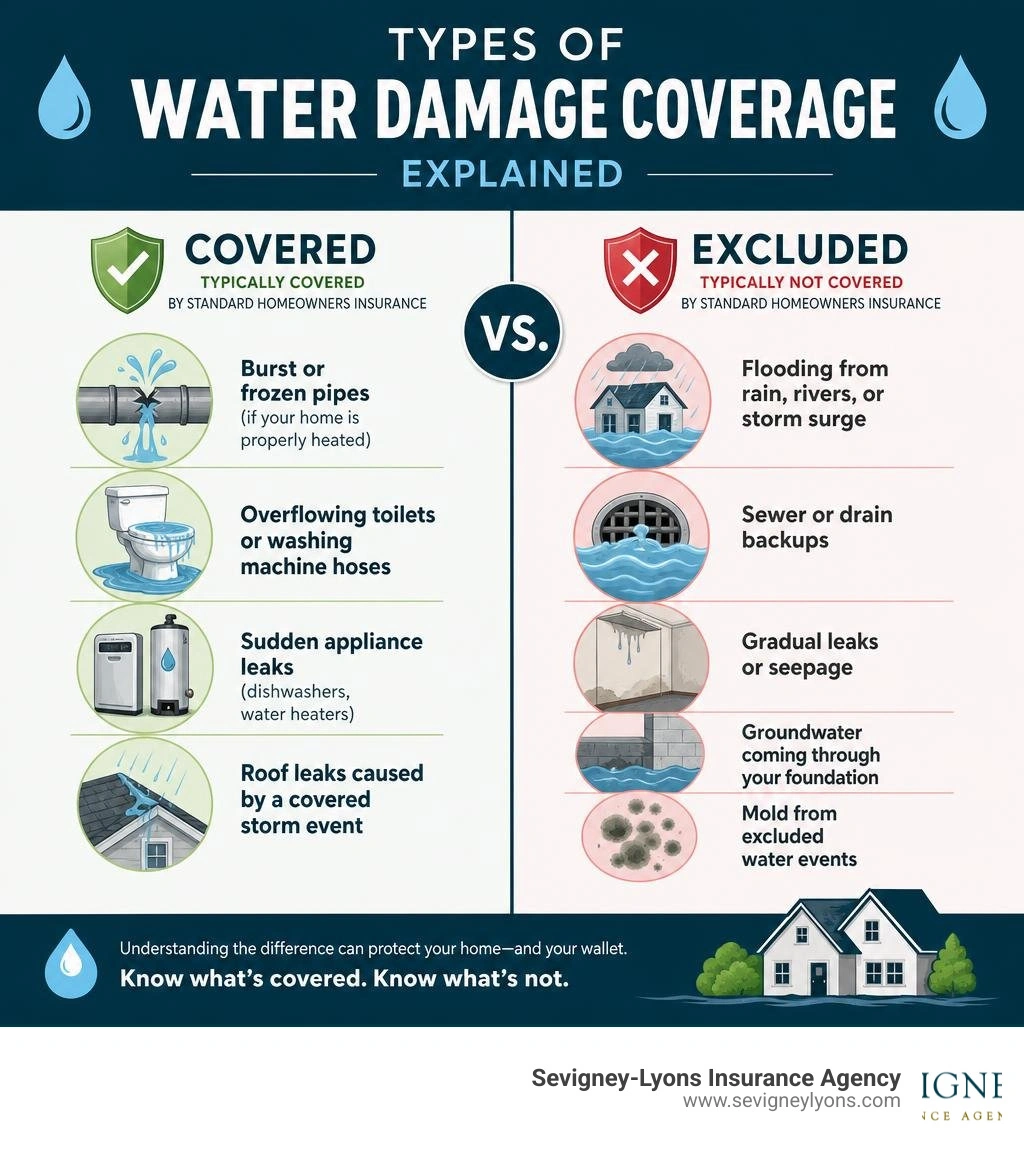
Standard homeowners insurance usually covers:
- Burst or frozen pipes (if your home is properly heated)
- Overflowing toilets or washing machine hoses
- Sudden appliance leaks (dishwashers, water heaters)
- Roof leaks caused by a covered storm event
Standard homeowners insurance usually does NOT cover:
- Flooding from rain, rivers, or storm surge
- Sewer or drain backups
- Gradual leaks or seepage
- Groundwater coming through your foundation
- Mold from excluded water events
Water damage is the second most common homeowners insurance claim in the U.S., right behind wind and hail. Here in Maine — where harsh winters bring frozen pipes and coastal storms push water into basements across Wells, Kennebunk, Ogunquit, and Biddeford — the risk is real and present every single year.
The tricky part? Not all water damage is treated the same by your insurer. Whether a claim gets paid often comes down to one critical question: was the damage sudden and accidental, or did it build up over time?
Understanding the difference before water hits your floors could save you tens of thousands of dollars.
Related content about water damage coverage:
- does homeowners insurance cover water main
- does homeowners insurance cover water main replacement
- home insurance for storm damage
Sudden vs. Accidental: What Standard Policies Cover
When it comes to homeowners insurance, the words "sudden and accidental" are music to a policyholder’s ears. Standard homeowners insurance policies (such as the common HO-3 policy form) are designed to protect you from unexpected, abrupt disasters. They are not, unfortunately, designed to replace basic home maintenance.
If a pipe suddenly bursts behind your drywall on a random Tuesday, or your washing machine hose decides to snap and turn your laundry room into an indoor swimming pool, your standard policy is there to help. This is because the event was unpredictable and happened in an instant.
Some of the most common covered water damage scenarios include:
- Burst or Frozen Pipes: A classic Maine winter hazard. If temperatures plummet in Kennebunk and your pipes freeze and burst, standard insurance typically covers the clean-up and repairs. However, there is a catch: you must show that you maintained proper heat in the home or took reasonable steps to shut off the water supply and drain the pipes if the property was left unoccupied.
- Appliance Overflows: If your dishwasher or water heater suffers a sudden mechanical failure and dumps gallons of water onto your hardwood floors, the resulting damage to your floors and drywall is covered.
- Roof Leaks from Covered Storms: If a severe coastal storm rips shingles off your roof in Ogunquit, allowing rainwater to pour into your attic and bedroom ceiling, the interior damage is covered. This is because the water entered due to a covered windstorm event.
To better understand how these scenarios fit into your overall insurance plan, check out our Maine Home Insurance 2026 Guide and our detailed breakdown of Maine Home Insurance for Storm Damage.
It is important to note that while your insurance will pay to dry out your home, replace ruined drywall, and lay down new flooring, it typically does not cover the cost to repair or replace the broken appliance or pipe itself. The policy covers the damage caused by the water, not the wear-and-tear repair of your plumbing or appliances.
Understanding Your Water Damage Coverage Exclusions
Now for the bad news. While standard policies are generous with sudden disasters, they have very strict boundaries when it comes to other types of water. If you assume your standard policy covers every type of wet mess, you might be in for a very expensive surprise.
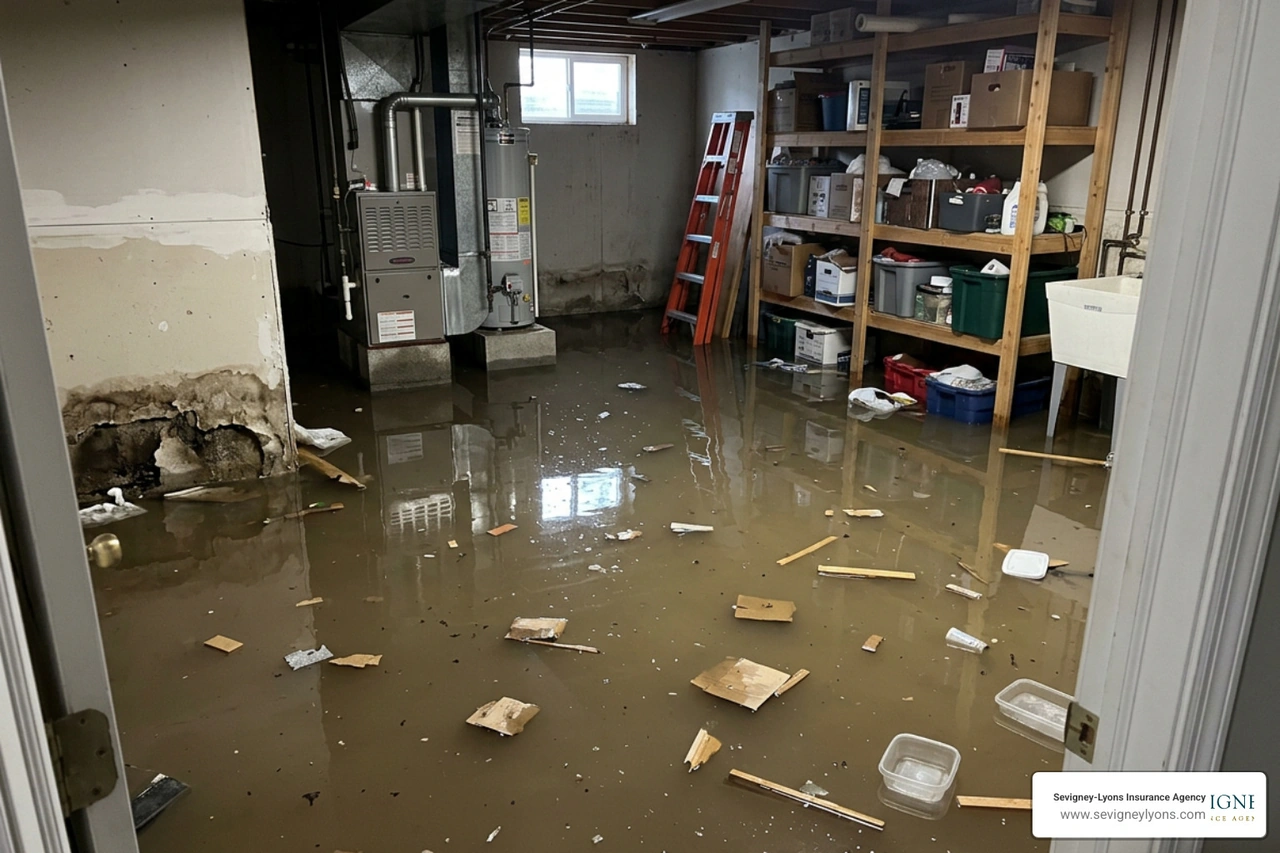
There are three major water-related exclusions on a standard homeowners policy:
- Gradual Leaks and Seepage: If a pipe under your kitchen sink has been dripping slowly for six months, causing rot and mold behind the cabinets, your claim will likely be denied. Insurance carriers view gradual leaks as a maintenance issue. Homeowners are expected to inspect their properties and catch these slow drips before they cause massive structural damage.
- Groundwater Seepage: If heavy spring rains saturate the soil around your Biddeford home and water begins seeping through your concrete foundation walls or basement floor cracks, this is considered groundwater seepage. Standard homeowners policies explicitly exclude water on or below the surface of the ground.
- Flooding: This is the big one. Standard homeowners insurance never covers flood damage. Whether it is a storm surge from the Atlantic Ocean, a river overflowing its banks, or heavy rainfall pooling in your yard and running through your doors, standard home insurance will not pay a dime for the cleanup.
To protect your home from rising outdoor water, you must purchase a separate flood policy. You can learn more about how the state handles these risks by reviewing the resources provided by the Flood Insurance | Maine Office of Community Affairs.
Flood Risks in Coastal Maine
Living in beautiful coastal communities like Wells, Ogunquit, Kennebunk, and Biddeford comes with incredible views, but it also exposes us to unique environmental risks. King tides, powerful nor'easters, and hurricane-related storm surges can push water inland quickly.
Because flood risks change over time, it is highly recommended that local homeowners regularly check the official Current FEMA Flood Insurance Rate Maps | Wells, ME - Official Website to understand their property's specific risk zone. Even if your mortgage company does not require you to carry flood insurance, living near the coast means a separate flood policy is always a smart investment.
Essential Endorsements to Expand Your Protection
If standard policies exclude so much, how do you keep your home truly safe? The answer lies in insurance endorsements (also known as riders or add-ons). These are optional coverages you can add to your basic policy for a relatively small annual fee.
To make sure your water damage coverage is robust, we highly recommend looking into these three essential add-ons:
- Water Backup and Sump Pump Failure: This is perhaps the most important endorsement for any Maine homeowner with a basement. Standard policies exclude water that backs up through sewers, drains, or overflows from a sump pump. If your sump pump loses power during a storm and your basement floods with dirty water, this endorsement pays for the water extraction, professional drying, and reconstruction.
- Mold Remediation / Cleanup: Standard policies usually cap mold cleanup at a very low limit, or exclude it entirely unless it was caused by a covered water claim. A mold buy-back endorsement allows you to raise those limits so you aren't left paying out-of-pocket for expensive mold removal.
- Service Line Coverage: Homeowners are often shocked to learn they are responsible for the utility lines running from the street to their house. If the water main line on your property breaks, it can cost thousands of dollars to excavate and repair. Adding service line coverage protects you from this sudden expense. Learn more about this by reading our guide on Home Insurance Cover Water Main Replace and explore other Maine Home Insurance Coverage Options.
Here is a quick look at how standard coverage compares to these optional endorsements:
What to Do Immediately After Experiencing Water Damage
If you walk into your home and find yourself standing in a puddle, don't panic. The actions you take in the first few hours can mean the difference between a fully covered claim and a denied one.
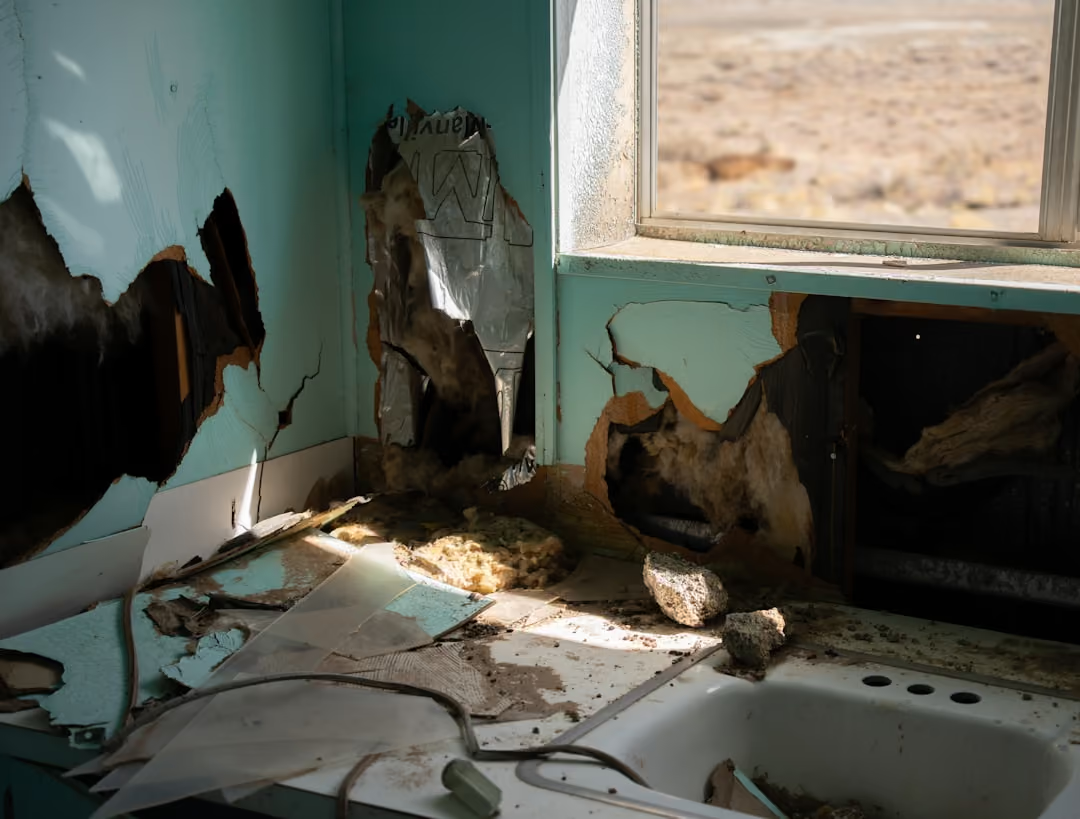
Here is the exact step-by-step process you should follow to protect your home and your insurance claim:
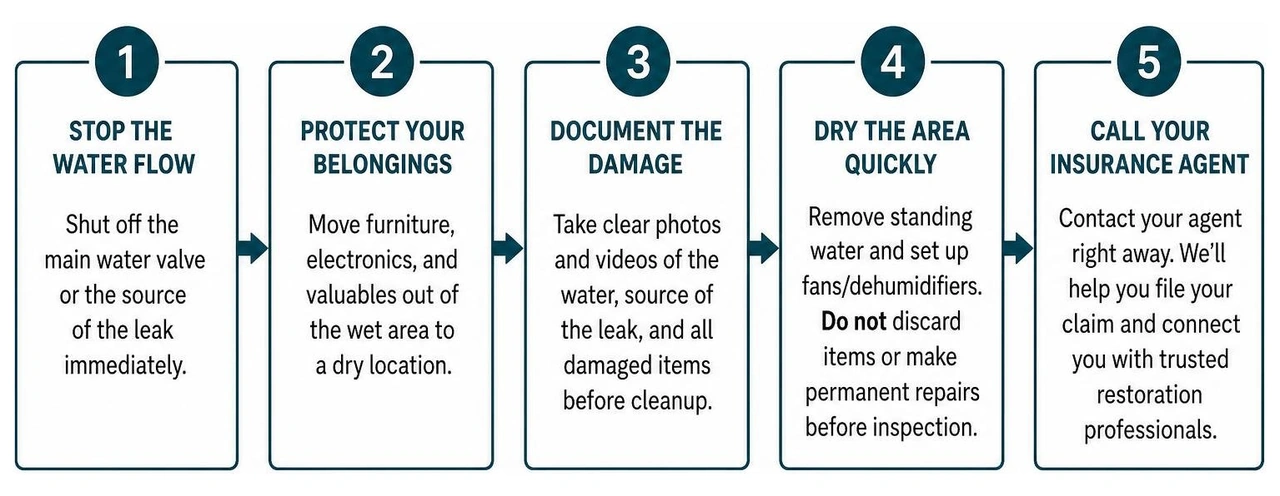
- Stop the Water Flow: If the water is coming from a broken pipe or appliance inside your house, shut off the main water valve immediately. If you don't know where your main shut-off valve is, find it today before an emergency happens!
- Protect Your Belongings: Move furniture, electronics, and valuable personal items out of the wet area to a dry room to prevent further ruin.
- Document the Damage: Take detailed photos and videos of the standing water, the source of the leak, and all damaged property before you begin clearing things out. This evidence is crucial for your insurance adjuster. If you are dealing with municipal water lines, you may also need to coordinate with local utilities, such as reviewing guidelines for Damage Claims through the Portland Water District.
- Dry the Area Quickly: Mold can begin growing within 24 to 48 hours. Remove pools of water, pull up wet area rugs, and set up fans and dehumidifiers. However, do not throw away any damaged items or make permanent repairs until an insurance adjuster has inspected the scene.
- Call Your Insurance Agent: Contact us right away. We will help you navigate the claims process, connect you with reputable local restoration professionals, and make sure your claim is filed correctly.
Frequently Asked Questions about Water Damage
Does Mcover mold from water damage coverage?
Yes, but only under specific circumstances. If mold develops as a direct result of a sudden, covered water claim—such as a pipe that burst yesterday—and you took prompt action to dry the area, your insurance will generally cover the mold cleanup.
However, if the mold is caused by a gradual leak that went unnoticed for months, or if it is the result of a flood (which is an excluded peril), standard insurance will not cover the remediation. Many carriers also place a specific sub-limit (often $10,000 to $25,000) on mold cleanup, which is why we often recommend adding a mold buy-back endorsement to increase your safety net.
How do I file a claim for water damage coverage?
Filing a claim starts with contacting your local insurance agent. We will guide you through the process, but generally, you will need to:
- Provide the exact date and time you discovered the water.
- Submit your photos, videos, and a detailed inventory of all damaged items.
- Keep receipts for any emergency mitigation expenses (like buying fans or hiring an emergency water extraction team).
- Meet with the insurance adjuster assigned to your case to review the damage.
Prompt notice is key. Waiting too long to report water damage can give the carrier grounds to deny the claim under the assumption that the damage worsened due to neglect.
Does standard insurance cover water main breaks in Maine?
No, standard homeowners policies do not cover water main breaks that occur outside your home's foundation. If the public water main in the street ruptures, the city or local water district is usually responsible for repairing the street line, but they may not cover the damage to your private property.
If the break occurs on your private service line (the pipe running from the street to your house), you are responsible for the repair costs. To protect yourself against this expensive headache, you need to add Service Line Coverage to your policy. You can read more about this in our article Does Home Insurance Cover Water Main and explore overall protection strategies in our guide to Comprehensive Home Insurance Maine.
Conclusion
Water is a powerful force. When it attacks your home, having the right water damage coverage is the only thing standing between you and a massive financial loss.
At Sevigney-Lyons Insurance Agency, we have been helping families across Southern Maine protect their most valuable assets for decades. As an independent agency with deep roots in Wells, Kennebunk, Ogunquit, Biddeford, and Portland, we don't believe in one-size-fits-all insurance. We work with over 20 top carriers to build customized policies that fit your unique needs, ensuring you have the exact endorsements you need before the storm hits.
Don't wait for a puddle in your living room to find out what your policy covers. Reach out to our team today for a comprehensive policy review, or Get a Free Maine Insurance Coverage Quote to secure your peace of mind today.