Blog Content
Why RV Insurance Is Essential for Maine's Growing Community of Road Warriors
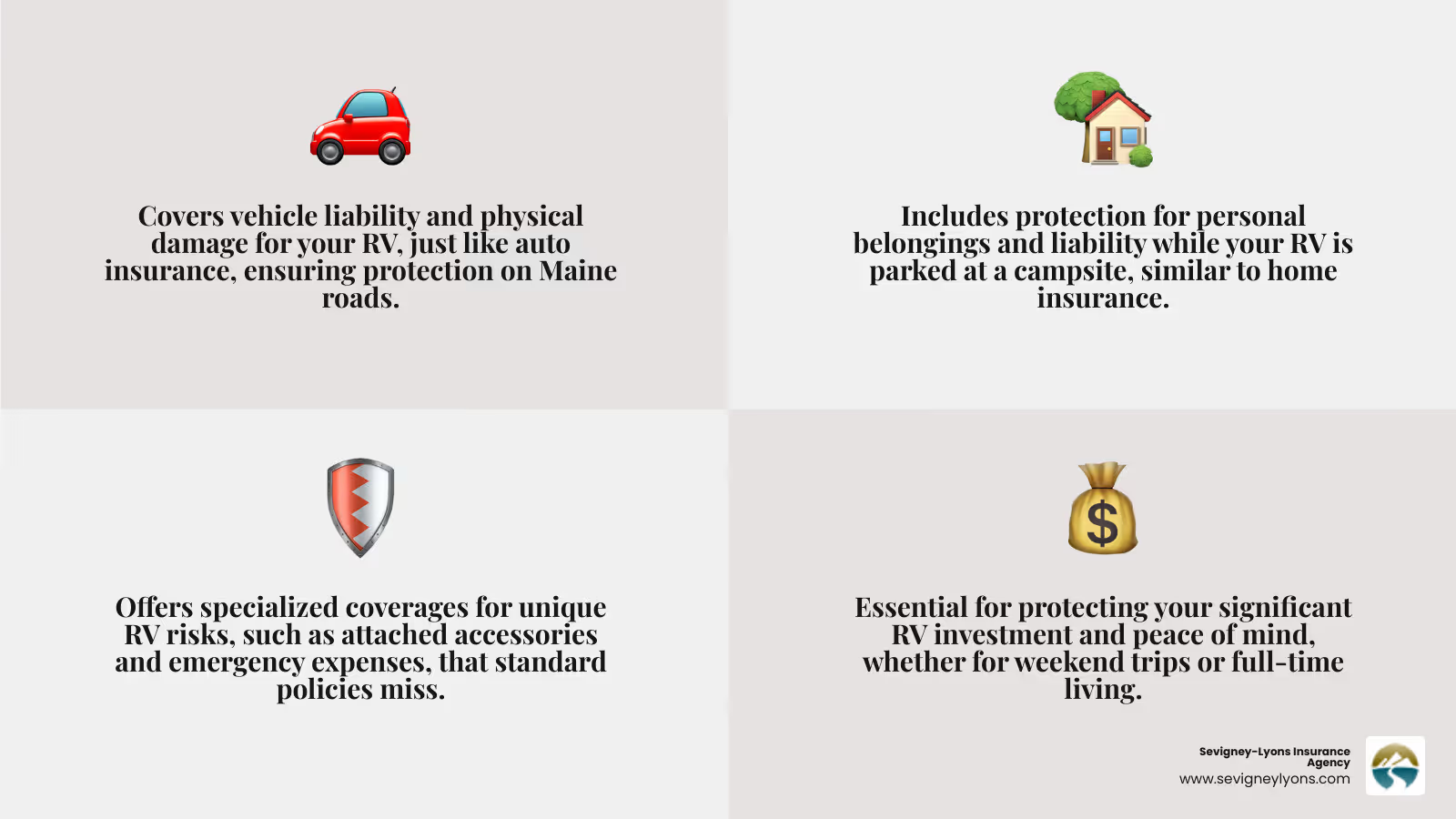
What is RV insurance? RV insurance is a specialized policy combining auto and home insurance aspects to protect recreational vehicles, their contents, and you. Unlike standard car insurance, it includes coverage for personal belongings, attached accessories like awnings, and liability while parked at campsites.
Quick Answer for RV Insurance Coverage:
- Liability Protection: Covers bodily injury and property damage to others
- Physical Damage: Protects your RV from collision, theft, fire, and weather damage
- Personal Property: Covers belongings inside your RV
- Emergency Expenses: Pays for lodging and meals if your RV breaks down
- Vacation Liability: Protects you from accidents at campsites
- Roadside Assistance: Provides towing and emergency services
The freedom of the open road is calling more Mainers than ever. With RV ownership growing 62% in the last 20 years, 11.2 million households now own an RV. Whether for weekend trips to Wells or cross-country journeys, your RV is a major investment.
However, a concerning 85% of RV owners are under-insured or uninsured. Many mistakenly believe their auto or home insurance is sufficient, a dangerous assumption that can lead to devastating financial loss. Your RV isn't just a vehicle—it's a home on wheels that requires specialized protection for your adventures from Ogunquit to the mountains of western Maine.
Understanding What is RV Insurance and How It Differs from Auto Insurance
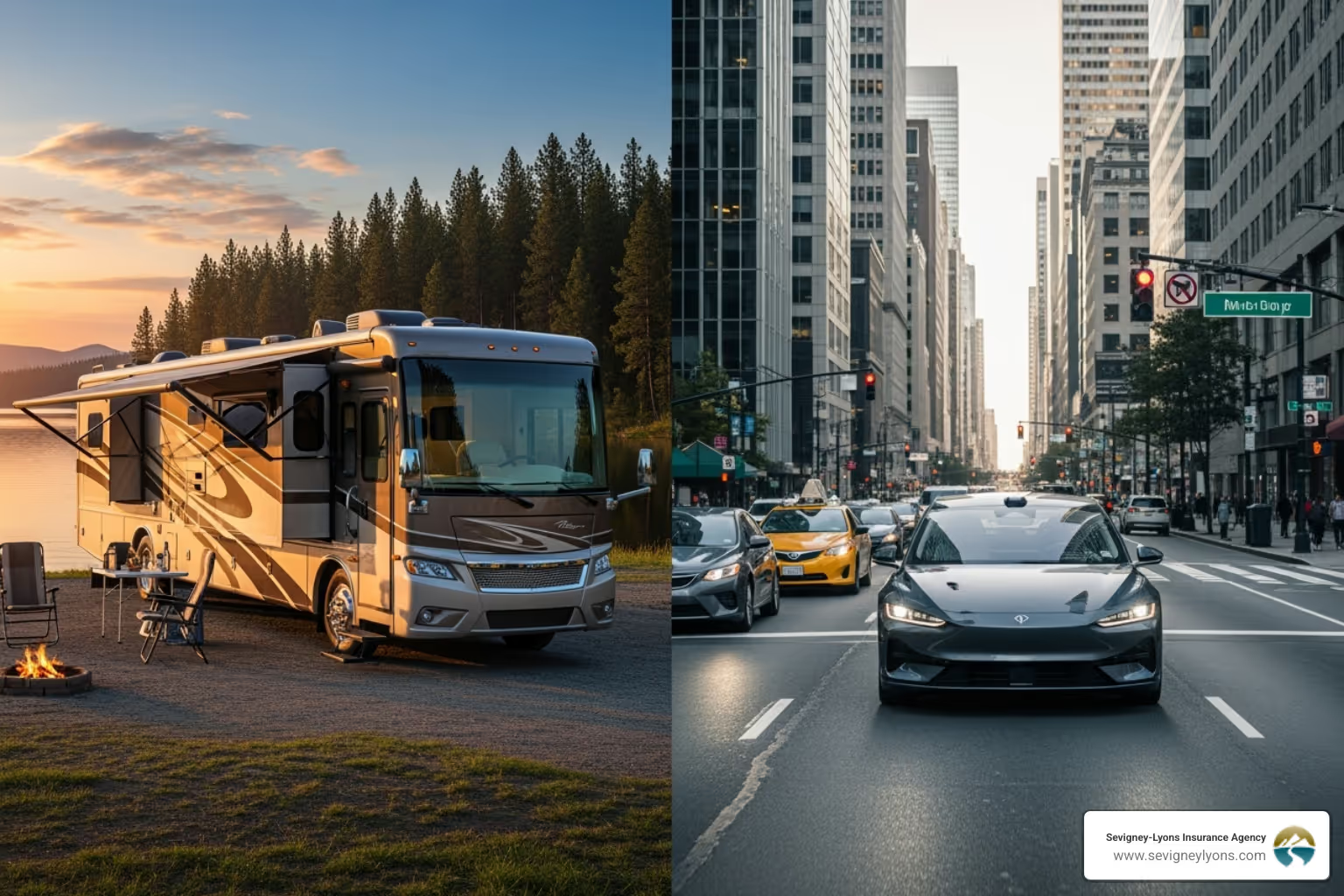
If you're wondering "What is RV insurance?" you're asking the right question. It’s a specialized policy for your home on wheels. Unlike a car, your RV is a kitchen, bedroom, and transport all in one, requiring unique coverage that a standard auto policy can't provide.
Your car insurance covers a vehicle, but your RV is packed with personal items and serves as your temporary address, whether you're parked in Ogunquit or exploring the country. The size and function of an RV create unique risks, from backing into a tight campsite to protecting the contents within.
Why Your Standard Auto Policy Isn't Enough
Many Maine RV owners mistakenly assume their car insurance is enough, but this can be a costly error. Standard auto policies have significant gaps when it comes to RVs:
- Personal Belongings: Your car insurance won't cover the theft of your RV's TV, camping gear, laptop, and other valuables.
- Attached Accessories: Specialized equipment like retractable awnings, solar panels, and satellite dishes are not covered by auto policies.
- Campsite Liability: Auto liability is for moving accidents, not for when a guest is injured at your campsite in Wells or a neighbor trips over your water hose.
- Emergency Expenses: If your RV breaks down on a trip, you'll need help with hotel and food costs, which auto policies don't provide.
For a deeper understanding of how specialized coverage differs, explore our guide on Best Auto Insurance Coverage in Maine.
The Hybrid Nature: Protecting Both a Vehicle and a Dwelling
What is RV insurance comes down to its hybrid nature. It protects your RV's two distinct personalities: a vehicle on the road and a dwelling when parked.
- As a Vehicle: It needs collision coverage for accidents and comprehensive coverage for theft, vandalism, and weather damage—all important in Maine.
- As a Dwelling: It needs property protection. This is where the "home insurance" side kicks in, covering liability for incidents that happen at your campsite.
Liability on the road is similar to car insurance, but liability while parked is unique to RVs, covering you if someone gets hurt at your campsite. This dual nature is why RV insurance vs. auto insurance isn't a fair comparison; they're built for different lifestyles.
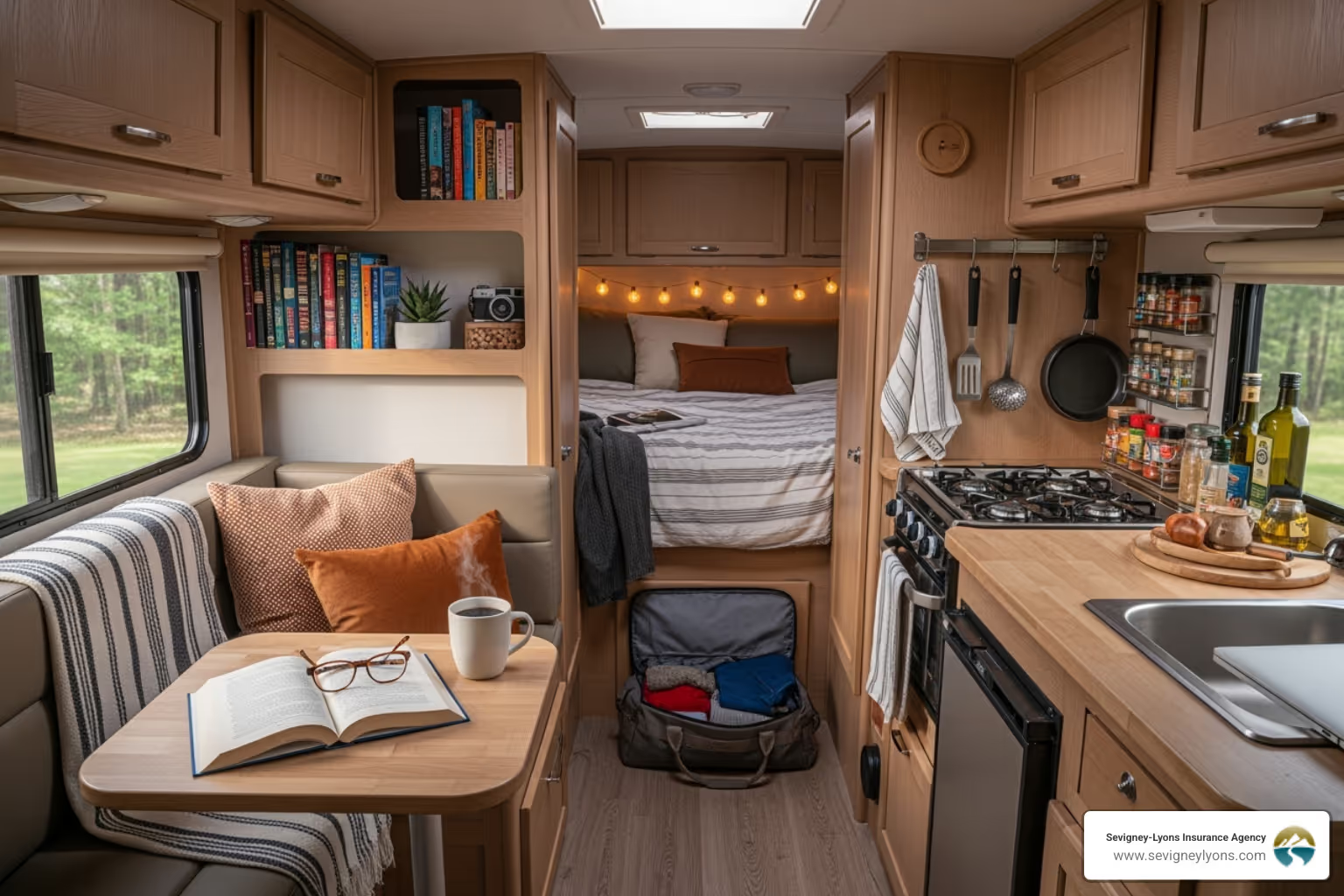
Your RV deserves insurance that understands both sides of its personality—the road warrior and the home away from home.
How RV Type and Usage Affect Your Maine Insurance Needs
Not all RVs are created equal, and your insurance needs depend heavily on the type of rig you own and how you use it. A weekend warrior in a pop-up camper has vastly different requirements than a full-timer in a Class A motorhome. In Maine, where RVers range from summer-only enthusiasts to year-round adventurers, matching your insurance to your lifestyle is key.
What is RV insurance for Motorized vs. Towable RVs?
The first distinction is whether your RV has its own engine. This affects legal requirements and how coverage works.

Motorized RVs (Class A, B, and C) are self-propelled vehicles. Maine law requires them to carry their own liability insurance policy before hitting the road, just like a car.
Towable RVs (travel trailers, fifth wheels, pop-ups) are different. When you're towing your trailer, your truck's liability insurance typically covers damage you cause to others. However—and this is crucial—it does not cover damage to your trailer itself. You need a separate RV policy with physical damage coverage (comprehensive and collision) to protect your investment. Most lenders require this for financed towables.
The complexity of larger vehicle insurance extends beyond RVs, which you can explore in our guide to Commercial Auto Insurance Maine.
What is RV insurance for Full-Time vs. Part-Time RVers?
How often you use your RV dramatically changes your insurance needs.
Full-time RVers, who use their RV as a primary residence (often 150+ nights a year), need coverage that functions like a homeowner's policy. This includes comprehensive personal liability for incidents at your campsite, medical payments for injured guests, and much higher personal property limits to cover all your belongings. Full-timer policies typically cost $1,500 to $4,000 annually.
Part-time or recreational RVers use their RVs for vacations and weekend trips. Your needs are less extensive but still specialized. Vacation liability is essential for when your RV is parked at a campground. For those who camp a few weeks a year, coverage usually costs $300 to $800 annually. A great Maine-specific tip: ask about "lay-up" or comprehensive-only policies for the long winter storage season to reduce your premium while still protecting against theft, fire, and storm damage.
Maine's Legal Requirements for RVs
In Maine, your motorized RV must be registered and carry mandatory liability insurance. However, state minimums are designed for cars and are often insufficient for a large RV that can cause significant damage. We always recommend carrying higher limits to protect your financial security.
Uninsured and underinsured motorist coverage is also vital. It protects you and your valuable RV if you're in an accident caused by a driver with little or no insurance.
For details on state laws, see our guide to Maine Car Insurance Laws 2025. You can also review the Maine Bureau of Insurance's auto insurance requirements to ensure you're properly protected.
A Deep Dive into RV Insurance Coverage Options
Understanding what is RV insurance means exploring the layers of protection available. Unlike a one-size-fits-all auto policy, RV coverage is flexible and can be customized to your adventures, whether you're planning weekend trips to Wells or a cross-country journey. For a broader look at vehicle protection, our Full Coverage Automobile Insurance Guide offers valuable insights.
Standard Protections: Liability, Collision, and Comprehensive
These three coverages are the foundation of any solid RV policy.
- Liability Coverage (Bodily Injury & Property Damage): This is mandatory for motorized RVs and covers injuries or damage you cause to others. Given the size of RVs, we recommend limits well above Maine's minimums.
- Collision Coverage: This pays to repair or replace your RV if it's damaged in a collision with another object or if it rolls over, regardless of who is at fault.
- Comprehensive Coverage: This protects your RV from non-collision events like theft, vandalism, fire, falling objects, and weather—essential for Maine's unpredictable storms.
For more on liability, our guide on Comprehensive Automobile Liability Insurance is a helpful resource.
Replacement Cost (RC) vs. Actual Cash Value (ACV)
This is a critical choice for how you're paid after a total loss.
- Actual Cash Value (ACV): This is the standard option. It pays the market value of your RV at the time of the loss, including depreciation. For a 10-year-old RV, this might be significantly less than what you need to buy a replacement.
- Replacement Cost (RC): This premium option pays for a brand-new, similar RV if yours is totaled, without deducting for depreciation. It's highly recommended for newer RVs to avoid a major financial hit.
Specialized Endorsements for the Avid RVer
These add-ons transform a basic policy into protection customized for the RV lifestyle.
- Vacation Liability: Protects you if someone is injured at your campsite while your RV is parked.
- Emergency Expense Coverage: Helps pay for a hotel, meals, and transportation if your RV becomes uninhabitable during a trip.
- Personal Effects Replacement: Covers your belongings inside the RV, like clothes, electronics, and camping gear.
- Roadside Assistance: Provides specialized towing and emergency services for large RVs.
- Pest Damage Protection: A unique RV coverage that pays for damage caused by rodents or insects chewing through wiring or insulation.
Common Policy Exclusions
It's also important to know what isn't covered. Exclusions typically involve gradual damage or issues preventable with proper upkeep.
- Wear and Tear: Normal aging and deterioration from use are not covered.
- Mold and Rot: Damage from long-term moisture issues is usually excluded.
- Lack of Maintenance: Damage resulting from neglected upkeep, like a leaky roof you never resealed, won't be covered.
- Earthquakes and Floods: These are typically excluded from standard policies but may be available as separate coverages. Given Maine's coast, understanding your flood risk is crucial. Learn more at Flood Insurance Coverage Agency NH Maine.
Factors Influencing Your RV Insurance Premium and How to Save
The cost of what is RV insurance can range from $200 to over $3,000 per year, with most owners paying around $1,500 annually. Understanding the factors that determine your rate is the first step to controlling your costs.

Key Factors That Determine Your Rate
Your premium is a personalized calculation based on your risk profile.
- RV Type and Value: A luxury Class A motorhome costs more to insure ($1,020-$3,000/year) than a travel trailer ($180-$600/year).
- Driving Record & Claims History: A clean record lowers your premium, while accidents and tickets increase it.
- Credit Score: In Maine, many insurers use credit scores as an indicator of financial responsibility.
- Usage: Full-time RVers pay more ($1,500-$4,000/year) due to higher risk exposure than recreational users ($300-$800/year).
- Storage Location: Storing your RV in a secure facility in Kennebunk or Ogunquit is cheaper than street parking.
- Coverage & Deductibles: Higher limits increase your premium, while a higher deductible lowers it.
Actionable Tips for Reducing Your RV Insurance Costs
You have control over your insurance costs. Here are some effective ways to save:
- Bundle Policies: Combine RV insurance with your auto or home policy for discounts of 10-30%. As an independent agency, Sevigney-Lyons can find the best bundle for you.
- Increase Your Deductible: Choosing a higher out-of-pocket expense (e.g., $1,000 vs. $500) will lower your monthly premium.
- Take a Safety Course: Completing an RV driving course can earn you a discount of up to 20%.
- Install Safety Features: Alarms, GPS trackers, and advanced locks can lower your rates.
- Maintain a Good Driving Record: This is one of the most effective long-term strategies for low rates.
- Ask for Storage Discounts: If you store your RV during Maine's long winter, a "lay-up" discount can significantly reduce your premium.
- Shop Around: Rates vary between providers. As an independent agency, Sevigney-Lyons shops multiple top-rated insurance companies on your behalf to find competitive rates.
- Pay Annually: Paying your premium in full can help you avoid monthly processing fees.
Frequently Asked Questions about RV Insurance
We often hear the same questions from Maine's RV community about what is RV insurance. Here are answers to help you make informed decisions.
How much does RV insurance typically cost in Maine?
Costs vary, but here are some general ranges. The national average is about $1,500 annually, but your premium depends on your RV and how you use it.
- By RV Type: Motorhomes are the most expensive to insure ($504-$3,000/year), reflecting their value and complexity. Travel trailers are more affordable ($180-$600/year), with fifth wheels in the middle ($300-$1,020/year).
- By Usage: Full-time RVers, who live in their rig, face higher costs ($1,500-$4,000/year) due to increased risk and coverage needs. Recreational users who take occasional trips pay much less, typically $300-$800 per year.
Storing your RV in Wells or Biddeford during the winter may also qualify you for seasonal discounts.
Do I need to keep my RV insured during the winter off-season?
Yes, absolutely. This is especially important for Maine RV owners. Your RV faces risks year-round, even in storage. Theft, fire, vandalism, and severe weather can cause major damage. Heavy snow can collapse a roof, and ice storms can cause structural harm.
To save money, ask your insurer about a comprehensive-only or "lay-up" policy for the off-season. This suspends your road-use coverages (like liability and collision) but maintains protection against storage-related risks like theft and weather damage. It's a cost-effective way to protect your investment during Maine's long winters.
How are my personal belongings covered in an RV?
This is one of the most critical parts of what is RV insurance. Your belongings are best protected by personal effects coverage within your RV policy, not your homeowner's policy.
While home insurance may offer limited coverage for items away from home, the limits are often low and may not apply to RV-specific risks. An RV policy's personal effects coverage is designed for the mobile lifestyle, protecting your clothes, electronics, cookware, and gear. You can adjust the coverage limit based on the value of your possessions.
For high-value items like expensive jewelry or electronics, you should "schedule" them on your policy. This lists the item and its appraised value individually, ensuring it's fully covered. Our guide on Maine High Value Jewelry Insurance offers more insight into protecting valuables.
Your Guide to Peace of Mind on the Open Road
After exploring what is RV insurance, it's clear your RV is more than a vehicle—it's your ticket to freedom, adventure, and memories along Maine's stunning coastline and beyond.
Protecting that investment requires the right coverage. Tailoring a policy to your specific needs is essential. A weekend warrior camping in Wells has different needs than a full-timer exploring the country. Your coverage should reflect your unique lifestyle.
This is where the value of an independent local insurance agent becomes clear. As an independent agency, Sevigney-Lyons Insurance Agency shops on your behalf. We work with numerous top-rated insurance providers to find the perfect policy match for your needs and budget.
Our deep roots in Southern Maine give us unique insights. We understand the challenges of storing an RV through a harsh Kennebunk winter and the patterns of seasonal use in our communities. This expertise allows us to provide smarter, more personalized protection.
Protecting your adventures means having the confidence to explore Acadia's scenic roads or relax at a Biddeford campground, knowing you're covered if something goes wrong.
The open road is calling. Let us handle the complexities of RV insurance so you can focus on planning your next journey.
Get your free Maine insurance coverage quote today and take the first step toward worry-free adventures.