Blog Content
Why Your Business Vehicle Needs More Than Personal Coverage
Commercial auto insurance requirements are the legal minimums your business must meet to operate vehicles for work. Unlike personal auto policies, commercial coverage is designed for the unique risks of business use—and it's often legally required.
Quick Answer: Commercial Auto Insurance Requirements
- Minimum Liability Coverage: Varies by state; Maine requires 50/100/25 ($50,000 per person/$100,000 per accident for bodily injury, $25,000 for property damage)
- Federal Requirements: Interstate carriers need at least $750,000 in liability coverage
- Who Needs It: Any business using vehicles for deliveries, client visits, hauling equipment, or transporting passengers
- Additional Coverages: Consider collision, comprehensive, hired/non-owned auto, and cargo insurance
- Key Difference from Personal: Personal policies typically exclude business use, leaving you personally liable
If you use a personal vehicle for work—even for a quick bank run—your personal auto insurance likely won't cover you in an accident. You could be held personally responsible for damages, medical bills, and lawsuits.
Commercial auto insurance is necessary because businesses face different risks than individual drivers, such as having multiple employees driving company vehicles, carrying valuable equipment, or operating across state lines. Personal policies don't provide this specialized protection.
Businesses in Maine, including those in Wells, Kennebunk, Ogunquit, and Biddeford, must meet state-mandated minimums. However, these minimums are often insufficient to cover the costs of a serious accident, putting your business assets at risk.

Commercial auto insurance requirements terms you need:
Understanding Federal and State Commercial Auto Insurance Requirements
Navigating commercial auto insurance requirements can be complex, as rules change depending on whether you're driving locally in Kennebunk or hauling goods across state lines. This guide clarifies both federal rules and the specific state mandates affecting businesses in Maine.
Every state sets its own commercial auto insurance requirements, which are typically higher than personal minimums to cover increased business risks. If your business operates outside of Maine, you must also consider federal regulations. Businesses moving people or goods across state lines (interstate commerce) are subject to federal auto insurance laws, with coverage mandated by vehicle weight, passenger count, and cargo type.

Maine's Specific Commercial Auto Insurance Requirements
As an independent insurance agency rooted in Maine, we know our state's specific commercial auto insurance requirements. Maine mandates minimum liability limits to ensure coverage for at-fault accidents. The minimum liability limits are 50/100/25:
- $50,000 per person for bodily injury liability.
- $100,000 per accident for total bodily injuries.
- $25,000 for property damage liability.
In addition to liability, Maine requires:
- Uninsured/Underinsured Motorist (UM/UIM) coverage equal to the liability minimums. This protects you if an at-fault driver has little or no insurance.
- Medical Payments (MedPay) coverage to help pay medical expenses for you and your passengers, regardless of fault.
Meeting these requirements is mandated by Maine's financial responsibility law. For more details, see our Commercial Auto Insurance Maine Guide.
Navigating Requirements in Other States
Businesses in Wells, Kennebunk, and Biddeford that travel to neighboring states must be aware that commercial auto insurance requirements vary dramatically. For example, Massachusetts has a 20/40/5 minimum, while New Hampshire's is 25/50/25. If your policy limits are lower than another state's requirements, your carrier will typically adjust your coverage to meet that state's minimums while you're there. However, it's always best to confirm you have adequate coverage before crossing state lines.
Who Needs to Follow Federal Regulations?
While many Maine businesses focus on state requirements, federal regulations apply if you use heavier vehicles, transport passengers for hire, or haul cargo across state lines.
Federal law sets strict commercial auto insurance requirements for interstate transport, based on vehicle weight, passenger count, and cargo type. Federal oversight is triggered by:
- USDOT Numbers: Vehicles requiring a U.S. Department of Transportation (USDOT) number, typically for interstate commerce or exceeding a certain weight, must follow federal rules.
- Weight-Based Requirements: Interstate trucking companies need at least $750,000 in Auto Liability coverage.
- Passenger Transport: Businesses like charter buses that cross state lines face higher liability limits.
- Hazardous Materials: Hauling hazardous cargo requires substantial liability coverage, often up to $5,000,000, to cover potential catastrophic damages.
Understanding these federal rules is critical for any Maine business operating beyond state borders to ensure compliance and avoid penalties.
Decoding Your Commercial Auto Policy: What's Included?
A commercial auto insurance policy is a shield protecting your business from the financial fallout of vehicle accidents. A standard policy includes several key components to safeguard your assets.
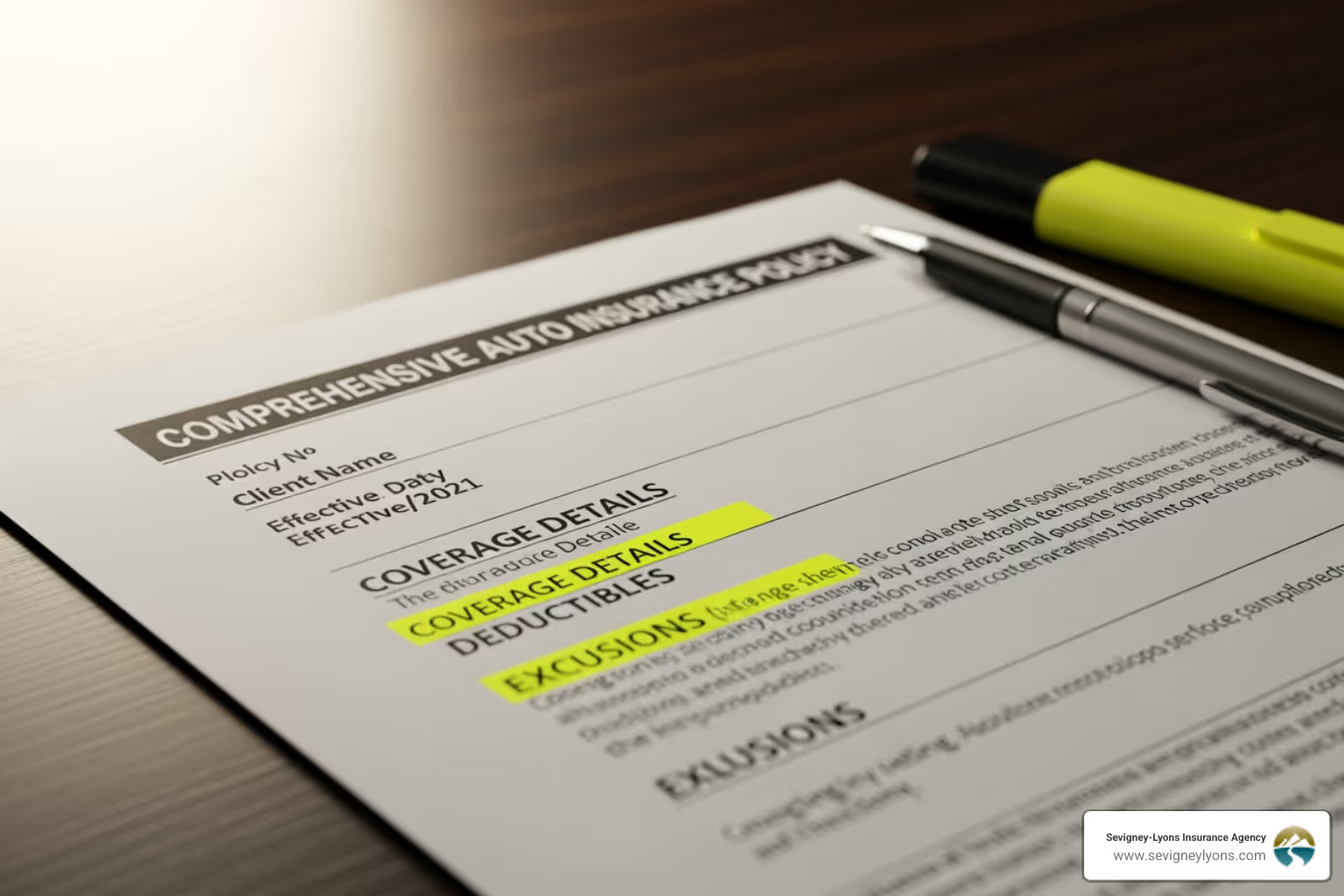
The core of any policy is liability coverage, which is mandated by the state and protects your business if you or an employee is at fault in an accident:
- Bodily Injury Liability: Covers medical expenses, lost wages, and legal fees for others injured by your business vehicle.
- Property Damage Liability: Pays for repair or replacement costs if your vehicle damages someone else's property, like their car or a building.
Policies also have common exclusions, which are situations not covered. A key exclusion in personal auto policies is for business use, making commercial coverage vital. Other exclusions may include intentional damage or liabilities covered by workers' compensation. Beyond liability, policies can include physical damage coverage for your own vehicles. For more on liability, see our Commercial Liability Insurance Guide.
Split Limits vs. Combined Single Limit (CSL)
Liability limits are structured in two main ways: split limits and combined single limit (CSL). Understanding the difference is key to choosing the right protection for your Maine business.
Split limits, like Maine's 50/100/25 minimum, set separate maximums for per-person bodily injury, per-accident bodily injury, and per-accident property damage. If one category's costs exceed its limit, your business pays the difference.
A Combined Single Limit (CSL) provides one total maximum for all bodily injury and property damage per accident. For example, a $500,000 CSL policy offers a single pool of money that can be distributed as needed, providing more flexibility.
CSL policies offer greater flexibility and are often preferred by businesses with higher liability exposures, like trucking companies, as they can better cover accidents where costs are concentrated in one area.
Essential Additional Coverages to Consider
Liability coverage only pays for damages you cause to others. To protect your own business vehicles and assets, consider these essential additions:
- Collision Coverage: Pays for damage to your business vehicle from a collision with another vehicle or object, regardless of fault.
- Comprehensive Coverage: Covers damage from non-collision incidents like theft, vandalism, fire, falling objects, or animal strikes—a must for Maine winters.
- Motor Truck Cargo Insurance: Protects against loss or damage to the freight you're hauling for others. Essential for delivery services and contractors.
- Uninsured/Underinsured Motorist (UM/UIM) Coverage: Mandated in Maine, this covers you when an at-fault driver has insufficient or no insurance.
- Medical Payments (MedPay) Coverage: Also required in Maine, this covers medical expenses for you and your passengers, regardless of fault.
To protect your physical business locations, see our Business Property Insurance Maine guide.
Understanding Hired and Non-Owned Auto (HNOA) Insurance
What if an employee uses their personal truck for a work errand in Kennebunk, or you rent a van for a delivery? A standard commercial auto policy may not cover these situations, and personal policies almost certainly won't. This is where Hired and Non-Owned Auto (HNOA) insurance is crucial.
HNOA insurance fills this gap, providing liability protection when vehicles not owned by your business are used for work purposes. It covers:
- Employee-Owned Vehicles: If an employee has an accident in their personal car while working (e.g., making deliveries in Ogunquit), their personal policy will likely deny the claim. HNOA protects your business from the resulting liability.
- Rented or Leased Vehicles: HNOA extends liability coverage to vehicles your business rents or leases for short-term use, providing consistent protection under your own policy.
HNOA is a smart addition to meet your commercial auto insurance requirements if your business uses non-owned vehicles. For more on protecting your business, see our Business Insurance for a Maine LLC guide.
Who Needs Coverage and How Are Premiums Calculated?
If you use a vehicle for any business purpose in Maine, you almost certainly need commercial auto insurance. It's not just about meeting commercial auto insurance requirements; it's about smart business protection.
Commercial auto insurance covers a wide range of vehicles, from a contractor's truck in Wells to a delivery car in Ogunquit. If a vehicle is titled to your business, used to transport goods or people for a fee, or equipped with work gear, it needs commercial coverage. The key distinction is business use vs. personal use; if a vehicle generates income, a personal policy won't cover it.
Common vehicles requiring commercial coverage include:
- Cars, SUVs, vans, and pickup trucks used for business
- Trailers (utility, enclosed, etc.)
- Heavy trucks (dump trucks, tow trucks)
- Passenger-carrying vehicles (taxis, shuttles)
Many Maine industries rely on commercial vehicles, including:
- Contractors (plumbers, electricians, landscapers)
- Delivery Services (restaurants, florists, couriers)
- Trucking and Towing
- Real Estate Agents
- Farms and Nurseries
Key Factors That Influence Your Insurance Costs
The cost of commercial auto insurance in Maine varies based on your business's specific risk profile. Insurers assess several factors to determine your premium:
- Vehicle Type and Value: A new, expensive truck costs more to insure than an older van.
- Driving Records: The driving history of all employees who operate your vehicles is a major factor. Clean records lower premiums.
- Garage Location: Rates can be higher in urban areas like Biddeford due to more traffic and theft risk.
- Radius of Operation: Local travel within Wells is less costly to insure than long-haul, interstate travel.
- Claims History: A history of frequent or expensive claims will increase your premium.
- Type of Cargo: Transporting general goods is less risky and cheaper to insure than hauling hazardous materials.
- Coverage Limits and Deductibles: Higher limits increase premiums, while higher deductibles can lower them.
Understanding these factors helps tailor a policy to your needs. For more on costs, see our guide on Business Liability Insurance Cost.
Smart Strategies to Lower Your Commercial Auto Insurance Costs
While meeting commercial auto insurance requirements is mandatory, there are ways to lower your premiums:
- Maintain Good Driving Records: Promote safe driving and regularly review employee driving records.
- Implement a Safety Program: A formal program with driver training and vehicle maintenance can earn discounts.
- Choose Higher Deductibles: A higher deductible lowers your premium, but ensure you can afford the out-of-pocket cost.
- Bundle Policies: Bundling commercial auto with other business policies often leads to discounts.
- Pay Premiums in Full: Paying annually instead of monthly can save you money.
- Install Telematics/GPS Systems: Some insurers offer discounts for using technology that monitors driver behavior and improves safety.
- Review Your Policy Annually: We can review your policy with you each year to find new discounts and ensure your coverage matches your current needs.
The High Cost of Non-Compliance
Ignoring commercial auto insurance requirements is a costly gamble that can jeopardize your entire business. The consequences of inadequate or no coverage range from administrative headaches to financial ruin.
Here's what can happen if your Maine business falls short:
- Fines and Penalties: Operating without required insurance leads to hefty state fines, often higher than personal auto violations.
- Vehicle Impoundment: Law enforcement can impound uninsured business vehicles, disrupting operations and incurring fees.
- Business License Suspension: Maine can suspend or revoke your business license for failing to maintain coverage.
- Personal Liability for Accidents: Without proper commercial insurance, your business and personal assets are at risk to cover medical bills, property damage, and legal fees from an at-fault accident.
- Lawsuit Costs: Your business would be responsible for all legal defense costs, settlements, and judgments, which can be astronomical.
- Inability to Secure Contracts: Many clients require proof of insurance, so a lack of coverage means lost business opportunities.
- Reputational Damage: An uninsured accident can damage your business's reputation, making it difficult to regain client trust.
The financial and legal repercussions of non-compliance far outweigh the cost of a proper policy.
Frequently Asked Questions about Commercial Auto Insurance Requirements
We get a lot of great questions from business owners in Maine about their commercial auto insurance requirements. Here are some of the most common ones:
What happens if I use my personal car for business errands?
This is a common trap. Your personal auto policy likely has an "exclusion for business use," meaning if you have an accident while running a work errand, your insurer could deny the claim. You would then be personally liable for all damages and medical costs. To avoid this, your business needs a commercial policy or Hired and Non-Owned Auto (HNOA) coverage.
Are the insurance requirements different for a dump truck versus a small delivery van?
Yes. Commercial auto insurance requirements are heavily influenced by a vehicle's weight, class, and use. A heavy dump truck is considered higher risk than a small delivery van and requires significantly higher liability limits. Factors like gross vehicle weight (GVW), interstate use, and cargo type all affect coverage needs. A contractor's dump truck will need more robust coverage than a local delivery van. Our Commercial Auto Insurance for Contractor guide has more details.
Do I need more insurance if I transport people or hazardous materials?
Yes, absolutely. Businesses that transport people (like taxis or tour buses in Ogunquit) or hazardous materials face the strictest state and federal commercial auto insurance requirements. The increased risk of severe injury or catastrophic damage means much higher liability limits are required. Federal regulations can mandate liability coverage from $1 million to $5 million for carriers of hazardous materials to ensure financial protection for victims and potential cleanup.
Your Partner in Protection: Securing the Right Coverage in Maine
Navigating commercial auto insurance requirements can certainly feel like a complex journey, but it's an absolutely critical step in protecting your business, its assets, and your peace of mind. From understanding Maine's specific 50/100/25 liability minimums to choosing between split limits and Combined Single Limit (CSL), having the right policy ensures you're not only legally compliant but also financially secure against the unexpected.
We at Sevigney-Lyons Insurance Agency pride ourselves on our deep community roots and decades of experience serving businesses like yours across Maine, from Wells and Kennebunk to Ogunquit and Biddeford. We understand the unique challenges and opportunities that come with operating a business in our beautiful state. As an independent insurance agency with access to over 20 top carriers, we're uniquely positioned to help you assess your specific risks and find the most comprehensive and cost-effective commercial auto insurance solutions custom to your needs.
Don't let inadequate coverage put your livelihood at risk. Protect your assets and your future by ensuring your business is properly insured. Contact us today for a free Maine insurance coverage quote. Let us be your trusted partner in protection.