Blog Content
Why Understanding Your Insurance Investment Matters
Electrical contractor insurance cost is a critical budget line for any electrical business in Maine. Whether you're a solo electrician in Wells or running a crew across Biddeford and Kennebunk, understanding what you'll pay—and why—helps you protect your business without overspending.
Quick Answer: What Does Electrical Contractor Insurance Cost?
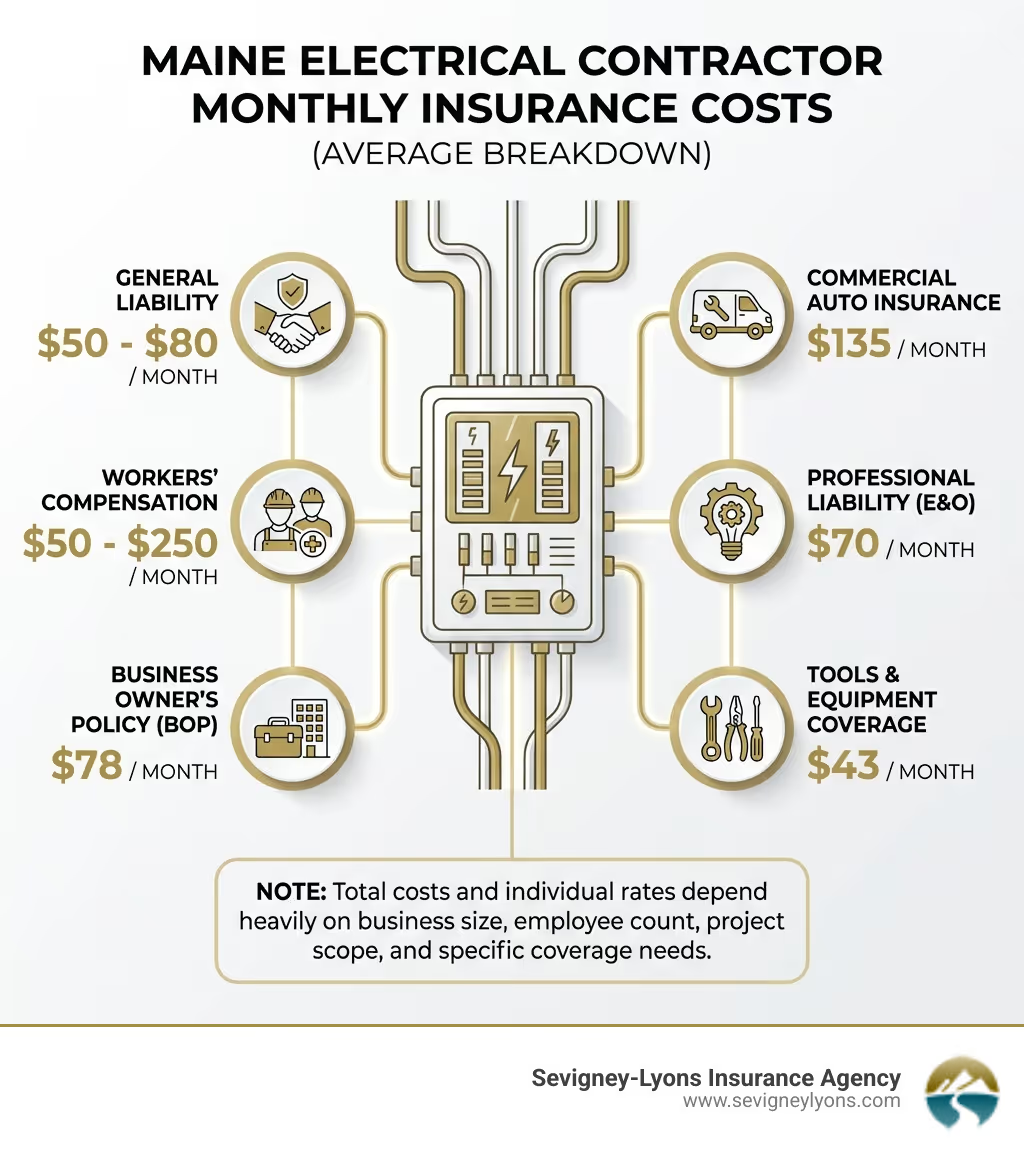
Here's what Maine electrical contractors typically pay per month:
- General Liability Insurance: $50-$80/month
- Workers' Compensation: $50-$250/month (if you have employees)
- Business Owner's Policy (BOP): $78/month average
- Commercial Auto Insurance: $135/month average
- Professional Liability (E&O): $70/month average
- Tools & Equipment Coverage: $43/month average
Note: Your actual costs depend on your business size, experience, work type, and coverage limits.
Without the right coverage, one mistake or lawsuit can put your business and personal assets at risk. Electricians face daily risks like fires from faulty wiring, customer injuries at job sites, and stolen tools. In Southern Maine's competitive market, most clients won't hire you without proof of insurance.
But insurance is more than a requirement; it's about protecting everything you've built. Understanding your electrical contractor insurance cost helps you budget effectively and make smart coverage decisions.
This guide breaks down exactly what you'll pay, what drives those costs, and how to get the best rates for your Maine electrical business.
Electrical contractor insurance cost basics:
Why Electrician Insurance is a Must-Have in Maine
For electrical contractors in Maine, insurance is a fundamental necessity for safeguarding your livelihood and financial security. The work involves high-stakes hazards like live wires and specialized equipment, increasing the risk of accidents, injuries, or property damage. For example, faulty wiring could cause a fire in a Kennebunk home, or a customer could trip over tools at an Ogunquit job site, leading to costly lawsuits. Even stolen tools or copper wire can significantly set back your business.
These are common claims scenarios. General liability insurance could cover property damage or a customer's medical bills. Workers' compensation would step in if an employee is electrocuted. And tools and equipment insurance helps replace essential items if they're stolen.
Beyond protection, adequate insurance opens doors. Many clients in Maine, from commercial projects to homeowners in Wells, require proof of insurance before hiring you. It signals professionalism and responsibility. Adhering to state regulations, including any insurance prerequisites from the Maine Electricians' Examining Board, is also crucial for maintaining your license. A strong commitment to safety, following Workplace safety standards from OSHA, also protects your team and can positively influence your insurance premiums.
For a deeper dive into protecting your electrical business in the Pine Tree State, explore our insights on Insurance for Electricians Maine.
What Your Policy Protects You From
An electrician insurance policy is a comprehensive shield designed to protect your business from a variety of potential liabilities and financial losses. Here's what we typically see covered:
- Third-party property damage: If your work or your team's actions accidentally damage a client's property—say, you drill through a water pipe while running new electrical lines—your policy can cover the repair costs.
- Bodily injury claims: Should a client or a member of the public suffer an injury at your job site (e.g., tripping over a ladder) or due to your completed work, your insurance can cover their medical expenses and associated legal costs.
- Advertising injury: This might sound surprising, but general liability can also protect you from claims of libel, slander, copyright infringement, or defamation arising from your business's advertising or marketing activities.
- Completed operations errors: This is crucial for electricians. If, after completing a job, an error in your work causes damage or injury down the line (e.g., faulty wiring leading to a fire), your policy can cover the resulting claims. This is often part of your general liability.
- Legal defense costs: Even if a claim against you is baseless, defending yourself in court can be incredibly expensive. Your insurance policy typically covers these legal fees, regardless of the outcome.
What Isn't Typically Covered
Just as important as knowing what your insurance covers is understanding its limitations. Every policy has exclusions, and knowing these helps us identify potential gaps and discuss additional coverages. Here are common exclusions:
- Faulty workmanship (cost to re-do the work): While your general liability might cover property damage caused by faulty wiring, it typically won't pay for the cost of replacing the faulty wiring itself or re-doing the work you performed incorrectly. This is where Errors & Omissions (E&O) insurance can come into play.
- Intentional acts: Insurance is designed for accidents. Deliberate damage or intentional harm caused by you or your employees is generally not covered.
- Employee theft: If an employee steals tools, materials, or money from your business or a client, this is usually excluded from standard policies. Specific crime insurance or employee dishonesty coverage would be needed here.
- Wear and tear on tools: Your tools and equipment insurance protects against theft, damage, or loss, but it won't cover the gradual depreciation or breakdown of equipment due to normal use.
- Contractual liability not assumed in writing: If you take on specific liabilities through a contract that are outside the scope of typical business operations, these might not be covered unless explicitly added to your policy.
Deconstructing Your Policy: Key Coverages for Electricians
We help you identify the core coverages essential for every electrician and explore optional endorsements to build a truly comprehensive policy.
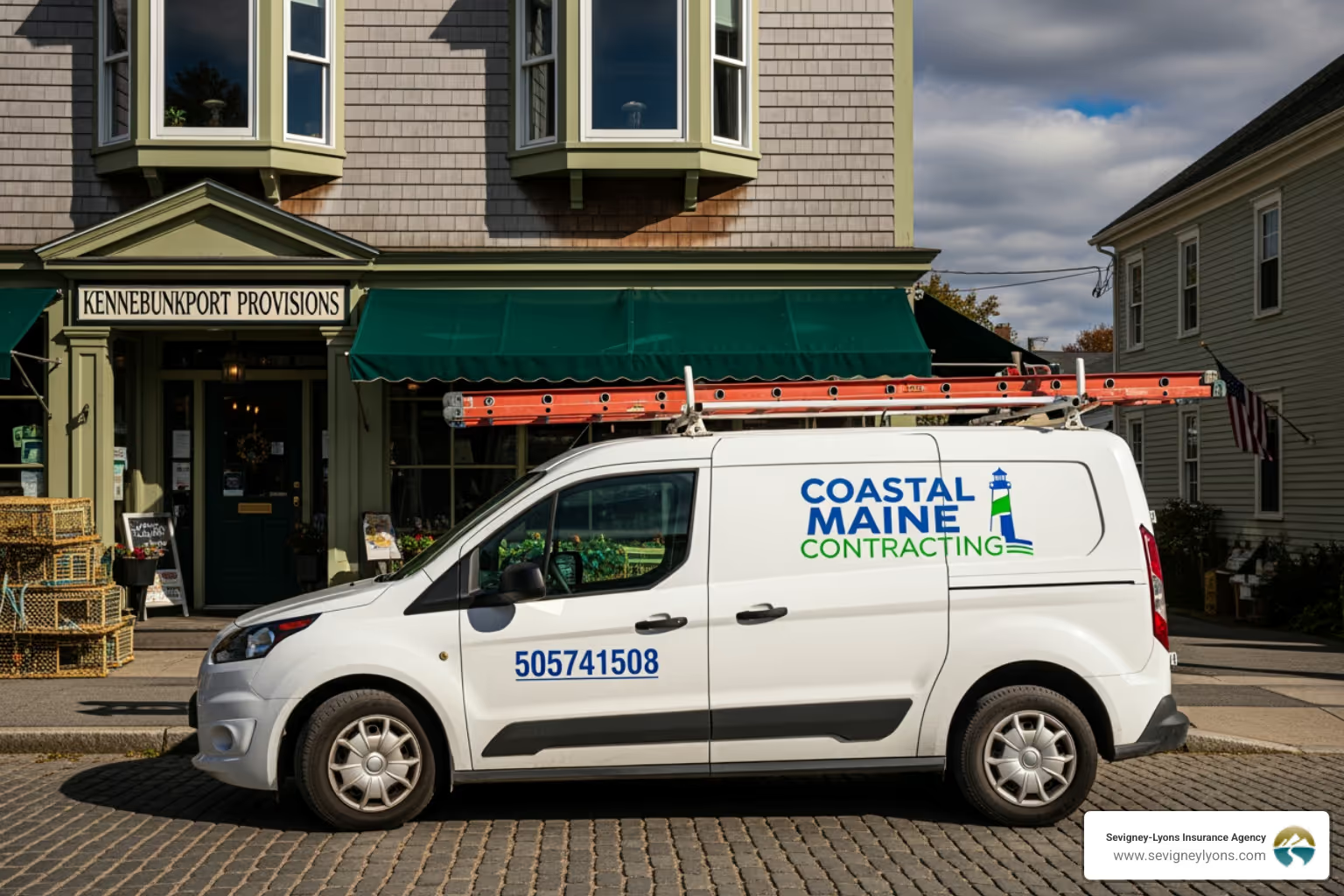
Core Protection: General Liability & Workers' Comp
These two policies form the bedrock of almost every electrical contractor's insurance plan in Maine.
- General Liability Insurance: This is your first line of defense, protecting your business from third-party claims of bodily injury or property damage. For instance, it would cover damage to a client's floor in Biddeford or claims from completed operations, like a fire caused by a past wiring error. This coverage is often a prerequisite for contracts in Maine. Learn more about its importance at General Liability Insurance Maine.
- Workers' Compensation Insurance: A legal requirement for Maine employers, this is non-negotiable if you have a team. It covers medical bills, lost wages, and rehab costs for employees injured on the job due to risks like falls or electrocution. This coverage is vital for protecting your employees and your business from the high costs of workplace accidents. For more details, visit Workers Compensation Insurance Maine.
Protecting Your Assets: Commercial Auto, Tools & E&O
Beyond protecting against third-party claims and employee injuries, we also need to safeguard your physical assets and professional reputation.
- Commercial Auto Insurance: A personal auto policy won't cover work-related incidents, making commercial auto a must for any business-owned vehicles. It provides liability coverage for at-fault accidents and can also cover damage to or theft of your vehicle and its contents. For more information, check out our guide on Commercial Auto Insurance for Contractor.
- Contractor Tools and Equipment Insurance: Often called Inland Marine insurance, this policy protects your valuable tools and equipment against theft, loss, or damage. It covers them on a job site in Ogunquit, in transit, or stored in your workshop.
- Errors & Omissions (E&O) Insurance / Professional Liability Insurance: While GL covers physical damage, E&O covers financial loss claims from your professional services or advice. For an electrician, this could involve claims of faulty design, code violations, or negligence. It's a crucial addition if your work includes design or advisory services. Understand more about this at What is Professional Liability.
Bundling for Value: The Business Owner's Policy (BOP)
For many small to medium-sized electrical businesses in Southern Maine, a Business Owner's Policy (BOP) is a cost-effective solution. A BOP bundles general liability and commercial property insurance into a single, discounted policy. This protects you from customer lawsuits and covers your business property (office, tools, materials) against theft or damage. Ideal for smaller businesses in towns like Wells or Ogunquit, a BOP simplifies insurance and reduces your overall electrical contractor insurance cost. Dive deeper into how this works with our Small Business Insurance Maine Guide.
What is the Average Electrical Contractor Insurance Cost?
National averages for electrical contractor insurance cost provide a solid baseline for budgeting. While your actual premiums will be specific to your business, these typical ranges help set expectations.

Average Costs for Common Electrician Policies
Let's break down the typical monthly premiums for the most common insurance policies an electrician needs:
- General Liability Insurance: Electricians typically pay an average of $57 per month, or $684 per year. This can range from $40 to $80 a month, protecting you from third-party claims of bodily injury or property damage.
- Workers' Compensation Insurance: If you have employees, this is a significant part of your budget. The average cost for electrical contractors is around $209 per month, ranging from $50 to $250 a month. This covers medical care and lost wages for employees injured on the job.
- Business Owner's Policy (BOP): For those eligible, a BOP offers excellent value. Electricians pay an average of $78 per month, or $937 annually. This bundles general liability and commercial property insurance.
- Commercial Auto Insurance: Protecting your work vehicles is crucial. The average cost for electricians is about $135 per month. This covers liability for accidents and damage to your business vehicles.
- Professional Liability Insurance (E&O): Also known as Errors & Omissions, this averages about $70 per month for electricians. It protects you from claims of professional negligence or errors in your work.
- Contractor Tools and Equipment Insurance: Safeguarding your valuable tools costs about $43 per month on average. This covers theft, loss, or damage to your portable equipment.
Here's a quick summary of average monthly premiums:
- General Liability Insurance: $52-$70
- Workers' Compensation Insurance: $209
- Commercial Auto Insurance: $135
- Professional Liability Insurance: $70
- Commercial Umbrella Insurance: $60 (provides extra liability coverage)
- Contractor Tools & Equipment Insurance: $43
Understanding the Electrical Contractor Insurance Cost in Maine
While national averages are a good benchmark, the actual electrical contractor insurance cost in Maine varies based on local factors. The cost depends on several variables specific to our state and region, including:
- The type, number, and size of jobs you undertake: Larger, more complex projects naturally carry higher risk and thus higher premiums.
- Your experience and claims history: A seasoned electrician with a clean record will likely pay less than a new business or one with a history of claims.
- The amount of liability insurance purchased: While $1 million in general liability is a common requirement in Maine, many larger jobs may demand $2 million or even $5 million in coverage. Rest assured, increasing limits often doesn't proportionally increase your premium.
- Current and past insurance status: A consistent history of coverage is viewed favorably by insurers.
- Coastal risk considerations: For businesses operating along Maine's beautiful coastline, from Wells to Kennebunk, there might be specific considerations for property insurance due to weather-related risks.
Because of these unique local factors, a custom quote is essential. We can help you steer the specifics of the Maine market to find coverage that fits your needs and budget. For a deeper understanding of what influences these costs in our state, explore our guide on Maine Business Liability Insurance Cost.
Key Factors That Influence Your Insurance Premiums
Your electrical contractor insurance cost isn’t a one-size-fits-all price. Insurers assess several elements of your business to calculate premiums. Understanding these factors helps you manage and potentially lower your costs.
Your Business Profile: Size, Experience, and Revenue
The very structure and operation of your electrical business significantly impact your insurance rates.
- Sole proprietor vs. multi-employee company: A solo electrician typically has lower premiums than a company with employees. More employees increase the potential for workplace injuries (workers' comp) and general liability exposure.
- Years in business: Established businesses with a safe track record often get lower rates, as insurers see longevity as a sign of stability. New ventures may pay more initially, but prior supervisory experience can be a positive factor for new business owners.
- Annual revenue and payroll size: Higher revenue generally indicates more work, which can correlate with increased risk exposure. Similarly, a larger payroll means more wages paid, directly influencing workers' compensation premiums.
Your Work & History: Project Type and Past Claims
What you do and how well you've done it in the past are critical determinants of your electrical contractor insurance cost.
- Residential vs. commercial projects: The type of electrical work you perform matters. Commercial projects, especially those involving complex systems or large-scale installations, can carry different risk profiles than standard residential wiring. High-voltage work, for example, is inherently riskier and can lead to higher premiums.
- High-risk work: Certain specialized tasks, like working at heights, with hazardous materials, or performing demolition as part of an electrical upgrade, are considered higher risk and will impact your rates.
- Claims-free discounts: A clean claims history is your best friend when it comes to insurance costs. Businesses with no prior claims often qualify for discounts, rewarding their commitment to safety and good practices.
- Your experience modification rate (E-Mod): For workers' compensation, your E-Mod is a crucial factor. It's a numerical representation of your past claims history compared to other businesses in your industry. A lower E-Mod indicates fewer claims and can lead to lower premiums, while a higher E-Mod means higher costs. Understanding and managing your E-Mod is key to controlling workers' comp expenses. Dive deeper into this at Experience Mod Workers Comp Maine.
Your Policy Choices: Customizing Your Electrical Contractor Insurance Cost
The decisions you make about your coverage directly influence your premiums.
- Choosing coverage limits ($1M vs $2M): A $1 million general liability policy is common, but many Maine clients require $2 million or more. Doubling your limit doesn't double your premium; the increase is often minor for substantial additional protection. We can help you find the right balance.
- Selecting deductibles: Your deductible is the amount you pay out-of-pocket before your insurance kicks in. Choosing a higher deductible often results in lower monthly premiums, but means you'll pay more upfront if a claim occurs. It's a balance between managing monthly costs and your capacity to absorb a potential loss.
- Adding endorsements for specific risks: Tailoring your policy with specific endorsements or riders can cover unique risks not included in a standard policy. This might include coverage for particular types of equipment, specific project risks, or even pollution liability if your work involves potential environmental hazards. While these add to your electrical contractor insurance cost, they provide crucial protection against very specific and potentially costly exposures.
How to Get the Best Rates on Your Electrician Insurance
Getting the best rates for your electrician business in Maine is achievable. By taking proactive steps and working with the right partner, you can secure comprehensive coverage without overpaying.
Proactive Steps to Lower Your Premiums
Insurance companies love a business that prioritizes safety and stability. Here are some actionable steps you can take:
- Implementing a formal safety program: A well-documented safety program, including regular training and safety meetings, demonstrates a commitment to preventing accidents. This can significantly reduce the likelihood of claims, which insurers appreciate.
- Documenting employee training: Keep meticulous records of all safety training, certifications, and licenses for your employees. This not only ensures compliance but also shows insurers you're investing in a skilled and safety-conscious workforce.
- Maintaining clean driving records for all drivers: If your business relies on commercial vehicles, the driving records of your employees are a major factor in your commercial auto insurance premiums. Encourage safe driving habits and regularly review records.
- Securing tools and job sites in towns like Biddeford: Theft of tools and equipment is a common claim for contractors. Implementing strong security measures—locking vehicles, securing job sites, using inventory management—can reduce these risks. This proactive approach not only protects your assets but can also make your business more attractive to insurers. For additional safety insights, refer to Safety resources from the National Safety Council of Northern New England.
Broker vs. Direct: Finding the Right Partner in Maine
You can buy insurance directly from a carrier or work with an independent broker like us. For Maine electrical contractors, the broker route offers distinct advantages.
- Access to multiple carriers: As an independent agent, we work for you, not a single insurance company. We shop our network of over 20 top carriers to find the best policies and rates, ensuring you get comprehensive protection at a competitive electrical contractor insurance cost.
- Local expertise for Maine contractors: Our deep roots in Southern Maine mean we understand the unique challenges contractors face from Portland to Kennebunk. We offer custom solutions that address local risks, regulations, and client expectations.
- Custom to your business: Whether you're a sole proprietor in Ogunquit or a growing company in Wells, we take the time to understand your specific operations. This allows us to craft an insurance package that's truly designed for your business.
Frequently Asked Questions about Electrical Contractor Insurance
We often hear similar questions from electricians in Maine about their insurance needs. Here are some of the most common ones we address:
Do I need insurance if I'm a self-employed electrician in Maine?
Yes, absolutely. Even as a sole proprietor, you need general liability insurance to protect your personal assets from business-related lawsuits. Without it, a single accident or claim could put everything you own at risk. Furthermore, many clients won't hire you without proof of insurance, and licensing boards in Maine often require it regardless of your business size. It's not just about compliance; it's about smart business protection.
Does my policy cover work done by my subcontractors?
Typically, no, your standard policy covers your own business and employees. If you hire subcontractors, your policy likely won't extend to cover their actions or mistakes. We strongly recommend that you require all subcontractors to carry their own liability insurance and provide you with a certificate of insurance (COI) before they start any work. This helps ensure that if they cause damage or injury, their insurance will respond, not yours. Failing to collect COIs from subcontractors can even increase your own rates down the line if you're held responsible for their errors.
How quickly can I get a certificate of insurance (COI)?
Once your insurance policy is active and bound, your insurance agent can usually issue a Certificate of Insurance (COI) the same day, often within a few hours. We understand that time is often of the essence when you're trying to start a new job or sign a contract, so we make this process as efficient as possible for our clients in Maine. Just give us a call, and we'll get it handled.
Secure Your Business with the Right Coverage
Understanding your electrical contractor insurance cost is a strategic investment in your business's security. As we've covered, the right coverage is non-negotiable for Maine electricians, and several factors influence your final premium.
At Sevigney-Lyons Insurance Agency, we are your local experts, deeply rooted in the communities of Southern Maine from Wells to Kennebunk. We're here to help you steer the complexities of contractor insurance with a clear, comprehensive, and custom plan.
Don't let unexpected risks threaten your business's future. Let us help you find the right protection.
Get a comprehensive quote for your artisan contractor insurance today!