Blog Content
Why Electrical Contractor Insurance is Essential for Your Maine Business
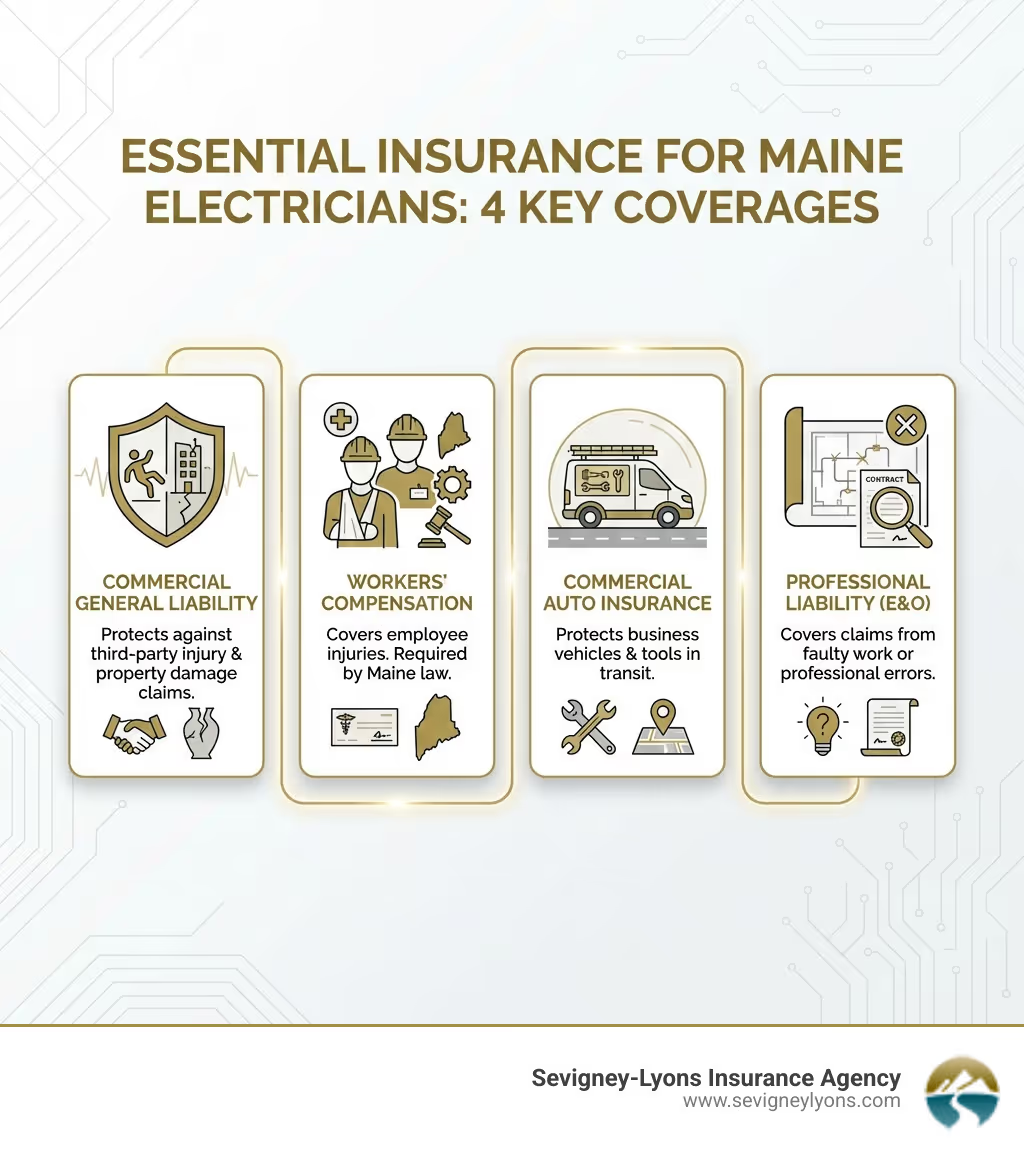
Electrical contractors insurance is a specialized bundle of coverage designed to protect electricians from the unique risks they face on the job—from workplace injuries and property damage to faulty work claims and stolen tools. If you're an electrician in Maine, the right insurance protects your business, your employees, and your financial future.
What Electrical Contractors Insurance Typically Includes:
- Commercial General Liability – Covers third-party bodily injury and property damage claims
- Workers' Compensation – Required by Maine law if you have employees; covers medical bills and lost wages for work-related injuries
- Commercial Auto Insurance – Protects business vehicles and covers accidents while transporting tools and equipment
- Professional Liability (Errors & Omissions) – Covers claims related to faulty work, design errors, or professional negligence
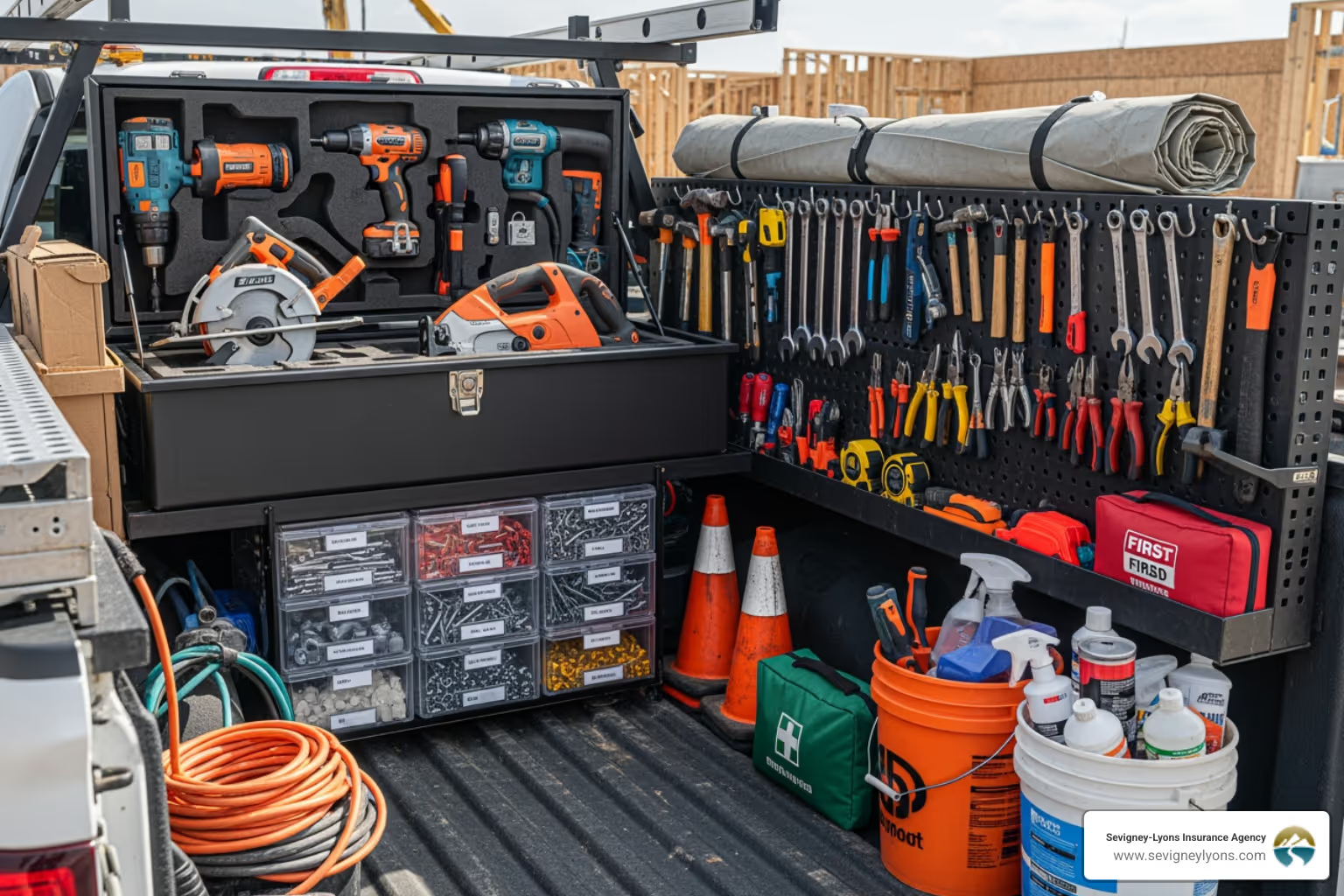
- Inland Marine/Tools & Equipment – Protects expensive tools and equipment from theft or damage on job sites
You are essential in literally turning the lights on in the lives of your clients. From fixing a fuse to rewiring a building in Wells, Kennebunk, or Ogunquit, your talents are unique and in high demand. But working with thousands of volts every day comes with inherent risks—both during and after work is completed.
The market size for electricians in Canada ballooned to $32.2 billion in 2022, and Maine's construction industry continues to grow. That growth means more opportunities, but also more exposure to costly claims. A single mistake—like faulty wiring that leads to a fire weeks after completion—can result in thousands of dollars in damages and legal fees.
Without proper coverage, one misstep can turn into a costly mistake. Electricians operate with low margins, and a single claim can threaten your business's survival. Insurance isn't just a legal requirement for many projects—it's the foundation of your risk management strategy and a key to winning client trust.
Whether you're a sole proprietor working out of your truck or a growing business with employees in Biddeford, having the right insurance protects your livelihood and gives you peace of mind to focus on your customers.
Electrical contractors insurance word roundup:
Powering Your Protection: Core Coverages for Electricians
As electrical contractors, you're responsible for keeping homes and businesses powered safely. This incredible responsibility comes with significant risks. That's why building a robust insurance plan is non-negotiable for your business, whether you're serving Wells, Kennebunk, Ogunquit, or Biddeford. Let's dig into the fundamental policies that form a comprehensive electrical contractors insurance package.
Commercial General Liability Insurance
Imagine you're installing a new electrical panel in a client's home, and accidentally, a tool slips, damaging a valuable antique. Or perhaps a visitor to your job site trips over a power cord you've laid out, sustaining an injury. These are precisely the kinds of situations Commercial General Liability (CGL) insurance is designed to cover.
CGL protects your business from claims of third-party bodily injury, property damage, and even advertising injury (like libel or slander). It covers the costs associated with these claims, including legal defense fees, settlements, and medical expenses. This coverage extends beyond the immediate work, often including "completed operations" coverage, meaning you're protected if an issue arises from your work after the project is finished. For example, if a wiring job you completed last year causes a fire, your CGL policy would respond.
Many clients, especially for larger commercial projects, will require you to carry a minimum amount of CGL insurance, often $1 million or more. This isn't just a formality; it assures them that your business is financially prepared for unexpected incidents. A typical CGL policy for an electrical contractor might cost between $900-$1,400 per year, but this can vary. For more in-depth information, explore our guide on General Liability Insurance Maine.
Workers’ Compensation Insurance
If your electrical business has even one employee, Workers' Compensation insurance isn't just a good idea—it's a legal requirement in Maine. This vital coverage provides a safety net for your team, covering medical expenses, lost wages, and rehabilitation costs if an employee suffers a work-related injury or illness. From a sprained ankle on a ladder to a more serious electrical burn, Workers' Comp ensures your employees receive the care they need without placing a direct financial burden on your business.
Beyond the immediate care, Workers' Compensation also protects your business from lawsuits related to employee injuries. Without it, you'd be vulnerable to significant out-of-pocket costs and legal penalties. The cost of Workers' Compensation insurance typically ranges from $2-$6 per $100 of payroll, but factors like your industry, claims history, and safety record can influence this. Understanding your Experience Modification Rate (EMR) is crucial here, as it directly impacts your premiums. A lower EMR reflects a strong safety record and can lead to significant savings. Learn more about managing this factor in our article on Experience Mod Workers Comp Maine.
Commercial Auto Insurance
Your vehicles are more than just transportation; they're mobile workshops, carrying your tools, equipment, and sometimes even your crew to job sites across Maine. That's why personal auto insurance simply isn't enough when those vehicles are used for business purposes. Commercial Auto insurance is specifically designed to cover the unique risks associated with business-owned or business-used vehicles.
This policy provides liability coverage if one of your work vehicles is involved in an at-fault accident, covering damages to other vehicles, property, and injuries to third parties. It can also cover damage to your own vehicles from collisions, theft, or other perils. If your employees use their personal vehicles for business (say, to pick up parts), you might also need "non-owned automobile coverage" to protect your business from liability arising from accidents involving those vehicles. Commercial Auto insurance for a single vehicle can range from $1,200-$3,000 annually, depending on factors like vehicle type, driving records, and coverage limits. For a deeper dive into protecting your fleet, check out our Commercial Auto Insurance Maine Guide.
General Liability vs. Professional Liability (E&O)
It's common for electrical contractors to confuse Commercial General Liability (CGL) with Professional Liability, also known as Errors and Omissions (E&O) insurance. While both are crucial, they cover very different types of risks. Understanding the distinction is key to a truly comprehensive electrical contractors insurance plan.
Let's break down the differences:
CGL covers the "oops" moments that cause physical harm or damage, while E&O covers the "uh-oh" moments where your professional advice or service leads to a financial setback for your client. For an electrician, this is incredibly important. If your wiring design leads to a system overload, causing a business to lose revenue, your E&O policy would be the hero. Many states, or specific project types, may require E&O, especially for services involving design or consulting. Dive deeper into this crucial coverage with our guide on What is Professional Liability.
Navigating Risks: Common Claims and How Electrical Contractors Insurance Responds
Electrical work is inherently risky. From the moment you pick up your tools to long after a project is completed, potential hazards lurk. Understanding these common claims scenarios and how your electrical contractors insurance responds is vital for risk mitigation and ensuring your financial safety net is robust. Let's look at some real-world examples.
Scenario 1: Faulty Wiring Leads to Property Damage
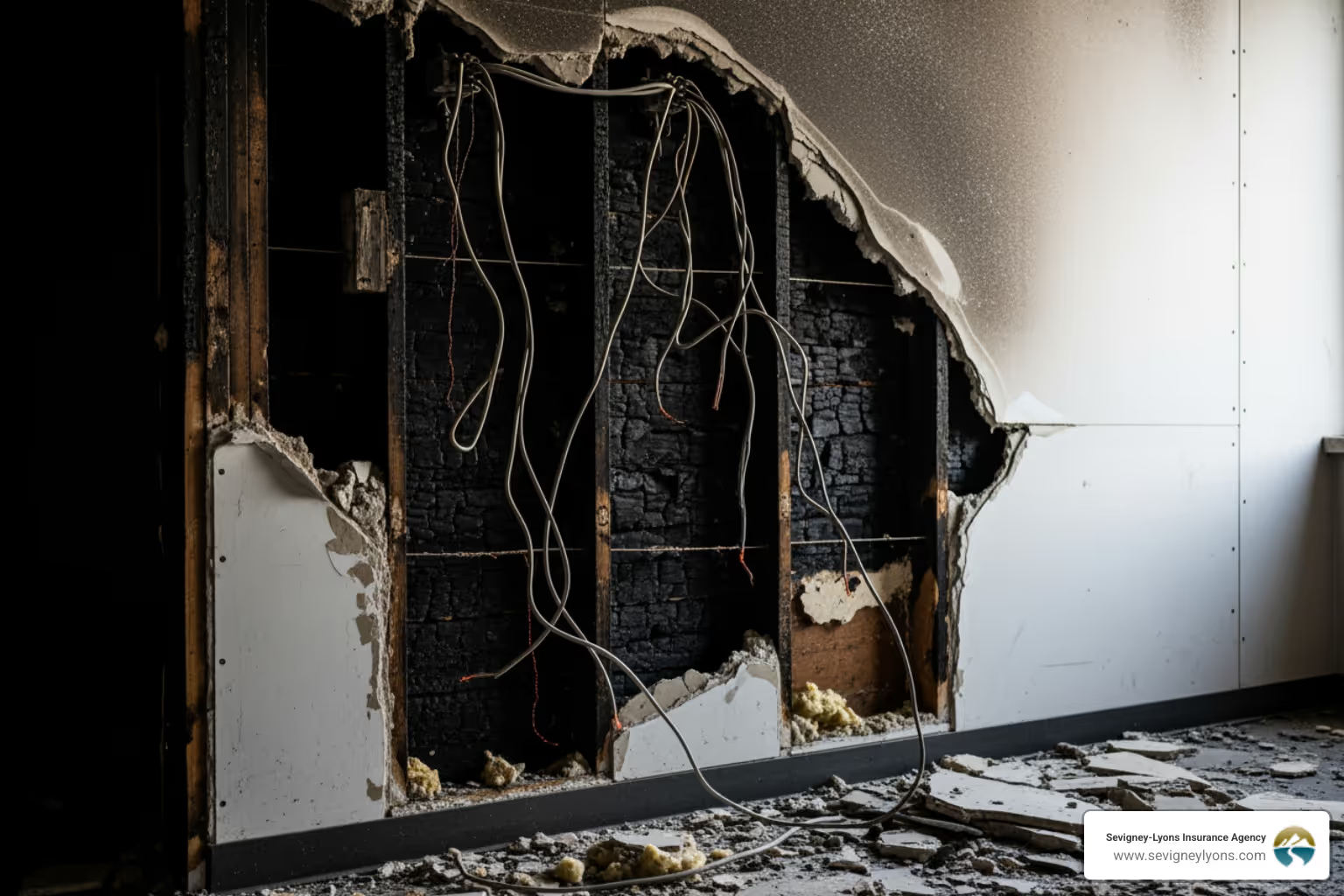
Imagine you've just completed a significant rewiring project for a commercial client in Biddeford. Everything seems fine, but a few weeks later, a fire breaks out in their office, and the investigation traces the cause back to a faulty connection in your work.
- Claim Example: The fire causes extensive damage to the client's property, including structural elements, office equipment, and inventory. They file a claim against your business for the significant cost of repairs, replacement of damaged items, and business interruption.
- How Insurance Responds: Your Commercial General Liability (CGL) policy would typically step in to cover the property damage and any resulting bodily injuries. However, if the claim specifically alleges that the fire was due to a design error or professional negligence (e.g., you used an incorrect gauge wire for the load), your Professional Liability (E&O) insurance would cover the costs to correct the faulty work and potentially the financial losses incurred by the client due to the business interruption. Without E&O, the costs to fix your own flawed work might not be covered by CGL, leaving you to pay out of pocket.
Scenario 2: Employee Injury on a Job Site
Electrical work often involves working at heights, in confined spaces, or with powerful machinery. Despite the best safety protocols, accidents can happen. Consider an employee working on an electrical panel in a dusty basement in Wells, who slips and falls, sustaining a serious back injury.
- Claim Example: The employee requires immediate medical attention, surgery, and extensive physical therapy. They are unable to work for several months, resulting in lost wages.
- How Insurance Responds: Your Workers' Compensation insurance would cover all the employee's medical bills, a portion of their lost wages, and rehabilitation costs. It would also protect your business from a lawsuit filed by the injured employee. This coverage is not just about financial protection; it's about ensuring your team is cared for. To minimize such incidents, we always encourage rigorous safety programs, regular "Toolbox Talks" (brief, on-site safety meetings), and adherence to OSHA guidelines, which not only protect your employees but also help manage your Workers' Comp premiums.
Scenario 3: Theft of Tools and Equipment
Your tools are your livelihood. They're expensive, specialized, and essential for every job. Picture this: you've parked your work van overnight at a job site in Kennebunk, and by morning, you find someone has broken in and stolen thousands of dollars worth of specialized electrical testing equipment and copper wiring.
- Claim Example: You're left without the necessary tools to complete your current project, facing delays and the significant cost of replacing the stolen items.
- How Insurance Responds: This is where Inland Marine insurance (often called tools and equipment coverage) comes into play. This policy covers your valuable movable property—tools, equipment, and materials—while they are in transit, stored at a job site, or even in your vehicle overnight. Unlike standard commercial property insurance, which typically only covers items at a fixed business location, Inland Marine coverage is designed for property that moves. Without it, replacing those stolen items could severely impact your cash flow and ability to take on new projects. For more information on protecting your valuable assets, consider exploring our insights on Business Property Insurance Maine.
Understanding the Cost of Your Electrical Contractors Insurance Policy
One of the first questions we hear from electrical contractors in Maine is, "How much does electrical contractors insurance cost?" It's a fair question, but the answer is rarely a simple number. Insurance premiums are as unique as your business, influenced by a variety of factors that paint a picture of your risk profile. Budgeting for insurance requires understanding these influencers.
Key Factors That Influence Your Premiums
- Business Size and Annual Revenue: Larger businesses with higher revenues generally have more exposure to risk, leading to higher premiums. More employees also mean more payroll, which directly impacts Workers' Compensation costs.
- Number of Employees: As discussed, the more employees you have, the greater your Workers' Compensation obligations and potential liability under other policies.
- Claims History: A clean claims history is your best friend. Businesses with a history of frequent or severe claims will typically pay higher premiums, as they are seen as a higher risk to insurers.
- Years of Experience: Established businesses with a proven track record of safe operations often receive more favorable rates than brand-new ventures. Insurers look for stability and experience.
- Type of Work (Residential vs. Commercial/Industrial): Residential work typically carries different risks than large-scale commercial or industrial projects. High-voltage work, for example, often warrants higher premiums due to the increased hazard. Specialized services like installing electric vehicle chargers might require specific endorsements or policies.
- Location in Maine: While Maine generally has moderate insurance costs compared to states like California or New York, your specific location within the state can play a role. Factors like local risk conditions, labor costs, and even natural disaster risks (though less common for electricians than other trades) can subtly influence pricing.
How to Manage and Reduce Your Insurance Costs
While some factors are beyond your immediate control, there are proactive steps you can take to manage and potentially reduce your Maine electrical contractors insurance costs:
- Implement Robust Safety Programs: This is perhaps the most impactful strategy. A strong safety culture, regular training, and strict adherence to safety protocols can significantly reduce accidents and claims. For Workers' Compensation, this directly improves your Experience Modification Rate (EMR), leading to lower premiums. Studies show that every dollar spent on safety can yield two or more dollars in return and significantly boost your reputation.
- Maintain Good Driving Records: For Commercial Auto insurance, ensuring your employees have clean driving records and promoting safe driving habits can lead to better rates.
- Bundle Policies: Many insurers offer discounts when you purchase multiple policies (e.g., CGL, Commercial Auto, and Property) from the same provider. This simplifies your insurance management and often saves money.
- Choose Higher Deductibles: Opting for a higher deductible means you'll pay more out of pocket if a claim occurs, but it will lower your annual premium. This strategy is best for businesses with healthy cash reserves that can comfortably cover the deductible if needed.
- Review Coverage Annually: Your business changes, and so should your insurance. An annual review with your agent ensures your coverage is still adequate, you're not over-insured, and you're taking advantage of any new discounts or policy structures.
- Work with a Specialized Agent: An insurance agency that understands the unique needs of electrical contractors can help you steer options and find the most cost-effective policies.
- Join Trade Associations: While not directly applicable in Maine, some associations offer members discounts on insurance. This highlights the value of being part of a professional community.
By taking these steps, you can create a safer work environment, reduce your risk profile, and ultimately control your insurance expenditures more effectively.
Maine-Specific Requirements for Electricians
Operating an electrical contracting business in Maine means navigating specific state regulations and local ordinances. Understanding these requirements is not just about compliance; it's about safeguarding your business and ensuring you can secure projects, whether you're working in the busy streets of Portland or the quieter towns of Ogunquit.
Licensing and State Mandates in Maine
In Maine, electricians are licensed by the Electricians' Examining Board. While specific insurance minimums might not be explicitly stated on your license, certain coverages are implicitly or explicitly required for operation, especially if you have employees or work with general contractors.
- Workers' Compensation Laws: As mentioned, if you have employees, Workers' Compensation insurance is mandatory under Maine state law. This critical coverage protects both your workers and your business from the financial fallout of workplace injuries.
- General Liability for Licensing and Projects: While not always a direct state licensing requirement for individual electricians, Commercial General Liability is almost universally required by general contractors, project owners, and municipalities for permits. Many contracts will stipulate minimum CGL limits, often $1 million or more. Ensuring you have this coverage is essential for bidding on and securing projects across Maine.
- Business Structure Considerations: If you operate as a Limited Liability Company (LLC) in Maine, understanding your insurance needs is crucial for protecting your personal assets. For more details on this, refer to our guide on Business Insurance for a Maine LLC.
Certificates of Insurance (COIs) for Projects
A Certificate of Insurance (COI) is a document issued by your insurance provider that summarizes your insurance coverage. It's not the policy itself, but rather proof that you have the required coverage. For electrical contractors in Maine, COIs are indispensable.
- Proof of Coverage: Clients, general contractors, and even local governments for permitting will frequently ask for a COI before you can start work. This document provides them with peace of mind, knowing that you are adequately insured.
- Subcontractor Liability: If you hire subcontractors for any part of your electrical work, it is absolutely critical to obtain a COI from each of them. Without proof of their insurance, you could inadvertently become responsible for any injuries they cause or damages they incur. Not collecting these COIs can also increase your own insurance rates.
- Winning Bids: Having a readily available COI can make the difference in winning a bid. It shows professionalism and readiness, demonstrating that your business is prepared and responsible.
When requesting a COI, be prepared to provide the following information:
- Your business name and contact information.
- The name and contact information of the party requesting the COI (the Certificate Holder).
- The type of coverage they require (e.g., CGL, Workers' Comp).
- The required limits of coverage.
- Whether the Certificate Holder needs to be listed as an "Additional Insured" (which extends some of your liability coverage to them, often required by general contractors).
- The project name or location, if specific.
We can help you generate these COIs quickly and efficiently, ensuring you're always ready for your next project in Wells, Kennebunk, Ogunquit, Biddeford, or anywhere else in Maine.
Get the Right Coverage for Your Electrical Business
As an electrical contractor, your work keeps our communities powered and safe. But the risks you face daily are substantial. From the potential for devastating fires caused by faulty wiring to serious injuries on job sites, operating without comprehensive electrical contractors insurance is like working without your trusted voltage tester—you're leaving too much to chance.
We've explored the essential coverages, the common claims scenarios, and the factors that influence your premiums. We've also touched upon the specific requirements for operating your electrical business here in Maine. Now, the question is, how do you ensure you have the right coverage, custom precisely to your unique operations?
Why Partner with a Specialized Insurance Agency
This is where working with a specialized, independent Maine insurance agency like Sevigney-Lyons Insurance Agency makes all the difference. We understand that your business isn't just another policy; it's your livelihood, built on skill, hard work, and dedication.
- Expert Guidance: We don't just sell insurance; we're risk management partners. Our team has decades of experience and deep community roots in Southern Maine, giving us unparalleled insight into the challenges and opportunities faced by local electrical contractors. We can explain the nuances of each policy, helping you understand exactly what you're covered for, and just as importantly, what you're not.
- Access to More Options: As an independent agency, we aren't tied to a single insurance company. We shop the market on your behalf to find the best coverage options and competitive rates for your specific needs. This means you get a customized policy, not a one-size-fits-all solution.
- Customized Policies: Your electrical business is unique. Whether you specialize in residential rewiring in Ogunquit, commercial installations in Biddeford, or industrial projects across Maine, your insurance needs will vary. We'll work with you to build a custom electrical contractors insurance package that precisely fits your operations, scale, and risk profile, ensuring you're neither over-insured nor under-protected.
- Risk Management Advice: Beyond policies, we offer valuable advice on how to implement safety programs, manage your EMR, and reduce your overall risk exposure. Our goal is to help you prevent claims from happening in the first place, which ultimately saves you money and protects your reputation.
- Community Focused: Sevigney-Lyons Insurance Agency is deeply embedded in the communities we serve, from Wells to Portland. We pride ourselves on providing custom insurance solutions for families and businesses across Maine, understanding the local context that can impact your operations. We love insurance, so you don’t have to!
Don't let a single spark jeopardize your hard-earned business. Let us help you illuminate your path forward with confidence. For the best protection for your electrical contracting business, connect with us. Find how we can help you Find the Best Maine Artisan Contractors Insurance custom specifically for your trade. We're here to ensure your business is protected, allowing you to focus on what you do best: keeping the lights on for Maine.