Blog Content
Why Maine Landlords Need Specialized Insurance Protection
Investment property insurance protects rental properties from financial losses that standard homeowners insurance won't cover. This specialized coverage addresses the unique risks landlords face, including tenant-related damages, liability claims, and loss of rental income.
Key Components of Investment Property Insurance:
- Property Coverage: Protects the building and landlord-owned items like appliances.
- Liability Protection: Covers tenant/guest injuries and legal defense costs.
- Fair Rental Value: Reimburses lost rental income during repairs.
- Cost: Averages $2,100-$4,000 annually, about 15-25% higher than homeowners insurance.
Whether you own a rental in Wells, a multi-unit in Biddeford, or a vacation property in Ogunquit, Maine's coastal climate and seasonal market create specific risks that demand proper coverage.
The biggest mistake landlords make is assuming their homeowners policy covers rental activities. Standard homeowners insurance excludes coverage for business use, and renting property is a business activity. This leaves landlords exposed to significant financial losses from property damage, lawsuits, and lost income.
As one insurance expert notes, "Owning a rental property is a significant investment" that requires protection beyond what typical homeowners policies provide. The unique challenges of managing rentals demand specialized insurance solutions.
Understanding Landlord Insurance vs. Homeowners Insurance
Many new landlords make a costly mistake: assuming their homeowners policy will cover a rental property. Unfortunately, investment property insurance and standard homeowners insurance are designed for entirely different purposes. The risks, responsibilities, and coverage needs are worlds apart.
The fundamental difference is property occupancy and business activity. A homeowners policy assumes you live in the property. The moment you hand keys to a tenant, you've entered the business world, and your insurance needs change dramatically.
When tenants move in, your risk exposure increases. You are now responsible for people living in your property, along with their guests and lifestyle choices. Tenant-occupied properties face different challenges than owner-occupied properties, from increased wear and tear to greater liability risks.
Why Your Homeowners Policy Isn't Enough
Imagine a winter storm damages the roof of your Kennebunk rental, or a tenant's guest slips on an icy step and sues. If you file a claim on a standard homeowners policy, you'll likely receive a devastating letter: "Claim denied due to business use exclusion."
Most homeowners policies contain a non-owner occupied clause that voids coverage when you're not living there. Renting your property is considered a business activity by insurers, and this business use classification reflects real differences in risk. The claim denial risk means you could face massive out-of-pocket expenses for repairs, legal fees, and medical bills you thought were covered. For more information about protecting your personal residence, check out our best Maine home insurance guide.
Key Differences in Coverage
The differences go far beyond who lives in the house. Homeowners insurance protects your lifestyle, while landlord insurance protects your business. Landlord policies are specifically designed to address the unique risks of rental properties.
Your homeowners policy won't cover the refrigerator you provide for tenants or the lawnmower you store on-site. Landlord liability coverage is also crucial, as you face unique legal exposures that a standard policy doesn't address.
Perhaps most critically, loss of rental income protection is a financial lifesaver. If a fire makes your Ogunquit rental uninhabitable, standard homeowners insurance won't replace lost rent payments. Investment property insurance includes fair rental value coverage to maintain your cash flow during repairs. If you're considering renting out a second home, learn more about insurance for second homes to ensure you're protected.
Trying to use homeowners insurance for a rental property is like wearing a winter coat to the beach—it's completely wrong for the situation.
Core Coverages in an Investment Property Insurance Policy
Investment property insurance is your financial safety net, offering far more protection than a standard homeowners policy. Think of it as a three-legged stool: property coverage protects your physical asset, liability coverage shields you from lawsuits, and loss of income coverage keeps money flowing when disaster strikes.
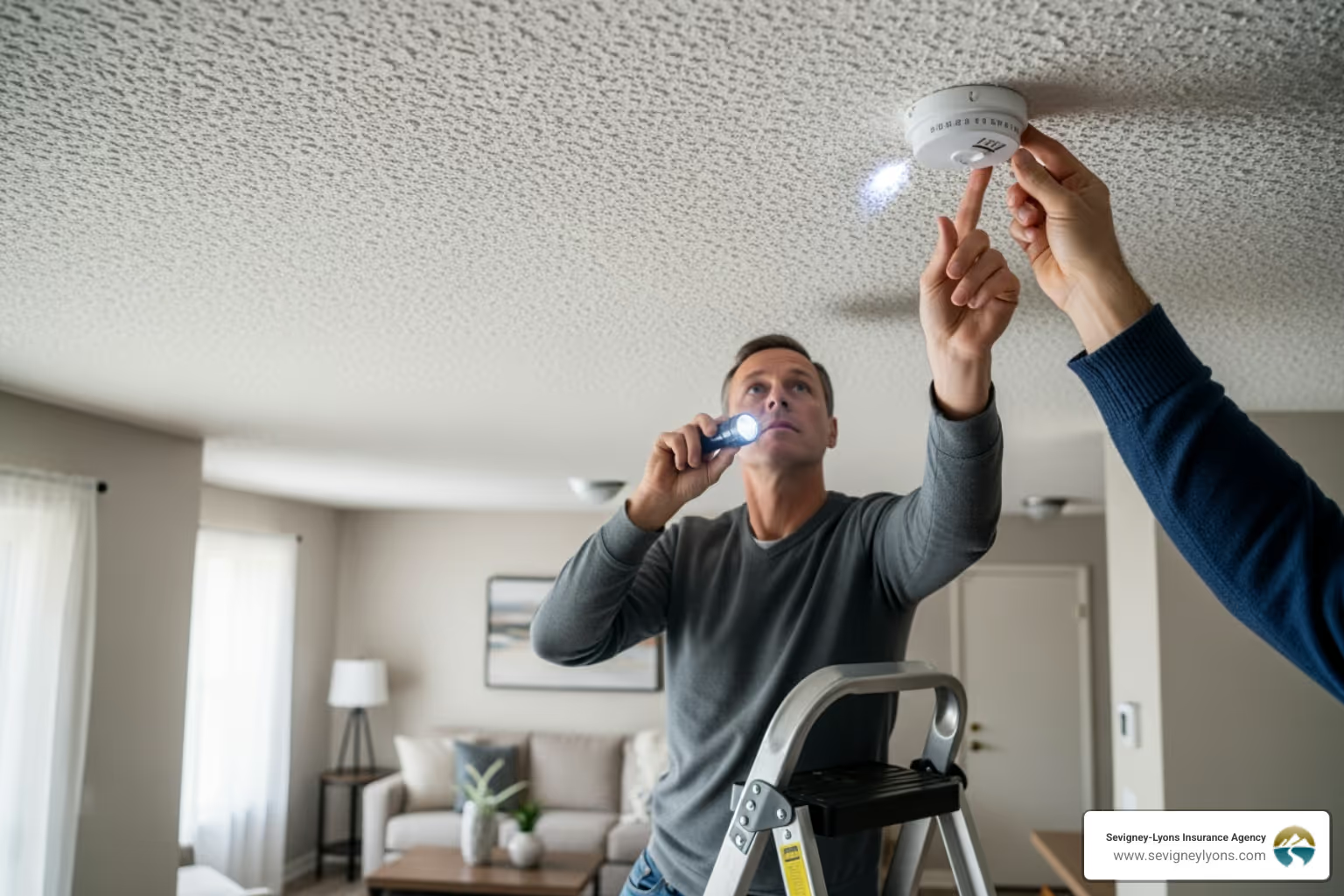
These policies are flexible and can be customized with endorsements to match your situation, whether you're managing a beach cottage in Ogunquit or a multi-unit building in Biddeford.
Property Coverage: Protecting Your Physical Asset
Dwelling coverage is the foundation, protecting the main structure from perils like fire, lightning, and severe weather. For Maine landlords, this is essential for protection against Nor'easters that cause wind and hail damage in coastal towns like Kennebunk.
This coverage also extends to other structures like detached garages, sheds, and fences. A key feature for landlords is landlord's personal property coverage, which protects items you own within the rental. This includes appliances (refrigerators, stoves, washers) and maintenance equipment like lawnmowers and snow blowers. The policy typically protects against common perils like fire, vandalism, theft, and storm damage. For more on protecting against natural hazards, see our guide on Maine Hazard Home Insurance.
Essential Liability Protection
If property coverage protects your investment, liability protection protects your financial future. As a landlord, you are exposed to lawsuits from anyone who steps on your property, including tenants, guests, and delivery drivers.
Consider a tenant's guest slipping on icy steps during a Maine winter. Your liability coverage handles legal defense costs and any settlements or judgments. It also includes medical payments coverage for minor injuries, regardless of fault, which can resolve issues before they escalate. Since legal defense costs can be staggering, this protection is vital.
We strongly recommend liability limits of $300,000 to $500,000 or higher, as basic policies are often insufficient. For more on expanding your liability protection, explore our Maine general liability quote options.
Fair Rental Value (Loss of Income)
This coverage answers the question: what happens if your property becomes uninhabitable and your income stops? Fair rental value coverage, or loss of income protection, reimburses you for the rent you would have collected during the repair period after a covered disaster.
This protection is like business interruption insurance for your rental operation. It typically lasts for a specified period, often 12 to 24 months, giving you time to complete repairs. This coverage bridges the gap between disaster and recovery, allowing you to maintain your investment without devastating financial losses. For more insights into business insurance, review our guide on Maine Business Insurance Essential 2025.
What Determines the Cost of Your Maine Investment Property Insurance?
The cost of investment property insurance varies, as each property has a unique risk profile. Insurers assess numerous factors to determine your premiums, reflecting the likelihood and potential cost of a claim.

As a guideline, landlord insurance is typically 15% to 25% more expensive than a homeowners policy for the same property. The average annual cost can range from $2,100 to $4,000, but this fluctuates based on your specific circumstances.
Key Factors Influencing Your Premium
- Property Location: A coastal property in Ogunquit or Kennebunk faces higher risks from Nor'easters and storm surges, impacting premiums. Proximity to fire departments and local crime rates also play a role.
- Property Age and Construction: Older homes may have higher costs due to aging systems and more expensive materials, while newer homes often get lower rates.
- Claims History: A history of claims on the property can signal higher risk to insurers.
- Coverage Limits and Deductibles: Higher coverage limits increase your premium, while a higher deductible (what you pay out-of-pocket) will lower it.
- Safety Features: Monitored alarms, sprinkler systems, and water leak detectors can qualify for discounts.
For properties in flood-prone areas, it's important to understand How Does Flood Insurance Work in Maine.
How to Save on Your Policy
Here are smart ways to lower your investment property insurance premiums:
- Bundling Policies: Combine your rental property insurance with your home, auto, or other policies for a significant discount.
- Higher Deductibles: Choosing a higher deductible reduces your annual premium, but ensure you have funds to cover it if a claim arises.
- Safety and Security Discounts: Install fire alarms, security systems, or water leak detectors to earn discounts.
- Maintain Good Credit: A strong credit history can lead to better premiums.
- Continuous Coverage: Avoid gaps in your insurance to prevent higher rates.
- Regular Policy Review: Review your policy annually with your agent to ensure it still meets your needs and to check for new discounts.
While price is important, the "cheapest" policy isn't always the best. For more tips, see our insights on Cheapest Maine Home Insurance.
Choosing the Right Policy for Your Maine Rental Property
Finding the perfect investment property insurance policy is about finding the best fit for your specific situation, not just the lowest price. Whether you're a first-time landlord or expanding your portfolio, understanding your needs is crucial.

If you have a mortgage, your lender will require coverage. Even if you own the property outright, proper insurance is your financial safety net. Local Maine regulations may also influence your requirements, making it important to work with an agent who understands the local landscape.
Assessing Your Specific Needs
Before comparing policies, examine what you're insuring. A single-family home in Wells has different needs than a multi-unit property in Biddeford or a condo.
- Property type is key. Single-family homes are straightforward, but multi-family properties have common areas and increased liability. For condos, your policy must work with the association's master policy. Our Maine Condo Insurance for Landlords guide explains this.
- Rental strategy also matters. Long-term tenants present a different risk profile than short-term vacation rentals in Ogunquit or Kennebunk. The constant turnover of short-term rentals often requires specialized coverage or endorsements.
Understanding Replacement Cost vs. Actual Cash Value
How your property damage claims are settled is a critical decision. The difference between Actual Cash Value (ACV) and Replacement Cost Value (RCV) can be thousands of dollars.
- Actual Cash Value (ACV) pays for repair or replacement based on current worth, factoring in depreciation. If a 20-year-old roof is damaged, ACV only pays its depreciated value, leaving you to cover the rest.
- Replacement Cost Value (RCV) pays to repair or replace damaged property with new materials of similar quality, without deducting for depreciation. RCV policies cost more but provide the financial protection most landlords need.
For older Maine properties, Ordinance or Law coverage is a vital endorsement. It covers the extra costs to bring a rebuilt property up to current building codes, which may be stricter than when the property was originally built. To dive deeper, explore how to Choose the right homeowners coverage.
Specialized Coverage and Common Exclusions
Even the best policy has limits. Understanding what's not covered is as important as knowing what is.
Common exclusions include flood damage (a major concern for coastal Maine), earthquake damage, and wear and tear. Insurance covers sudden, accidental losses, not gradual deterioration.
Your policy protects your property, but not your tenant's belongings; they need their own renters insurance. Vacant properties also pose a challenge, as coverage is often reduced after 30-60 days of vacancy due to increased risks of vandalism or undetected damage. Specialized vacant property insurance is available for these situations. For coastal properties, reviewing Maine real estate insurance options provides additional insights.
Frequently Asked Questions about Investment Property Insurance
As an independent insurance agency serving Southern Maine for decades, we often hear the same questions from landlords. Here are clear, honest answers to some common concerns.
What is the difference between landlord insurance and investment property insurance?
There is no meaningful difference. The terms "investment property insurance," "landlord insurance," and "rental property insurance" are used interchangeably. You may also hear it called a "dwelling fire policy" or "DP-3 policy." All these names refer to the same product: specialized insurance for residential properties you own but do not live in. The important thing isn't the name, but ensuring you have the right coverage.
Do I need to require my tenants to have renters insurance?
Yes. While not legally required in Maine, making renters insurance a condition of your lease is one of the smartest business decisions a landlord can make. Your investment property insurance protects your building and your belongings (like appliances), but it does not cover anything that belongs to your tenant. Renters insurance covers their personal property.
More importantly, renters insurance provides liability coverage for your tenants. If your tenant accidentally starts a fire, their policy would respond first, creating an extra layer of protection for you and potentially preventing a claim on your policy. For more information, check out our guide on Commercial Renters Insurance Maine.
What happens if my rental property is vacant for an extended period?
This is a crucial question, especially for seasonal rentals in Southern Maine. Most investment property insurance policies have a "vacancy clause." If your property is empty for more than 30 to 60 days (the exact time varies), coverage for perils like vandalism, theft, and sometimes fire may be significantly reduced or eliminated.
Vacant properties face higher risks, as a burst pipe or break-in might go unnoticed for weeks. The solution is vacant property insurance, which is designed for these situations. The key is to communicate with your insurance agent before the property becomes vacant to ensure you have continuous, proper coverage. For broader insights, explore our guide to Maine Real Estate Insurance Options.
Protect Your Maine Rental Investment with the Right Coverage
Owning rental property in Maine is a significant investment. Whether it's a cottage in Wells or a multi-family in Biddeford, your investment property insurance is the foundation of your financial security. It's not just an expense—it's your shield against the unexpected.
You've worked hard to build your rental portfolio. Protecting that asset with proper insurance isn't optional; it's essential. A single uninsured liability claim or a major storm could devastate your investment. Investment property insurance transforms these potential catastrophes into manageable events.
Key takeaways include understanding that homeowners insurance is not enough, securing adequate liability coverage ($300,000-$500,000+), and ensuring you have fair rental value coverage to protect your income. Proactive risk management, like requiring renters insurance, can also reduce your exposure.
At Sevigney-Lyons Insurance Agency, we've spent decades helping Southern Maine landlords steer these decisions. Our deep roots in communities like Wells, Kennebunk, and Biddeford mean we understand the unique challenges you face. We work with over 20 top carriers to find coverage that fits your needs and budget.
Don't leave your valuable investment under-protected. The peace of mind from knowing you're properly covered is invaluable.
Contact our top-rated insurance agency in Wells, Maine, for a free quote and let us help you build a secure foundation for your rental property success.