Blog Content
Why Understanding Property Insurance Coverage Types Matters for Maine Homeowners
What are the three main types of property insurance coverage is a question every Maine property owner should understand. Whether you're facing a nor'easter in Wells or protecting a business in Biddeford, the right coverage is the difference between financial recovery and devastating loss.
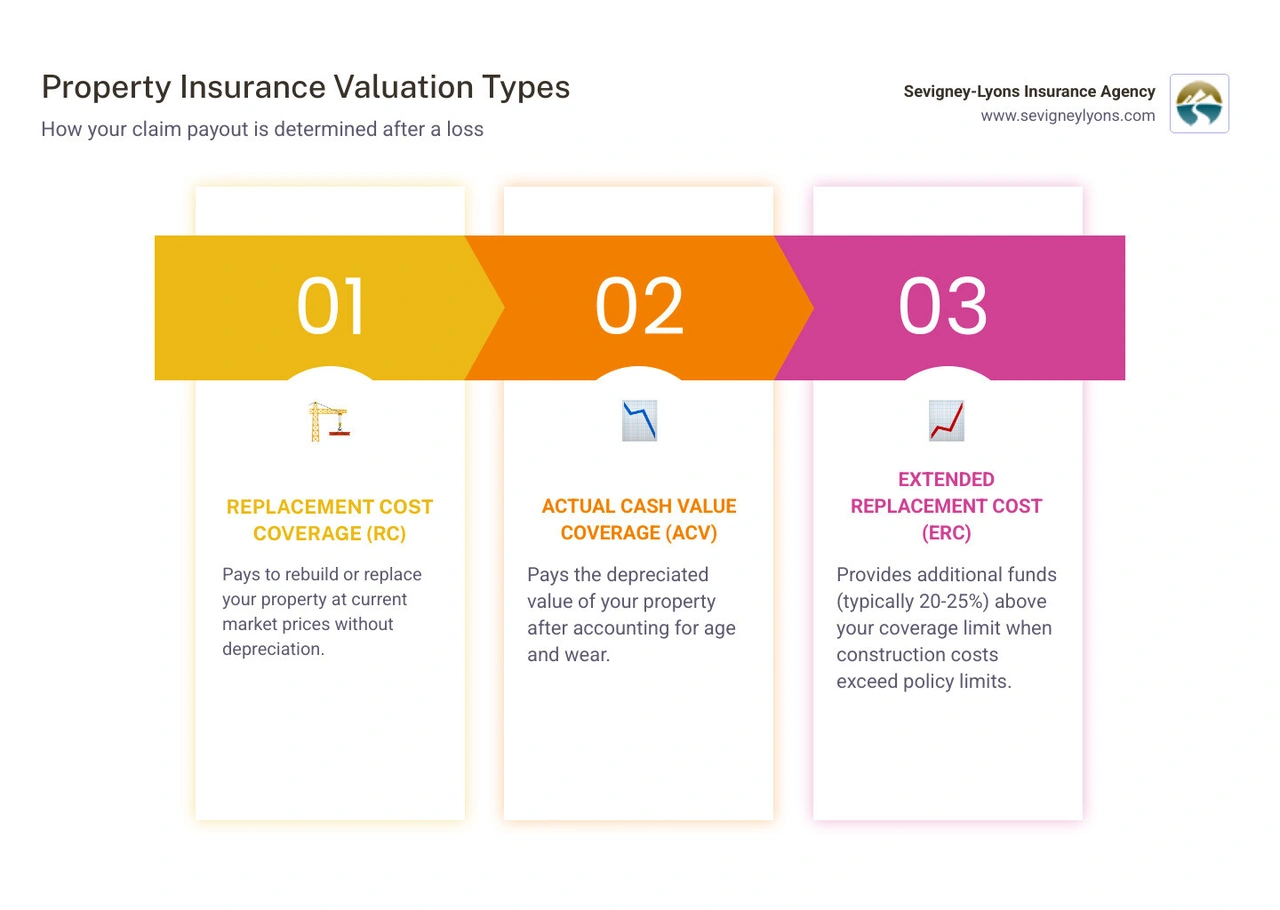
The three main types of property insurance coverage are:
- Replacement Cost Coverage - Pays to rebuild or replace your property at current market prices
- Actual Cash Value Coverage - Pays the depreciated value of your property after accounting for age and wear
- Extended Replacement Cost Coverage - Provides additional funds (typically 20-25% above your coverage limit) when construction costs exceed your policy limits
Imagine a peaceful morning disrupted by a sudden fire or flood. This scenario highlights why understanding your coverage is crucial for Maine residents.
Maine's unique geography brings specific risks that make property insurance essential. Coastal areas like Kennebunk and Ogunquit face flooding risks, while inland properties deal with heavy snow loads and ice dams. The weight of ice and snow alone can cause thousands in damage—coverage that varies significantly depending on which type of policy you choose.
Your property insurance is a financial safety net, but only if you understand what you're buying. The difference between replacement cost and actual cash value coverage could mean receiving $15,000 versus $8,000 for the same claim. That gap is critical as Maine's construction costs rise.
The Foundation: How Your Property is Valued
Property valuation is the foundation of your insurance policy, determining how much you'll receive after a disaster. Understanding how your property is valued isn't just jargon; it's the difference between having enough to rebuild or facing a financial shortfall.
The valuation method you choose determines your future payout. Whether you're protecting a historic home in Kennebunk or a modern cottage in Wells, this decision shapes your financial recovery plan.
What are the three main types of property insurance coverage for valuation?
For valuation, there are three approaches that determine your claim payout: Replacement Cost, Actual Cash Value, and Extended Replacement Cost.
Replacement Cost Coverage is the gold standard of property protection. If a nor'easter damages your Ogunquit home, this coverage pays the full cost of repairs with new materials at current prices. It restores your home to its previous condition without penalizing you for age.
Actual Cash Value Coverage factors in depreciation. If a storm damages your 10-year-old kitchen, ACV pays its current depreciated value, not the cost of a new one. While premiums are lower, it can leave you with a significant gap to cover replacement costs.
Extended Replacement Cost Coverage is your safety net when construction costs spiral. Maine's construction market is unpredictable, especially after a major storm. It provides an extra 20-25% above your limit, protecting you from inflation and market fluctuations.
Why Choosing the Right Valuation Matters
The financial impact of your choice is clear when filing a claim. If your Biddeford home needs a new roof after wind damage, Replacement Cost Coverage covers a new roof. With Actual Cash Value Coverage, you might only receive 60% of that amount, leaving you to cover the rest.
Underinsurance is a major threat to Maine homeowners. When coverage falls short of rebuilding costs, you're self-insuring the difference. This is dangerous given Maine's rising construction costs and the need for specialized materials on coastal properties.
An accurate home valuation requires knowing your home's market value and its replacement cost—two different numbers. Your Kennebunk cottage might sell for $400,000, but rebuilding it could cost $500,000 or more due to material and labor costs.
Don't let budget lead to inadequate coverage. Higher premiums for better protection are a smart investment against the financial devastation of being underinsured.
What Are the Three Main Types of Property Insurance Coverage in Maine?
Now let's address the main policy categories in Maine that answer: what are the three main types of property insurance coverage? These policies protect different property and ownership situations.
What are the three main types of property insurance coverage for policyholders?

Three primary categories exist based on property use and ownership:
- Homeowners Insurance: For individuals who own and occupy their homes.
- Renters Insurance: For tenants who rent their living space.
- Commercial Property Insurance: For businesses protecting physical assets.
Let's explore their roles for Maine residents and businesses.
1. Homeowners Insurance for Maine Residences
Homeowners insurance is the cornerstone of protection for Mainers. This comprehensive policy covers your dwelling, belongings, and liability. It's essential for owner-occupied properties, from a Kennebunk cottage to a Portland family home.
A standard homeowners policy typically includes:
- Dwelling Coverage: Covers your home's physical structure from perils like fire, wind, and hail common in Maine.
- Other Structures Coverage: Covers detached structures like sheds, fences, and garages.
- Personal Property Coverage: Protects your belongings (furniture, electronics, etc.) from theft or damage, even when away from home.
- Liability Protection: Covers you if someone is injured on your property or if you damage someone else's property.
- Additional Living Expenses (ALE): Pays for temporary housing and living costs if a covered event makes your home uninhabitable.
Lenders require homeowners insurance for a mortgage. Even if you own your home outright, it's a critical investment. For a more detailed look, explore our Maine Home Insurance Explained and Best Maine Home Insurance Guide.
2. Renters Insurance for Tenants
Renters insurance (HO-4) is for tenants. Since you don't own the building, it focuses on your personal belongings and liability.
Key coverages include:
- Personal Belongings Coverage: Covers your valuables from theft, fire, and other perils. For example, it can replace a stolen laptop in your Biddeford apartment.
- Liability for Tenants: Helps with medical or legal fees if someone is injured in your rental or you cause damage. Landlords often require this coverage, as noted in resources like Are you a Residential Landlord? (PDF).
- Additional Living Expenses (ALE): Covers temporary living costs if your rental becomes uninhabitable after a covered loss.
Renters insurance is an affordable way to protect your belongings and liability, essential for tenants in markets like Biddeford and Portland.
3. Commercial Property Insurance for Businesses
For Maine business owners, commercial property insurance is a non-negotiable safeguard for physical assets, from the building to its inventory.
This type of policy typically covers:
- Buildings: Covers your business's structure, like an Ogunquit storefront or Portland warehouse.
- Inventory: Protects inventory, materials, and goods from damage or theft.
- Equipment: Covers essential equipment, tools, and technology.
- Business Interruption Coverage: If a covered event forces a temporary closure, this vital coverage helps replace lost income and cover ongoing expenses like payroll.
- Liability for Customers: Some policies include liability for incidents like customer slips and falls.
Protecting your business property and ensuring continuity is paramount. To learn more, check out our insights on Commercial Condo Insurance Coverage.
Decoding Your Policy: Covered Perils and Common Exclusions
Understanding what your policy covers is critical, especially with Maine's unique weather. Knowing the terms of your policy contract beforehand prevents surprises during a claim.
Common Covered Perils
Your policy protects against specific "perils," or events that cause damage. Standard policies cover many common events in Maine.

Fire, lightning, and theft are fundamental coverages. In Maine, wind and hail coverage is relevant for nor'easters that damage roofs and bring down trees, causing a significant number of property damage claims.
Vandalism protection covers intentional damage to your property.
In Maine, winter coverages are key. Weight of ice and snow protects against roof damage and ice dams. Frozen pipe coverage addresses water damage from burst pipes, provided you've taken preventative measures.
Key Exclusions in a Standard Policy
Knowing what isn't covered is just as important. Standard policies have exclusions that can be significant for Maine residents.
Flood damage is a critical exclusion, especially for coastal towns like Wells, Kennebunk, and Ogunquit. Standard policies exclude damage from floods, tsunamis, and groundwater, meaning waterfront properties require separate flood insurance.
Earth movement from earthquakes or landslides isn't typically covered and requires a special endorsement.
Policies exclude normal wear and tear. Damage from age or lack of maintenance, like an old, leaky roof, isn't covered.
Pest damage, intentional damage, and sewer backup are also common exclusions. You can often add an endorsement for sewer backup.
Understanding these exclusions helps you identify coverage gaps and make informed decisions to protect your Maine property.
Beyond the Basics: Customizing Your Maine Property Insurance
A standard policy provides a solid base, but Maine properties often need a custom approach. Let's explore how to build a complete safety net for your unique situation, from a historic Kennebunk home to a Wells waterfront condo.
Different Levels of Homeowners (HO) Policies
Homeowners insurance comes in different "HO" policy forms. Understanding these levels of protection can save you thousands during a claim.
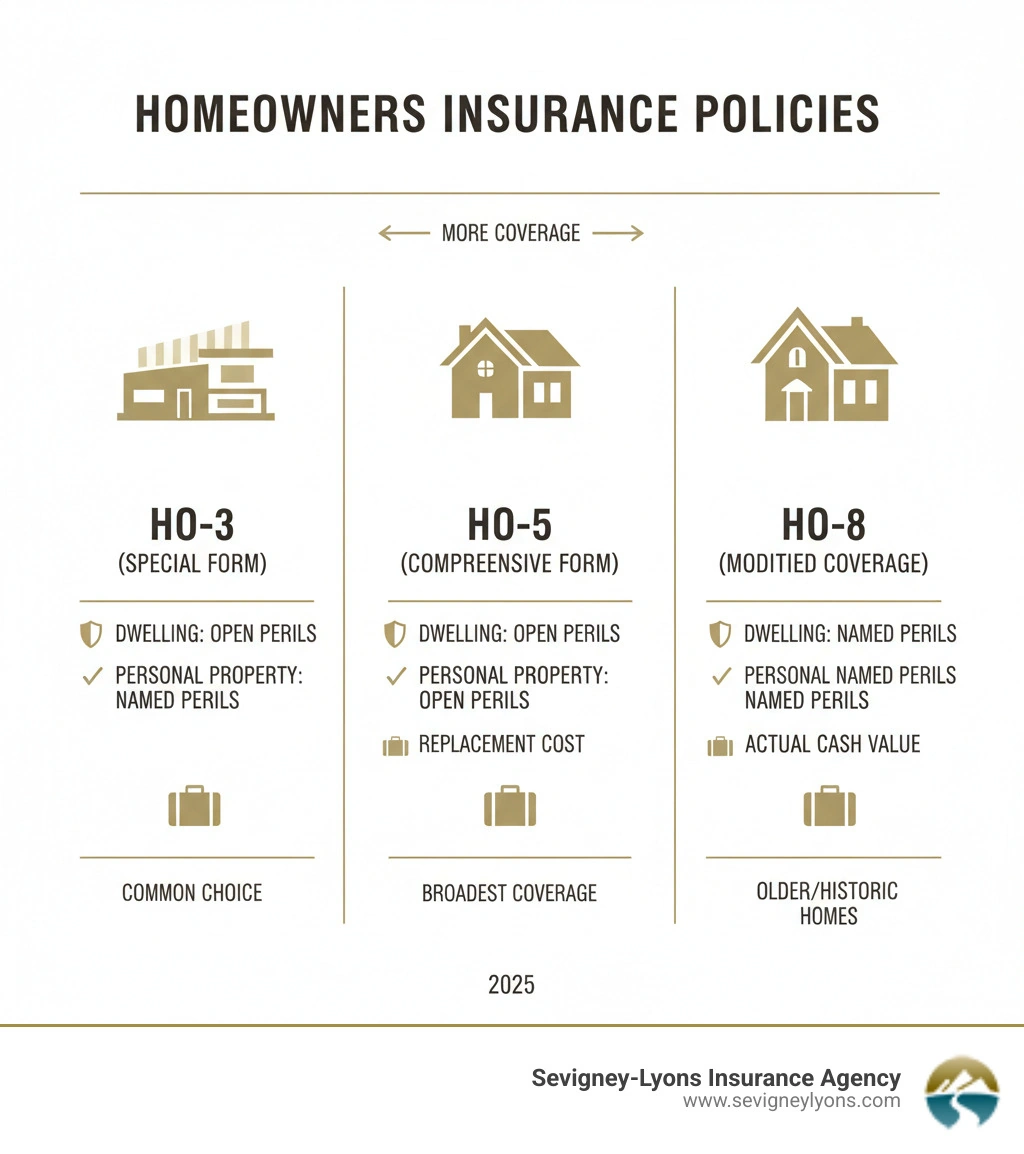
The HO-3 (Special Form) is the most common policy for Maine families. It provides "open perils" coverage for your home's structure (covering everything unless excluded) and "named perils" for your belongings (covering a specific list of events). It's a comprehensive and affordable option.
For premium protection, the HO-5 (Comprehensive Form) extends "open perils" coverage to your personal property. Both your house and belongings are covered against almost everything not explicitly excluded. It costs more but prevents claim surprises.
The HO-8 (Modified Coverage) is for unique properties, like historic homes in Ogunquit. When rebuilding costs exceed market value, this policy may use Actual Cash Value and cover only specific named perils.
The difference is simple: Named Perils covers only what's listed; Open Perils covers everything unless it's excluded. This distinction is key to choosing the right protection.
Specialized Insurance for Maine-Specific Risks
Living in Maine involves unique risks. Standard policies can have gaps that require specialized coverage.
Flood Insurance is essential for many Maine properties, as standard policies exclude it. Coastal residents in Wells and Kennebunk face serious risk without it. This coverage is available through FEMA's National Flood Insurance Program (NFIP). Flooding can happen anywhere, not just on the coast, due to snowmelt or heavy rain. Our Flood Insurance Maine 2025 Guide can help, and our Waterfront Insurance Coverage in NH Maine page offers specialized guidance.
Earthquake Insurance, usually an endorsement, covers damage from tremors. While major quakes are rare in Maine, even minor ones can cause damage not covered by standard policies.
Condo and Liability Coverage
Condo Insurance (HO-6) works with your association's master policy. Your HO-6 covers your belongings, liability, and interior improvements, while the master policy covers the building exterior and common areas. Understanding where the master policy ends and your policy begins is crucial to avoid coverage gaps. Our Condo Insurance Maine 2025 guide breaks this down.
Personal liability protection comes standard, but some situations call for more. An umbrella policy adds liability protection beyond your standard limits, covering major claims for injury or property damage. For those with significant assets or higher liability exposure, an umbrella policy offers invaluable peace of mind for a modest cost.
Frequently Asked Questions about Maine Property Insurance
We get many questions about property insurance from people across Maine. Understanding your coverage shouldn't be a puzzle. Here are the most common questions we hear from clients in Wells, Biddeford, and beyond.
How much does property insurance cost in Maine?
The cost depends on several factors.
Location is a huge factor. A coastal home in Ogunquit or Wells may cost more to insure than an inland property due to risks like wind and storm damage.
Your property's value and rebuilding cost impact premiums. A larger home costs more to insure, and rising Maine construction costs affect this.
The age and materials of your home matter. A newer home often gets better rates than an older one that may require special materials for rebuilding.
Your claims history affects your rates. More claims can lead to higher premiums.
You can control your deductible. A higher deductible lowers your premium, but ensure you can afford it if you need to file a claim.
Many discounts are available for things like security systems, bundling policies, or having a claims-free record. We can help you find these savings.
For more on Maine-specific costs, our How Much Is Maine Homeowners Insurance guide breaks it all down.
Is property insurance required in Maine?
This is a common question with a two-part answer.
Maine doesn't have a law forcing you to buy homeowners insurance. However, if you have a mortgage, your lender will require it to protect their investment. This requirement lasts for the entire loan term.
If you own your home outright, you're not legally required to have insurance, but it's a risky gamble. Without it, you'd pay for major repairs—like rebuilding after a fire in your Wells cottage—out of pocket. Even cash buyers usually choose to protect their investment. While not legally required for outright owners, it's financial common sense.
What is the difference between property insurance and home insurance?
This common point of confusion isn't helped by industry jargon.
Property insurance is the broad umbrella term for any policy that protects physical assets from loss.
Homeowners insurance is one specific type of property insurance, designed for people who own and live in their homes.
So, the property insurance umbrella also includes renters, condo, and commercial property insurance.
Think of it like vehicles and cars. All cars are vehicles, but not all vehicles are cars. Similarly, all home insurance is property insurance, but property insurance is a much broader category.
The confusion is understandable, as most people deal with home insurance. But understanding the distinction is helpful when shopping for coverage.
The bottom line is that having the right protection for your specific situation in Maine is what matters most.
Securing Your Maine Property for the Future
You now understand what are the three main types of property insurance coverage: the valuation methods (Replacement Cost, Actual Cash Value, Extended Replacement Cost) and the main policy categories (Homeowners, Renters, Commercial).
But the basics are just the start. We've covered the importance of understanding perils vs. exclusions, especially for Maine's winter storms and coastal floods. Customizing your policy with the right endorsements can be the difference between full protection and financial loss.
Property insurance is a financial lifeline. Whether protecting a Kennebunk home, a Wells rental, or a Biddeford business, the right coverage provides invaluable peace of mind.
Maine's weather is unpredictable. A nor'easter won't wait for you to review your policy. The time to ensure you have the right coverage is now, before an emergency.
At Sevigney-Lyons Insurance Agency, we've helped our Southern Maine neighbors for decades. Our local knowledge is deep: we understand local construction costs, wind risks, and building codes that affect your coverage.
As an independent agency with access to over 20 top-rated carriers, we shop the market to find the best fit for your property, budget, and peace of mind. That's the independent agent advantage.
Your Maine property is your home and future. Don't leave it vulnerable. Let our experience help you build a custom plan that stands strong against Maine's weather.
Ready to protect what matters most? Get a free quote for your Maine property insurance needs and find how proper coverage can secure your property for years to come.