Blog Content
Choose Motorhome Breakdown Cover That Fits Your Rig
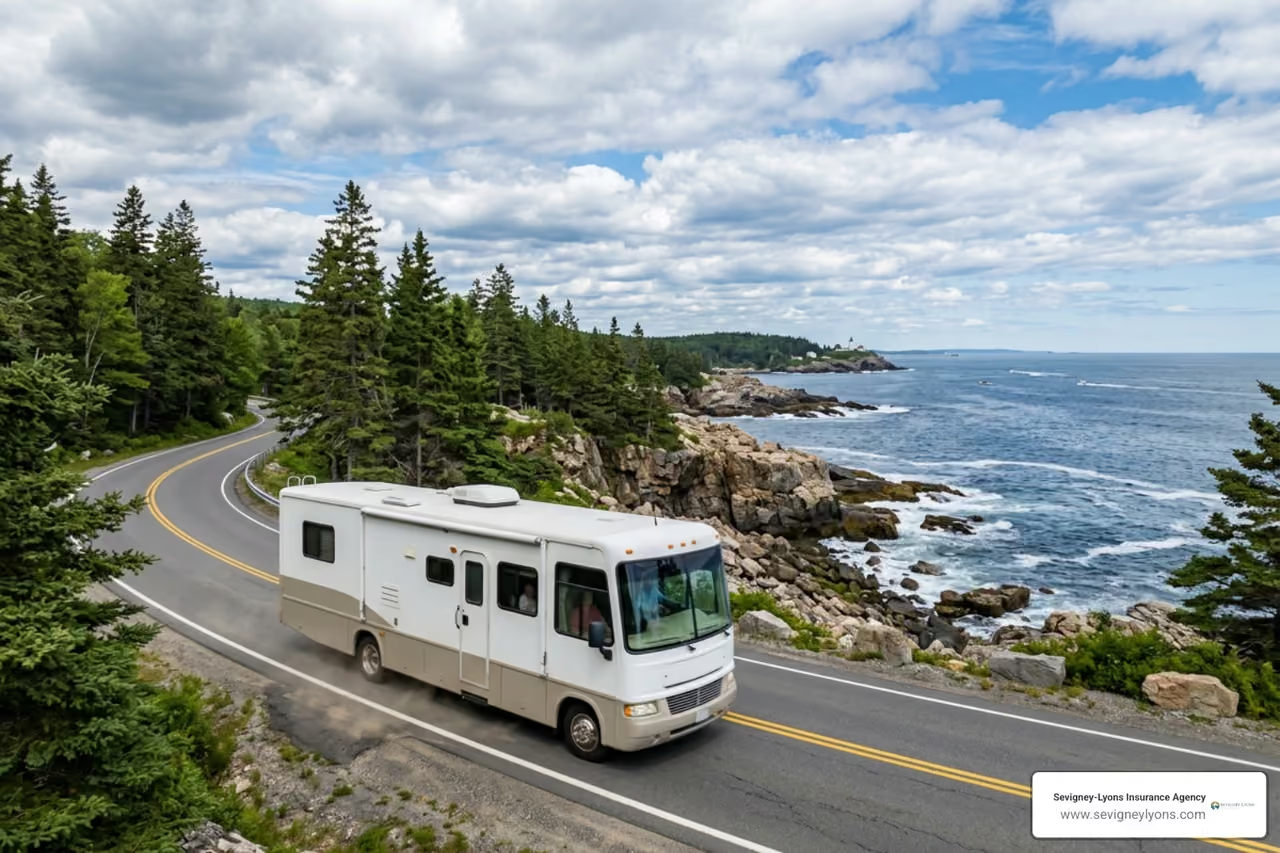
The best breakdown cover for motorhomes is one that accepts your motorhome's weight and dimensions, provides roadside repair and heavy-duty recovery, and includes trip-interruption help when you travel far from home. For Maine owners, prioritize coverage that can assist on coastal Route 1, at campgrounds near Wells and Ogunquit, and on longer trips beyond Kennebunk or Biddeford.
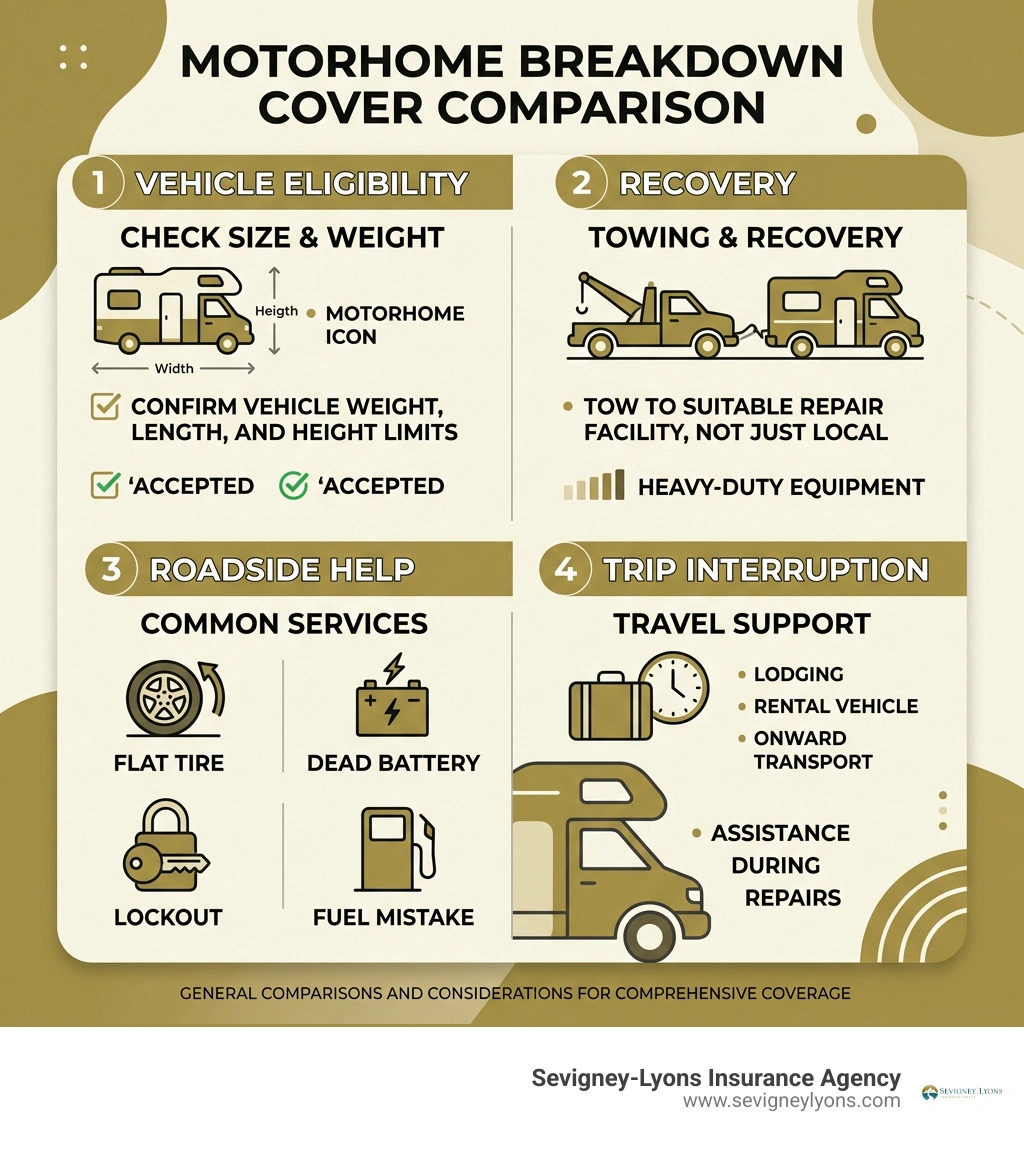
Before you buy, check these essentials:
- Vehicle eligibility: Confirm the plan covers your motorhome's full weight, length, and height.
- Recovery scope: Look for towing to a suitable repair facility, not only a short local tow.
- Common roadside problems: Tire trouble, dead chassis or leisure batteries, lockouts, and fuel mistakes should be addressed clearly.
- Travel support: Onward transport, lodging, or rental-vehicle benefits can matter if repairs delay a family trip or business schedule.
- Territory: Make sure the policy applies where you drive, including out-of-state and Canadian travel if relevant.
A standard auto roadside add-on can be useful, but it may have towing, size, or weight limits that do not suit a larger motorhome. Dedicated motorhome cover is often the safer choice when recovery requires specialist equipment.
I am Jon Sevigney, and the comparisons ahead will help you weigh the coverage details that matter most for motorhome travel from Southern Maine and beyond.
Understanding Motorhome Breakdown and Roadside Assistance Coverage
When traveling across New England, a mechanical breakdown in a motorhome is fundamentally different from a breakdown in a standard passenger car. A leisure vehicle serves as both transportation and living quarters. When something fails on the road, you face mechanical dilemmas as well as housing disruptions.

Comprehensive roadside plans address several standard failure points:
- Tire Blowouts and Punctures: Carrying substantial weight over long distances places intense thermal and physical stress on motorhome tires. Blowouts represent the single most common dispatched roadside emergency for recreational vehicles.
- Battery Failures: Modern motorhomes rely on dual electrical configurations—the vehicle chassis battery and deep-cycle house or leisure batteries. Standard auto recovery plans often lack the technical ability or equipment to diagnose or jump specialized leisure battery setups.
- Lockout Assistance: Accidental lockouts on motorhome deadbolts or specialized entry locks require locksmiths trained in multi-point leisure vehicle access.
- Misfuelling Protection: Draining and flushing fuel lines after accidentally topping off with the wrong fuel saves heavy diesel and gas engines from catastrophic failure.
- Campsite and Soft-Ground Recovery: A heavy rig bogged down in wet grass or sandy coastal ground requires specialist winching.
Understanding how emergency roadside features work alongside your baseline policy starts with securing proper RV insurance so your property, liability, and emergency needs are coordinated.
Comparing Plan Types for the Best Breakdown Cover for Motorhomes
Choosing the correct coverage architecture depends on how you travel and who operates the vehicle. Breakdown policies generally divide into vehicle-based and personal-based structures:
- Vehicle-Based Policies: The protection stays attached to the specific motorhome, regardless of who is driving. This setup is ideal for family rigs shared among multiple household drivers.
- Personal-Based Policies: The coverage follows the individual policyholder, providing breakdown assistance in any eligible vehicle they drive or travel in as a passenger.
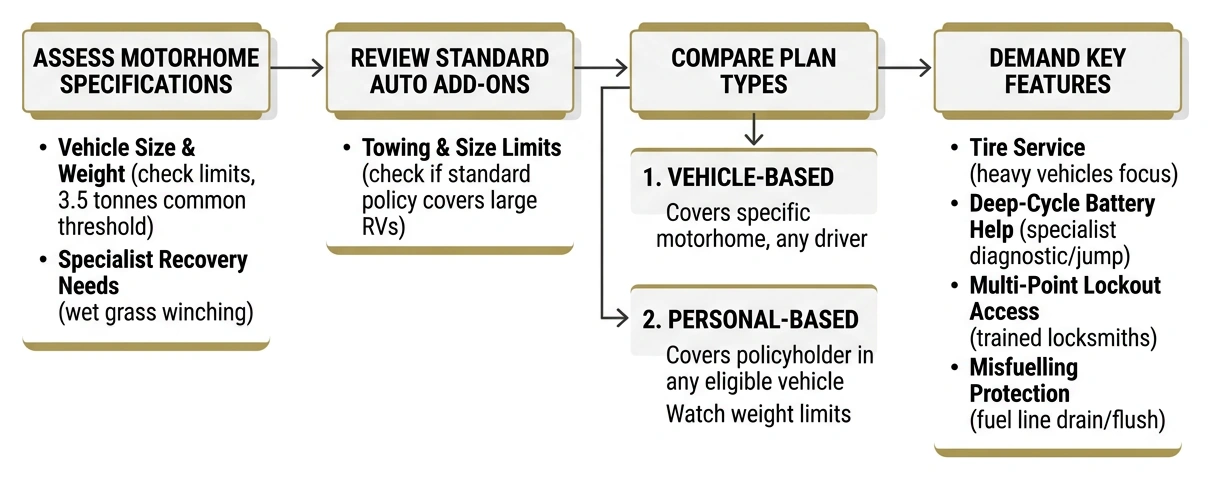
When selecting personal coverage, verify whether weight thresholds apply. Standard personal policies often cut off eligibility at 3.5 tonnes (approx. 7,700 lbs). A fully loaded Class A, Class C, or heavy camper van routinely exceeds this threshold. Selecting the right policy ensures you are actively protecting your vehicle in Maine without running into unexpected weight exclusions during a crisis.
Key Features to Demand in the Best Breakdown Cover for Motorhomes
A budget-rate breakdown policy can leave you stranded if its fine print limits towing distances or vehicle sizes.

When comparing comprehensive plans, insist on these non-negotiable coverage provisions:
- Unlimited or Extended Towing Mileage: Basic plans frequently restrict towing to a 5- or 10-mile radius. A specialized motorhome garage capable of hoisting a 10-tonne rig might be 40 to 60 miles away. Demand recovery that covers transport to the nearest qualified facility.
- Heavy-Duty Equipment Dispatch: Low-profile wheel lifts designed for sedans will damage motorhome fiberglass overhangs and air suspension setups. Quality policies guarantee heavy-duty flatbeds, under-reach tow units, and low-angle loading ramps.
- Specialist Winching and Off-Road Extraction: Getting stuck on soft ground at a campground requires dual-line winching from certified recovery professionals.
- Trip Interruption and Alternative Accommodation: If a blown transmission leaves your motorhome stranded in a repair bay for four days, top-tier plans provide daily meal stipends, hotel allowances, or replacement transport.
- Dual-Journey Recovery: If your motorhome cannot be repaired during a vacation, dual-journey recovery provides transport to help you finish your itinerary, later returning your repaired rig to your home base.
Pairing roadside add-ons with comprehensive Maine RV insurance ensures that both unexpected mechanical breakdowns and major collision repairs are thoroughly handled.
Size, Weight, and Technical Towing Specifications
Motorhomes present physical dimensions that challenge standard recovery equipment. Before enrolling in any breakdown plan, calculate your Gross Vehicle Weight Rating (GVWR), total exterior length, width, and height.
Slide-out room failures represent another common technical challenge. If a hydraulic or electric slide gets stuck in the extended position, the vehicle cannot be driven or towed legally. Comprehensive breakdown coverage includes mobile mechanics dispatched to manually retract and secure slide mechanisms safely.
Pairing specialized towing protocols with full coverage auto insurance in Maine protects both the mechanical powertrain and physical coach body against secondary towing damage.
Comparing Roadside Assistance Add-Ons vs Dedicated Motorhome Policies
Many vehicle owners question whether a standard roadside endorsement on an auto policy is sufficient or if an independent, dedicated motorhome plan is necessary.
Requesting an instant RV insurance quote helps you identify coverage gaps where an entry-level roadside endorsement might fall short.
Finding the Best Breakdown Coverage for Motorhomes Across Maine and Beyond
Driving through Maine presents distinct travel dynamics. Whether you are navigating traffic on coastal Route 1, heading out from Ogunquit, setting up camp near the beaches of Wells, or setting off on long excursions past Kennebunk and Biddeford, local geography matters.
Coastal fog, salt air, sharp seasonal temperature changes, and gravel access roads around rural campgrounds can stress brake systems, house batteries, and tire rubber. Drivers from Biddeford and neighboring towns should balance roadside plans against regional driving hazards by securing appropriate auto insurance in Biddeford.
Frequently Asked Questions About Motorhome Breakdown Cover
Does standard auto insurance include motorhome breakdown cover?
No. Standard auto insurance policies provide liability, collision, and comprehensive damage coverage, but they do not automatically provide breakdown assistance. While some carriers offer roadside endorsements, these add-ons often contain vehicle weight and length exclusions that disqualify larger Class A and Class C motorhomes. A specialized RV endorsement or standalone breakdown policy is required.
What is the most common cause of motorhome breakdowns?
Tire failures and blowouts represent the leading cause of dispatched emergency roadside events. Motorhomes place continuous downward force on radial tires, and extended periods of storage between vacations can cause dry rot and sidewall degradation. Dead leisure and engine batteries rank as the second most frequent issue.
Does vehicle weight affect breakdown coverage eligibility?
Yes. Weight is the primary filter used by breakdown providers. Standard passenger roadside assistance plans routinely cap eligibility at 3.5 tonnes (approx. 7,700 lbs). Heavy Class C rigs and Class A diesel pushers require commercial-grade recovery apparatus, meaning owners must select plans that explicitly cover higher gross vehicle weight ratings.
Conclusion
A breakdown should never derail the freedom of the open road. As an independent agency rooted right here in Southern Maine, we understand the preparation required to keep your recreational journeys secure.
At Sevigney-Lyons Insurance Agency, our team works with more than 20 leading insurance carriers to craft tailored personal and vehicle protection plans. Whether you are exploring Wells, cruising near Ogunquit, taking day trips around Kennebunk, or commuting from Biddeford, we provide the regional expertise and dedicated service your family deserves.
Before your next seasonal road trip, connect with our local agents to secure the best RV insurance coverage in Maine and travel with true roadside confidence on every mile of your journey.